Parents: 8 Quiet Nature Escapes Near Toronto, All Within 90 Minutes
Parents: 8 Quiet Nature Escapes Near Toronto, All Within 90 Minutes
Rattlesnake Point and Crawford Lake, Rattray Marsh, Happy Valley Forest, Rouge National Urban Park, Toronto Islands, High Park, Albion Hills, and Heart Lake all sit within roughly 30 to 90 minutes of downtown Toronto, and each one has at least one quiet corner if you know when to show up. The escarpment sites near Milton run closer to 45 to 50 minutes. Below is the drive time, parking cost, trail surface, and stroller reality for each, plus a full timed day plan that you can copy straight into your calendar.
TL;DR:
- Visiting Rattlesnake Point or Crawford Lake early in the morning or on a weekday helps avoid parking lot capacity issues and large crowds.
- Rattray Marsh offers stroller-friendly boardwalks and free parking, making it ideal for families with young children, but arrive before 10 a.m. on weekends.
- Happy Valley Forest has a fully accessible trail built to AODA standards, suitable for wheelchairs and mobility devices, with on-site accessible parking.
- Most conservation parks lack overflow parking, so calling ahead about lot capacity or avoiding peak times is crucial, especially for popular spots like Albion Hills.
- Cell service drops out at several sites, making offline maps and prepared paper trail guides essential for safety and navigation.
Table of Contents
- Nature escapes near Toronto: 8 spots worth the drive
- A timed day plan: Crawford Lake, Rattray Marsh, and lunch in Milton
- How to actually avoid the crowds at any of these spots
- Which of these picks work for strollers and wheelchairs
- Getting there without a car
- What to know about accessibility beyond strollers
- Safety and packing basics for any of these trips
- What I’d actually warn you about first
- Let DayHop turn this list into your actual plan
- Where to check before you go
- Sources
Nature escapes near Toronto: 8 spots worth the drive
Here’s the shortlist, ranked by how well each one rewards you for skipping the obvious weekend crowd.
1. Rattlesnake Point Conservation Area + Crawford Lake
Drive time from downtown Toronto is about 45 to 50 minutes; from Richmond Hill, plan closer to an hour once you’re past the 407/401 interchange. Both sites sit under Conservation Halton, and the cliff-edge lookouts here genuinely feel like a different province. Day-use parking runs roughly $10 to $15 per vehicle, so bring cash or a card since rates change seasonally. The Nassagaweya Canyon Trail connects both parks and covers about 5.5 kilometres of rugged limestone, with sections close enough to the escarpment edge that you’ll want proper footwear, not sandals. Park at the Crawford Lake lot first if you’re arriving before 9 a.m.; the Rattlesnake Point lot on Appleby Line fills faster because it’s the one with the postcard lookout. Strollers do not work on the escarpment trails. Bring a carrier instead.
Crawford Lake itself is the quieter half of the pairing. It’s a meromictic lake, meaning its layers of water never fully mix, which has preserved centuries of sediment and let archaeologists date a reconstructed Haudenosaunee longhouse village on site to the 1400s. The boardwalk loop around the lake is flat, about 1.4 kilometres, and manageable for older kids on foot even if not stroller-friendly throughout.
2. Rattray Marsh Conservation Area
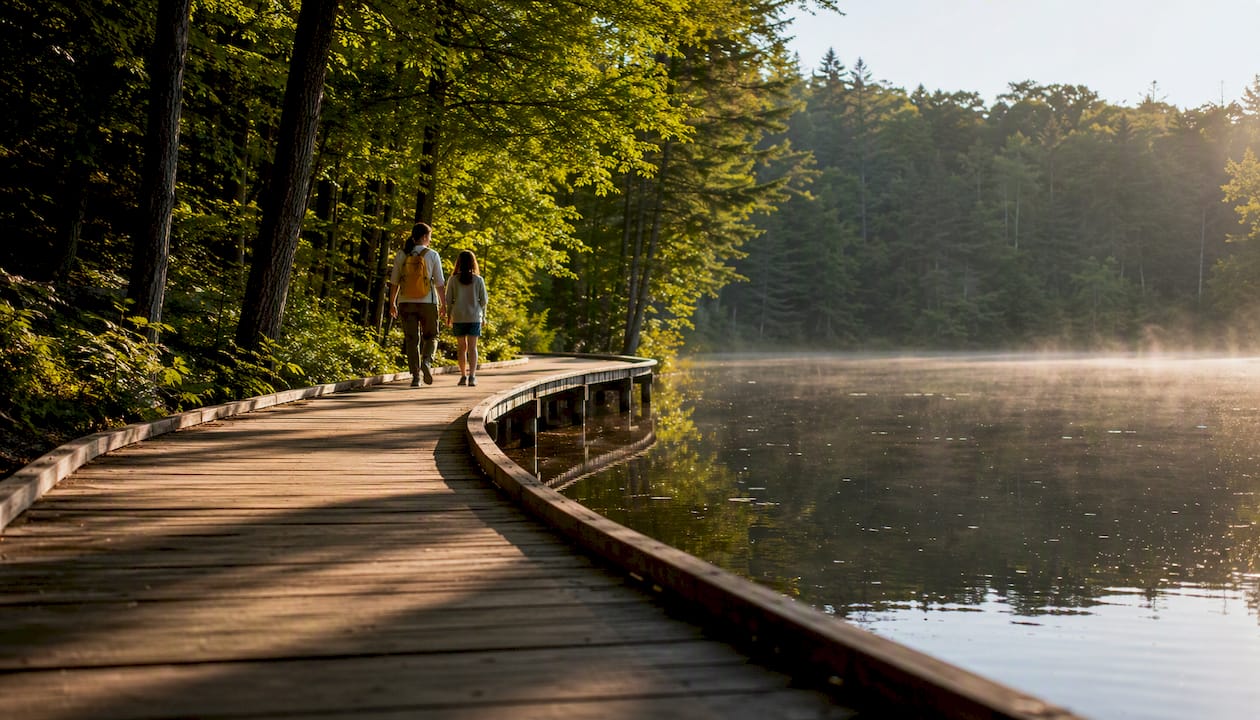
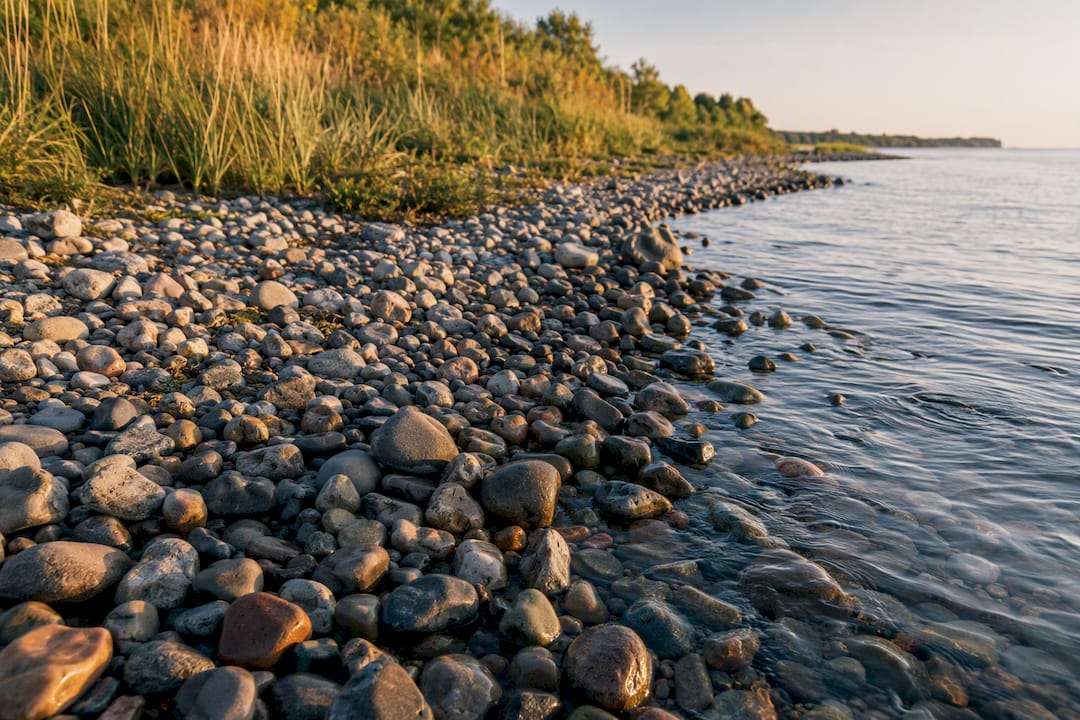
This one’s the easiest sell for a family with a toddler. It sits in Mississauga, about 35 to 40 minutes from downtown Toronto along the QEW, and the raised boardwalk sections handle a stroller without a fight. The marsh empties into Lake Ontario at a cobble beach that’s rare for this stretch of shoreline, and the walk from the Bexhill Road lot to the beach is under 20 minutes each way on packed gravel and boardwalk. Parking is free but limited to a small lot and street spots nearby, so arrive before 10 a.m. on weekends. Washrooms are portable, seasonal, and not always stocked, so plan accordingly if you’re travelling with a young child.
3. Happy Valley Forest (Goldie Feldman Nature Reserve)
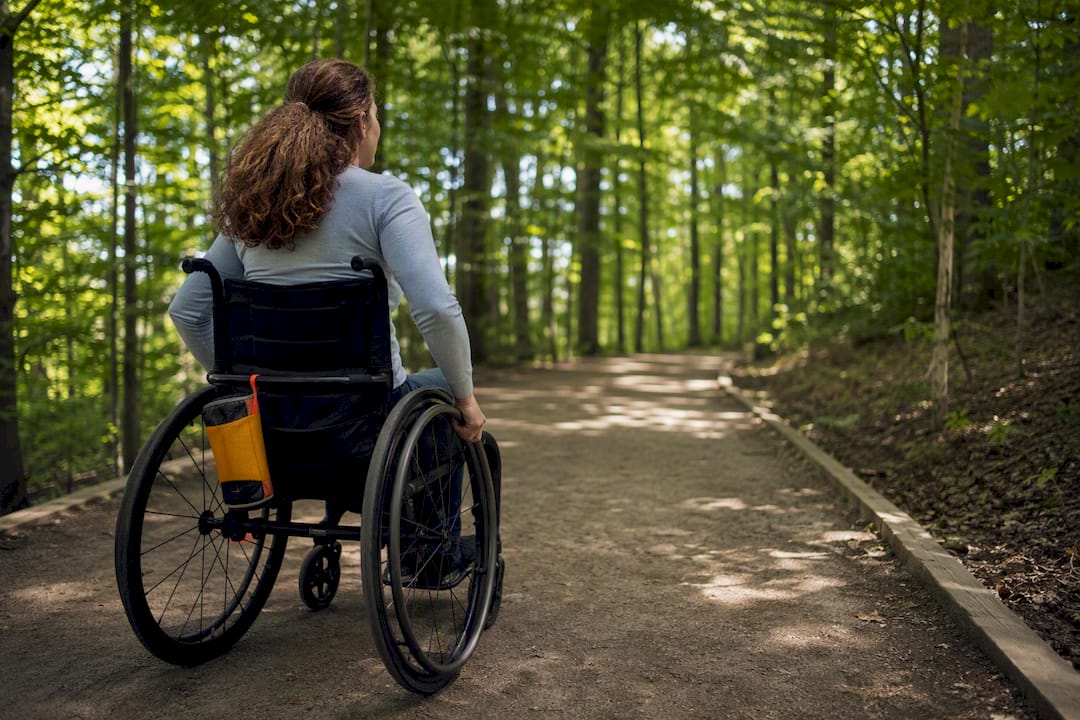
North of King City, this is the pick for anyone who needs a genuinely accessible trail rather than one that’s merely stroller-tolerant. The reserve includes a 770-metre loop built to AODA accessibility standards, with accessible parking spaces at the trailhead. Drive time from Richmond Hill is about 30 minutes; from downtown, closer to 50. Because the forest protects several species at risk, stay on the marked loop rather than wandering off into the surrounding Nature Conservancy of Canada land. There’s no washroom on site, so use one before you leave.
4. Rouge National Urban Park
Rouge is the closest thing on this list to a wilderness experience without leaving city limits. It’s North America’s largest urban park, and depending on which access point you use, you can be on a trail within 30 minutes of downtown. The Vista Trail and Riverside Trail loops see far less traffic than the beach parking lots near Rouge Beach in summer. Parks Canada runs seasonal camping here too, which is worth knowing if a day trip turns into an overnight. Trail surfaces vary from packed dirt to gravel; a jogging stroller handles most of it, a standard umbrella stroller will struggle on the rooted sections.
5. Toronto Islands
The ferry from the foot of Bay Street takes about 10 minutes each way, and the islands themselves stretch stroller-friendly paths across Centre Island, Ward’s Island, and Hanlan’s Point. Arrive on the first ferry of the day, usually around 8 a.m. in summer, and you’ll have the boardwalks nearly to yourself for the first hour. Washrooms and picnic areas cluster around Centre Island; Ward’s Island is quieter and more residential in feel. Ferry tickets run a modest cash fare, and lineups by mid-morning on a July Saturday can stretch past an hour.
6. High Park
The advantage here is proximity: you can reach High Park by TTC or a short drive from downtown without using the highway. The catch is cherry blossom season, when the Sakura trees near Bloor Street draw large crowds that fill parking early. Skip late April weekends, or go before 8 a.m. if you must. Outside blossom season, the park’s western trails around Grenadier Pond are reliably calm, and that’s also your best bet for early-morning birdwatching.
7. Albion Hills Conservation Park
This is the mountain-biking and family-splash-pad option, about 50 minutes from downtown Toronto via Highway 50. TRCA maintains an extensive multi-use trail network here alongside a splash pad and outdoor pool that open seasonally. Parking has a day-use fee, and the lot does close once it’s full on hot weekends, so a Saturday afternoon arrival is a gamble.
8. Heart Lake Conservation Park
Just outside Brampton, reachable within about an hour from downtown, Heart Lake centres on a kettle lake formed by retreating glaciers, a different geological story from Crawford Lake’s meromictic layers. Trails here are flatter and better suited to a first hike with young kids than the escarpment routes near Rattlesnake Point.
Pro Tip: Call the conservation authority’s automated line or check its site before you drive to Rattlesnake Point, Albion Hills, or Heart Lake on a summer weekend. All three post “lot full” closures by mid-morning, and there’s no overflow parking on Appleby Line or Heart Lake Road.
A timed day plan: Crawford Lake, Rattray Marsh, and lunch in Milton
This is the plan to screenshot. It assumes you’re leaving from Richmond Hill; downtown Toronto drivers, add about 10 to 15 minutes to each leg.
- 7:15 a.m. Leave Richmond Hill. Drive time to Crawford Lake is about 55 minutes via Highway 407 to Highway 401 westbound, then north on Guelph Line.
- 8:10 a.m. Park at the Crawford Lake lot on Steeles Avenue West. The lot is small, and this early slot means you’ll get a spot without circling.
- 8:15 to 9:30 a.m. Walk the boardwalk loop around the lake and through the reconstructed longhouse village. Budget 45 minutes for the loop, plus 30 minutes if kids want to linger at the longhouses.
- 9:45 a.m. Drive 15 minutes to downtown Milton for a coffee and washroom stop. Try one of the cafés along Main Street East; most open by 8 a.m. and have accessible washrooms.
- 10:30 a.m. Head toward Rattray Marsh, about 35 minutes southeast via Highway 407 and the QEW. Park at the Bexhill Road lot.
- 11:10 a.m. to 12:15 p.m. Walk the boardwalk to the cobble beach and back. Bring a blanket for a beach picnic if the weather holds; there’s no food service on site.
- 12:30 p.m. Drive 10 minutes to Port Credit for a sit-down lunch along Lakeshore Road, where patios and washrooms are easy to find.
Pro Tip: Pack a printed map or screenshot of both parking lots before you leave. Cell coverage near Crawford Lake and along parts of the escarpment drops out, and Google Maps will not reroute you if a lot is full.
Bring layered clothing regardless of season, a refillable water bottle each, and sturdy shoes if Crawford Lake’s boardwalk has any ice or mud, which happens in shoulder months.
How to actually avoid the crowds at any of these spots
Timing beats destination. A quiet weekday morning at Rattlesnake Point beats a jammed Saturday at Heart Lake every time, and the fix is the same at almost every site on this list.
- Arrive before 9:30 a.m. on weekends. Popular Bruce Trail access points near Milton routinely fill their lots by 9:30 to 10 a.m. once the weather turns warm.
- Go on a weekday if your schedule allows it. Tuesday and Wednesday mornings at Rouge or Albion Hills feel like a different park compared to Saturday.
- Visit in the shoulder seasons. Late April and October give you fall colour or spring wildflowers with a fraction of the July traffic, though trails can be muddy or icy underfoot.
- Pick the loop trail over the lookout trail. Rattlesnake Point’s main escarpment lookout draws a line of visitors; the Nassagaweya Canyon Trail loop a few hundred metres away rarely does.
- Bring a small power bank with a built-in light if your day runs into golden hour and you’re relying on your phone for maps or photos.
Statistic Callout: Conservation area lots near the Niagara Escarpment commonly reach capacity by 9:30 to 10 a.m. on weekends between May and September. Arriving even 30 minutes earlier than that window is the single biggest lever you have.
Which of these picks work for strollers and wheelchairs
Happy Valley Forest’s Goldie Feldman Nature Reserve is the one built specifically for accessible use: the 770-metre loop meets AODA standards and has accessible parking at the trailhead.
- Rattray Marsh’s boardwalk sections handle a standard stroller and most manual wheelchairs without difficulty.
- Toronto Islands’ main paths on Centre Island are paved and stroller-friendly; Ward’s Island is hillier in places.
- High Park’s paved loop road around Grenadier Pond works for both strollers and wheelchairs.
- On-site washrooms exist at High Park, Rouge, Albion Hills, and Heart Lake. Rattray Marsh and Crawford Lake rely on seasonal portables, so pack a changing mat if you have a baby.
Getting there without a car
Rouge National Urban Park and Toronto Islands are your best bets if you don’t drive. Rouge Hill GO station sits close to several Rouge access points, and a short walk or rideshare gets you to the Vista Trail entrance from there.
Toronto Islands are the easiest of all: take the TTC to Union Station, walk to the Jack Layton Ferry Terminal at the foot of Bay Street, and the ferry ride itself takes about 10 minutes. High Park is a straightforward TTC trip on Line 2, exiting at High Park or Keele station and walking a few minutes into the park.
The escarpment sites are harder without a vehicle. Rattlesnake Point, Crawford Lake, Happy Valley Forest, Albion Hills, and Heart Lake all sit outside reliable transit routes, and while GO Transit reaches nearby towns like Milton and Brampton, the last stretch to the trailhead usually requires a taxi, rideshare, or a bike. If you’re planning a car-free day, build your list around Rouge and the Islands first, and treat the conservation areas as a driving-day trip.
What to know about accessibility beyond strollers
AODA compliance means more than a flat surface. Happy Valley Forest’s accessible loop was specifically engineered for wheelchair users, with a hard-packed surface, gentle grades, and accessible parking stalls near the trailhead rather than a general lot with no reserved spaces.
Most other conservation areas on this list have accessible parking at main lots and accessible washrooms in the visitor buildings that stay open, but the trails themselves revert to natural surfaces once you’re past the first few hundred metres. If a member of your group uses a mobility device, call ahead to Conservation Halton or TRCA to confirm which specific trail segments are hard surfaced that season, since maintenance and washouts change things year to year. Visual and hearing accessibility, like braille signage or audio trail guides, is limited across most of these sites and worth asking about directly if it matters for your visit.
Safety and packing basics for any of these trips
Cell service drops out on parts of the escarpment near Rattlesnake Point and Crawford Lake, so download an offline map before you leave the driveway. A paper trail map from the conservation authority kiosk works as a backup too.
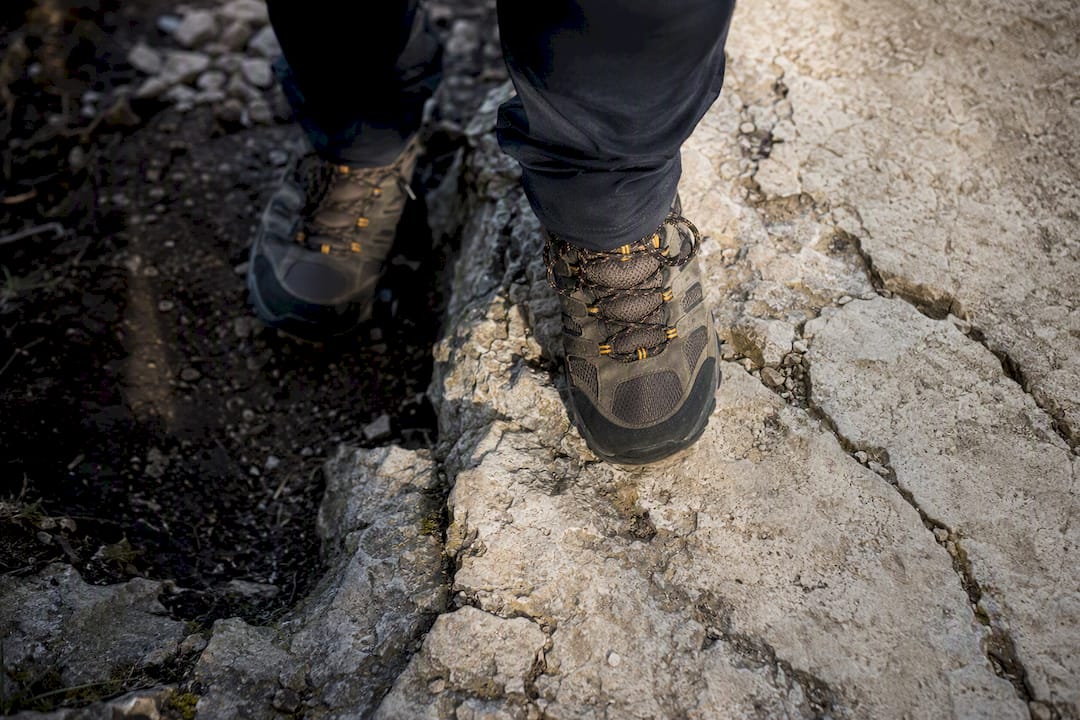
Pack more water than you think you need, roughly one litre per person for anything over an hour of walking, plus snacks if kids are along. Wear closed shoes with grip on any escarpment or marsh boardwalk trail; wet wood and loose limestone are both more slippery than they look. Layer clothing even in summer, since lakeside and marsh sites run several degrees cooler than downtown. Sunscreen and bug spray matter most at Rouge and Heart Lake, where trails run through dense tree cover. If you’re heading to Rattlesnake Point specifically, stay well back from unfenced cliff edges, particularly with kids who like to run ahead.
What I’d actually warn you about first
The Rattlesnake Point parking lot on Appleby Line is the honest caveat here: it fills by 10 a.m. on nearly any warm Saturday, and there’s no overflow lot to fall back on. Go before 9 or pick a weekday.
Shoulder seasons reward you with quiet trails and better light, but Crawford Lake’s boardwalk gets genuinely icy in March and Rattray Marsh turns to soft mud after a wet October. Late spring and early fall, on a weekday morning, is the sweet spot across nearly every site on this list.
— Mugendi
Let DayHop turn this list into your actual plan
You’ve got the shortlist and one full timed itinerary above, but building a second or third version of this day, with weather-adjusted stops and family filters built in, is exactly what DayHop was built for. Instead of cross-referencing four conservation authority websites and a weather app the night before, tell the planner what you want, a quiet hike, a stroller-friendly loop, a picnic spot, and it lays out the timing and stops for you.

The planner factors in weather, so a plan built around Rattray Marsh’s beach automatically shifts toward a covered trail if rain is forecast that morning. It also filters for family-friendly stops if you’re travelling with young kids, similar to the ideas in DayHop’s family day trip guide. For longer routes and more escarpment options than fit here, DayHop’s hiking guide for the GTA is worth a look too. The platform doesn’t book anything on your behalf without you confirming it, and you should still check the official park page for closures before you drive out. Get a ready-made, timed nature day plan at Dayhop.
Where to check before you go
Confirm hours, fees, and closures directly with each authority: Parks Canada’s Rouge pages for camping and trail advisories, Conservation Halton for Rattlesnake Point and Crawford Lake permit rates, the Nature Conservancy of Canada for Happy Valley Forest access rules, and TRCA for Albion Hills, Heart Lake, and Rattray Marsh seasonal openings.
Sources
- Happy Valley Forest | Nature Conservancy of Canada
- This boardwalk trail near Toronto winds through a forest to a rare cobble beach - Narcity
- Nature in Toronto | Destination Ontario
Recommended
Plan my day →