Best day trips from Toronto: 2026 local guide
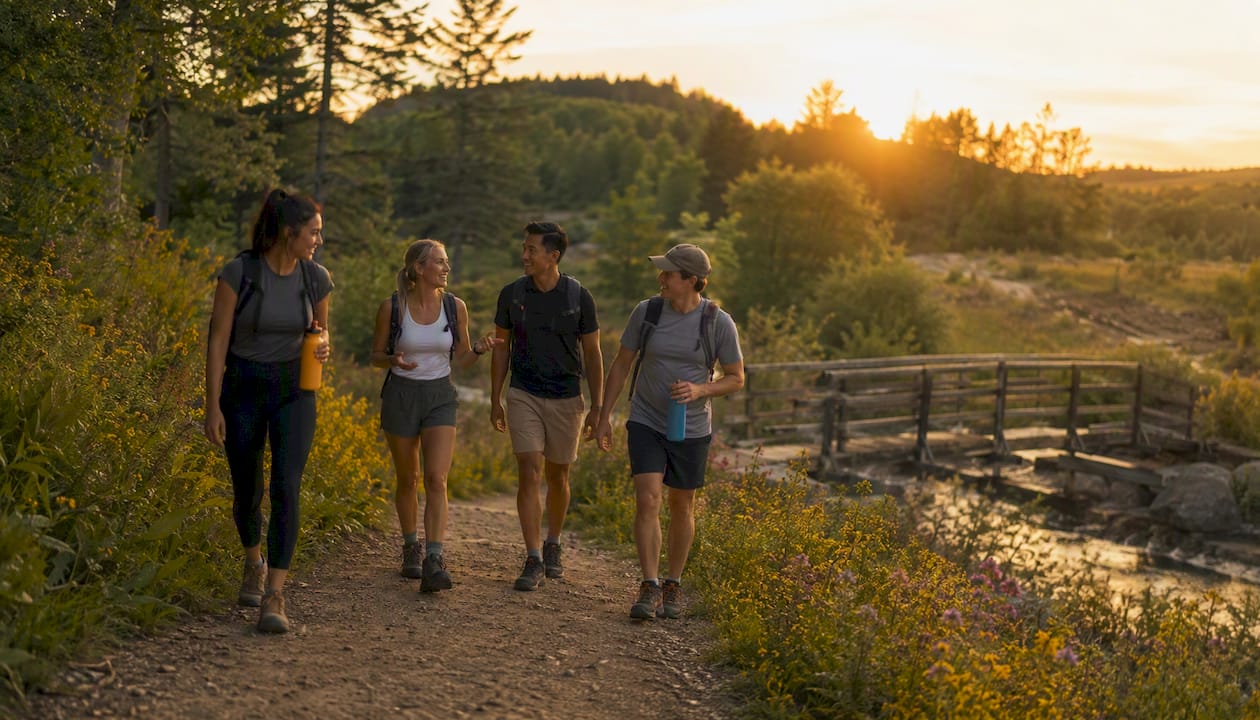
Best day trips from Toronto: 2026 local guide
The best day trips from Toronto cover a lot of ground, literally. Within 1.5–3 hours of downtown, you can stand at the edge of Niagara Falls, hike limestone cliffs above Georgian Bay, sip Pinot Noir in Prince Edward County, or paddle a canoe through Muskoka. The shortlist below covers the highest-value options, with a quick tag for each so you can pick in under a minute.
- 🌊 Niagara Falls — iconic waterfalls, 1.5 hrs — best for first-timers and families
- 🏝️ Toronto Islands — ferry ride, 15 min — best for a quick urban escape
- 🍷 Niagara-on-the-Lake / wine region — 1.5 hrs — best for wine lovers and history buffs
- 🌲 Bruce Peninsula / Tobermory — 3.5 hrs — best for hikers (plan as a long day or overnight)
- 🦌 Algonquin Provincial Park — 3+ hrs — best as a weekend; doable as a very long day
- 🛶 Muskoka — 2 hrs — best for lakes, cottages and fall colour
- 🏔️ Blue Mountain — 1.5 hrs — best for skiing, hiking and village vibes
- 💧 Hamilton waterfalls — 1 hr — best for a short, active half-day
- 🌿 Elora Gorge — 1.5 hrs — best for swimming and scenic cliffs
- 🏖️ Sandbanks / Prince Edward County — 2–2.5 hrs — best as a weekend (wineries + beach)
- 🪨 Rattlesnake Point / Cheltenham Badlands — 45 min–1 hr — best for quick escapes
- 🌸 Royal Botanical Gardens — 1 hr — best for families and garden lovers
- ⛵ 1000 Islands — 2.5–3 hrs — best for boat cruises and scenic drives
Pro Tip: If you have only one day and no car, Niagara Falls is your clearest call. The seasonal GO Train runs on weekends and makes the trip car-free and easy. Book your ticket in advance, especially in summer.
Table of Contents
- Quick-reference table: top day trips compared
- Every destination, fully mapped out
- How to pick the right day trip for your group
- Practical planning tips for a smooth day out
- Key takeaways
- A local perspective on what makes a great day trip
- Dayhop makes day-trip planning fast and personal
- Useful sources and booking links
Quick-reference table: top day trips compared
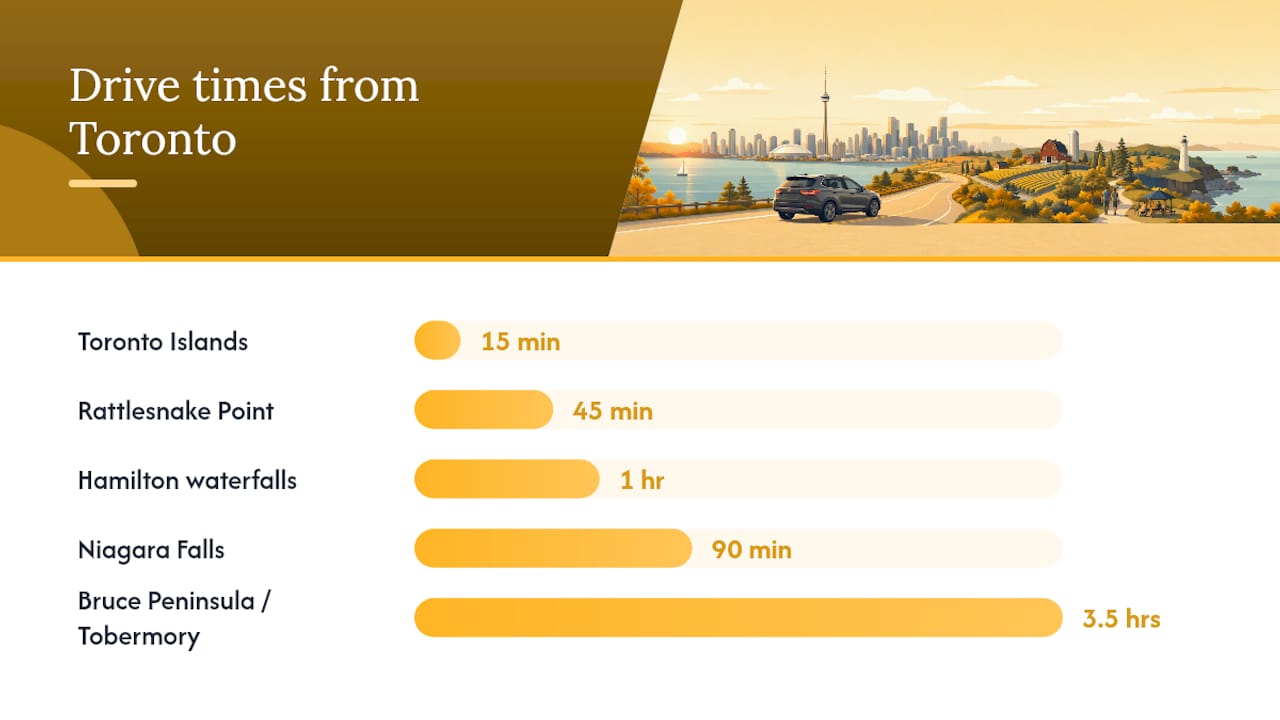
Planning a day out of the city is much easier when you can see all the key details side by side. The table below covers every destination in this guide. Drive times are from downtown Toronto without heavy traffic; add 30–45 minutes for Friday afternoons or summer weekends.
| Destination | Drive time / distance | Best for | Best season(s) | Access options | Typical day cost (CAD) |
|---|---|---|---|---|---|
| Niagara Falls | 90 min / 125 km | Families, first-timers | Year-round | Car, GO Train (seasonal), guided bus tour | $50–$150+ |
| Toronto Islands | 15 min ferry | Urban escape, cycling | May–October | Ferry from Jack Layton Ferry Terminal | $10–$30 |
| Niagara-on-the-Lake | 90 min / 130 km | Wine, history, theatre | May–October | Car, guided tour | $60–$200 |
| Bruce Peninsula / Tobermory | 3.5 hrs / 280 km | Hiking, kayaking | June–September | Car | $30 |
| Algonquin Provincial Park | 3–3.5 hrs / 260 km | Canoe, wildlife | May–October | Car | $25–$60 |
| Muskoka | 2 hrs / 165 km | Lakes, fall colour | June–October | Car | $30–$100 |
| Blue Mountain | 1.5 hrs / 150 km | Skiing, hiking, village | Year-round | Car | $40–$150 |
| Hamilton waterfalls | 1 hr / 75 km | Short hike, waterfall | Year-round | Car, GO Bus | $0–$20 |
| Elora Gorge | 1.5 hrs / 100 km | Swimming, cliffs | June–September | Car | $20–$50 |
| Sandbanks / Prince Edward County | 2–2.5 hrs / 200 km | Beach, wine | June–September | Car | $50–$200 |
| Rattlesnake Point | 45 min / 50 km | Quick hike, escarpment | Year-round | Car | $10–$20 |
| Cheltenham Badlands | 1 hr / 65 km | Scenic drive, photos | Year-round | Car | $0–$10 |
| Royal Botanical Gardens | 1 hr / 70 km | Families, gardens | April–October | Car, GO Bus | $20–$30 |
| Elora Gorge | 1.5 hrs / 100 km | Swimming, cliffs | June–September | Car | $20–$50 |
| 1000 Islands | 2.5–3 hrs / 280 km | Boat cruise, scenic drive | May–October | Car | $99–$150 |
One quick planning note: Niagara Falls and Toronto Islands are the two destinations that genuinely work on a weekday. Every other destination on this list rewards an early Saturday start. If you are heading to Sandbanks or Prince Edward County, the 2–2.5 hour drive means you will want to leave by 7:00 AM to get a full day on the ground.
Every destination, fully mapped out
Here is the deep dive. Each entry includes how to get there, what to do, a sample day plan, and a note on family-friendliness and accessibility. Use the quick-reference table above to shortlist, then come back here for the full picture.
Niagara Falls
Drive time: 90 minutes (125 km) without traffic; up to 2.5 hours in peak season. Public transit: Seasonal GO Train service runs on weekends from Union Station to Niagara Falls. Guided bus tours are widely available and typically priced at $99–$150 per person, including transport and some admission.
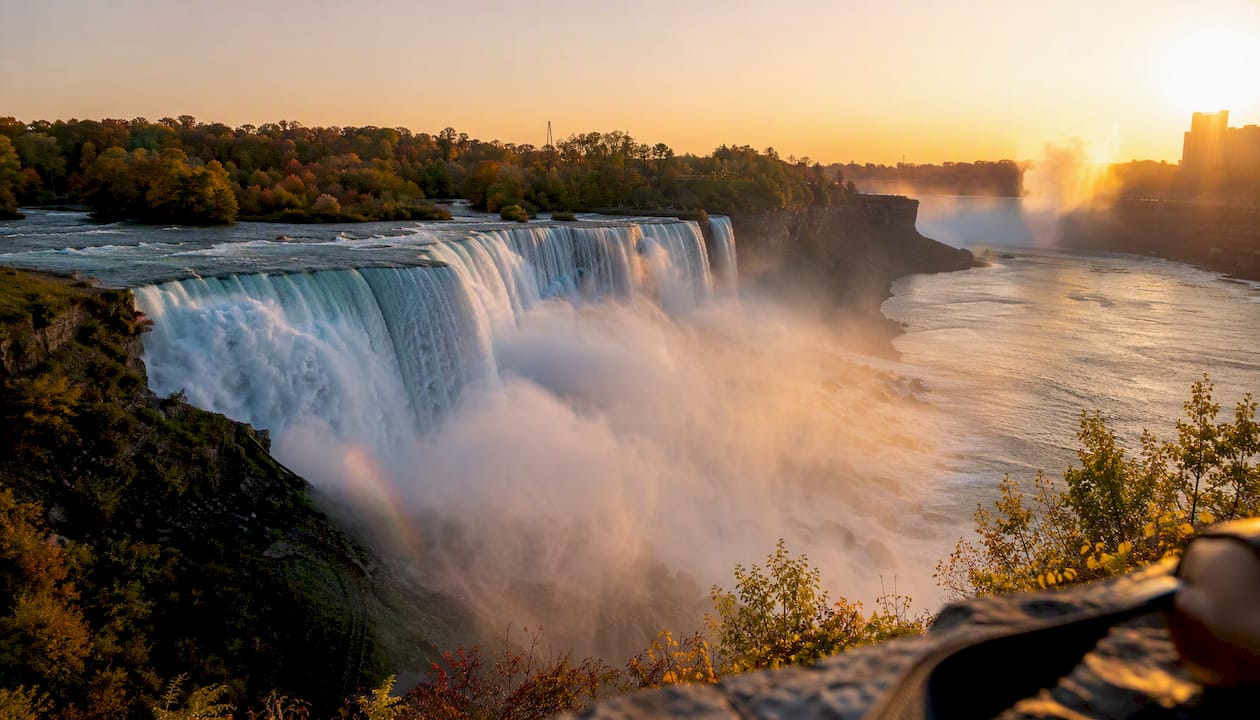
Niagara Falls is the most visited natural attraction in Canada, and for good reason. The sheer scale of Horseshoe Falls stops you cold the first time you see it. The mist, the roar, the rainbow at midday — it earns every cliché.
Top 3 things to do:
- Walk the Niagara Parkway from the falls to Niagara-on-the-Lake (or drive it)
- Take the Journey Behind the Falls or the Hornblower Niagara Cruises boat tour
- Pair the afternoon with a stop in Niagara-on-the-Lake for wine and lunch
Sample day plan:
- 7:30 AM: Leave Toronto
- 9:30 AM: Arrive, park at Rapidsview or take the WEGO bus from the GO station
- 9:45 AM–12:30 PM: Walk Table Rock, Journey Behind the Falls, boat tour
- 1:00 PM: Lunch in Niagara-on-the-Lake
- 2:30–5:00 PM: Wine tasting at one or two estate wineries
- 6:00 PM: Back in Toronto
Parking: Niagara Parks lots fill fast in summer. Rapidsview lot with the WEGO shuttle is the easiest option. Book online in advance for summer weekends.
Family/accessibility: Stroller and wheelchair accessible along the main Niagara Parkway path. Journey Behind the Falls has elevator access.
Pro Tip: Pair Niagara Falls with Niagara-on-the-Lake in a single day only if you leave Toronto by 7:30 AM. Arriving after 10:00 AM in July or August means you will spend the first hour finding parking rather than watching the falls.
Toronto Islands
Ferry time: 15 minutes from Jack Layton Ferry Terminal at the foot of Bay Street. Access: Ferry only. No cars on the islands. Bikes are welcome on the ferry (limited space; arrive early on weekends).
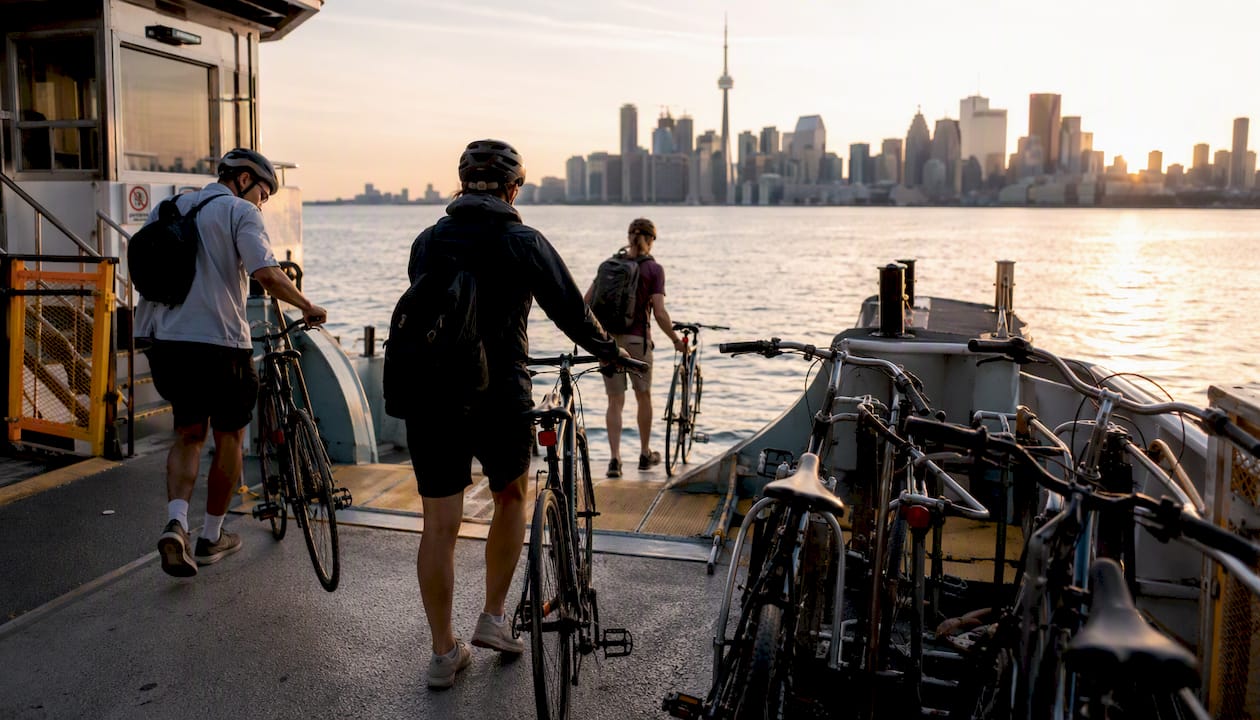
The Toronto Islands are the easiest half-day escape in the GTA. Three main islands — Centre, Ward’s, and Algonquin — offer beaches, bike paths, a small amusement park (Centreville), and a genuinely quiet pace that feels nothing like the city you just left. The skyline view from the south shore is one of the best in Toronto.
Top 3 things to do:
- Rent a bike and loop the islands (about 9 km total)
- Swim at Centre Island Beach or Hanlan’s Point Beach
- Pack a picnic and find a spot on the south shore facing the lake
Sample day plan:
- 9:30 AM: Ferry from Jack Layton Terminal (ferries run every 15–30 min)
- 10:00 AM–1:00 PM: Bike rental, beach time, Centreville for kids
- 1:00 PM: Picnic lunch on the south shore
- 2:00–4:00 PM: Explore Ward’s Island, grab a coffee at the café
- 4:30 PM: Ferry back
Cost: Ferry is roughly $10 for adults, less for children. Bike rentals are available on the island.
Family/accessibility: Centreville is great for young kids. Paved paths are accessible for most mobility needs, though some grass areas are uneven.
Niagara-on-the-Lake and the Niagara wine region
Drive time: 90 minutes (130 km). Easily combined with Niagara Falls in one day.
Niagara-on-the-Lake is one of the best-preserved 19th-century towns in Canada. The main street is lined with independent shops, restaurants, and theatre venues (the Shaw Festival runs May through October). The surrounding wine region holds dozens of estate wineries producing Riesling, Chardonnay, and the Niagara Peninsula’s famous Icewine.
Top 3 things to do:
- Walk Queen Street and stop for lunch at one of the heritage restaurants
- Visit two or three estate wineries along the Niagara Parkway or Lakeshore Road
- Catch a Shaw Festival matinée if you are visiting May–October
Sample day plan:
- 8:00 AM: Leave Toronto
- 9:30 AM: Arrive Niagara-on-the-Lake, walk Queen Street
- 11:00 AM–3:00 PM: Two winery visits with tastings and lunch
- 3:30–5:00 PM: Quick stop at Niagara Falls (15 min drive away)
- 6:30 PM: Back in Toronto
Designated driver note: Wine tasting is the main draw here. Designate a driver before you leave, or book a guided winery tour that handles transport. Several operators run day tours from Toronto that include pick-up, transport, and two or three winery stops.
Family/accessibility: Most wineries are accessible. Niagara-on-the-Lake’s main street is flat and easy to navigate with a stroller.
Bruce Peninsula and Tobermory
Drive time: 3.5 hours (280 km). This is a long day from Toronto. Many travellers prefer an overnight in Tobermory.
The Bruce Peninsula is where the Niagara Escarpment meets Georgian Bay, and the result is some of the most dramatic scenery in Ontario. Tobermory sits at the tip of the peninsula and is the gateway to Bruce Peninsula National Park. The turquoise water at Cyprus Lake and the Grotto is genuinely Caribbean-blue on a sunny day.
Top 3 things to do:
- Hike the Grotto trail at Cyprus Lake (3.5 km loop, moderate difficulty)
- Take a glass-bottom boat tour to see the Fathom Five shipwrecks
- Walk a section of the Bruce Trail along the escarpment
Sample day plan:
- 5:30 AM: Leave Toronto (early start is non-negotiable for this one)
- 9:00 AM: Arrive Tobermory, grab coffee
- 9:30 AM–1:00 PM: Hike the Grotto trail
- 1:30 PM: Lunch in Tobermory
- 2:30–4:30 PM: Glass-bottom boat tour
- 5:00 PM: Start drive back; arrive Toronto around 8:30–9:00 PM
Booking: Reserve your park entry through Parks Canada well in advance. The Grotto trail has a timed-entry system in summer and spots sell out weeks ahead.
Family/accessibility: The Grotto trail involves some uneven rock scrambling near the water. Not suitable for strollers. The boat tours are accessible.
Pro Tip: If you are visiting in July or August, book your Grotto timed-entry pass the moment reservations open. They sell out within hours. Check park fees before you go.
Algonquin Provincial Park
Drive time: 3–3.5 hours (260 km). Honestly, this one is better as a weekend. The round-trip drive alone is 6–7 hours, leaving you with a very short window in the park.
That said, if you leave Toronto by 5:00 AM and target the Highway 60 corridor, you can get a solid 4–5 hours of paddling or hiking before heading back. The park is famous for moose sightings, loon calls, and fall colour that peaks in late September and early October.
Top 3 things to do:
- Canoe on one of the accessible lakes along the Highway 60 corridor (Canoe Lake, Cache Lake)
- Hike the Lookout Trail (1.9 km, great views) or the Centennial Ridges Trail (10 km)
- Stop at the Algonquin Visitor Centre for wildlife exhibits and trail maps
Sample day plan (long day only):
- 5:00 AM: Leave Toronto
- 8:00–8:30 AM: Arrive, pick up canoe rental at Portage Store
- 9:00 AM–1:00 PM: Paddle Canoe Lake
- 1:30 PM: Lunch at the Portage Store or packed lunch
- 2:00–4:00 PM: Lookout Trail hike
- 4:30 PM: Start drive back; arrive Toronto around 8:00 PM
Family/accessibility: The Visitor Centre is accessible. Many lakeside picnic areas are flat and easy to reach. Canoe rentals are available without needing to portage.
Muskoka
Drive time: 2 hours (165 km) to Gravenhurst or Bracebridge.
Muskoka is Ontario’s cottage country, and you do not need to own a cottage to enjoy it. The towns of Gravenhurst, Bracebridge, and Huntsville each have their own character. Gravenhurst is the gateway to the Muskoka Wharf and the RMS Segwun steamship cruises. Bracebridge has a beautiful downtown waterfall. Fall colour here, typically peaking in late September, is among the best in the province.
Top 3 things to do:
- Take a steamship cruise on Lake Muskoka from Gravenhurst Wharf
- Walk the Bracebridge Falls trail and explore the downtown
- Visit a local farm stand or artisan market (summer and fall)
Sample day plan:
- 7:30 AM: Leave Toronto
- 9:30 AM: Arrive Gravenhurst, walk the Muskoka Wharf
- 10:30 AM–12:30 PM: Steamship cruise
- 1:00 PM: Lunch in Gravenhurst or Bracebridge
- 2:30–5:00 PM: Bracebridge Falls walk, browse the town
- 6:00 PM: Drive back, arrive Toronto around 8:00 PM
Family/accessibility: The Muskoka Wharf and steamship cruises are accessible. Bracebridge Falls trail is short and relatively flat.
Blue Mountain
Drive time: 1.5 hours (150 km) to Collingwood / Blue Mountain Village.
Blue Mountain works year-round. In winter, it is Ontario’s most popular ski and snowboard destination. In summer and fall, the village is a hub for mountain biking, hiking, the Blue Mountain Gondola, and the Plunge! Aquatic Centre. The village itself has good restaurants and is walkable.
Top 3 things to do:
- Ski or snowboard in winter (Ontario’s largest ski resort)
- Ride the gondola for Georgian Bay views in summer
- Hike the Georgian Trail or a section of the Bruce Trail nearby
Sample day plan (summer):
- 7:30 AM: Leave Toronto
- 9:00 AM: Arrive Blue Mountain Village
- 9:30 AM–12:30 PM: Mountain biking or gondola ride and ridge walk
- 1:00 PM: Lunch in the village
- 2:00–4:30 PM: Plunge! Aquatic Centre or afternoon hike
- 5:00 PM: Drive back, arrive Toronto around 6:30 PM
Family/accessibility: The village is very family-friendly. The gondola is accessible. Ski school and rentals are available in winter.
Hamilton waterfalls
Drive time: 1 hour (75 km). Also reachable by GO Bus from Hamilton GO Centre.
Hamilton has over 100 waterfalls within city limits, which makes it one of the most underrated day trips in the GTA. Albion Falls, Webster’s Falls, and Tews Falls are the most photogenic. Most are free to visit and require only a short walk from the parking area.
Top 3 things to do:
- Visit Albion Falls (a 19-metre cascade, easy 10-minute walk from parking)
- Hike the Spencer Gorge trail to Webster’s Falls and Tews Falls (about 2 km)
- Walk the Bruce Trail section along the Niagara Escarpment for views over the city
Sample day plan:
- 8:30 AM: Leave Toronto
- 9:30 AM: Arrive Albion Falls, short walk and photos
- 10:30 AM: Drive to Spencer Gorge (20 min)
- 11:00 AM–1:00 PM: Hike Webster’s Falls and Tews Falls loop
- 1:30 PM: Lunch in Dundas or Westdale Village
- 3:00–5:00 PM: Optional stop at Royal Botanical Gardens (15 min away)
- 6:00 PM: Back in Toronto
Pro Tip: Download trail maps before you leave. Some Hamilton waterfall trailheads have limited signage, and cell service can be spotty in the gorge. The Hamilton Conservation Authority website has printable maps for all major sites.
Family/accessibility: Albion Falls is accessible via a paved path. Spencer Gorge involves stairs and uneven terrain; not suitable for strollers.
Royal Botanical Gardens
Drive time: 1 hour (70 km), just outside Hamilton in Burlington. Public transit: Accessible by GO Bus from Hamilton GO Centre.
The Royal Botanical Gardens spans over 1,100 hectares and is the largest botanical garden in Canada. It is genuinely worth a half-day on its own. The Rock Garden is the showpiece in spring and summer. The Hendrie Valley Sanctuary is a quiet nature trail that most visitors skip, making it a good call if you want to avoid crowds.
Top 3 things to do:
- Walk the Rock Garden in spring (tulips, May) or summer (roses, June–July)
- Explore the Hendrie Valley nature trails
- Check the seasonal events calendar for guided walks and family programmes
Sample day plan:
- 9:00 AM: Leave Toronto
- 10:00 AM: Arrive RBG, start at the Rock Garden
- 10:00 AM–12:30 PM: Rock Garden and Laking Garden
- 12:30 PM: Lunch at the RBG Centre café
- 1:30–3:30 PM: Hendrie Valley trail walk
- 4:30 PM: Back in Toronto
Family/accessibility: The main garden areas are paved and accessible. Stroller-friendly. Check rbg.ca for current hours and seasonal admission fees before you go.
Elora Gorge
Drive time: 1.5 hours (100 km) to the village of Elora.
Elora is one of those places that locals love and visitors discover with genuine surprise. The gorge itself is a 22-metre limestone canyon carved by the Grand River, and the village above it is full of independent cafés, galleries, and stone-building architecture. In summer, the Elora Gorge Conservation Area is popular for swimming, cliff jumping (at designated spots), and tubing.
Top 3 things to do:
- Swim and cliff jump at the Elora Gorge Conservation Area (summer only)
- Walk the gorge trail and cross the suspension bridge
- Explore Elora village for lunch and local shops
Sample day plan:
- 8:30 AM: Leave Toronto
- 10:00 AM: Arrive Elora village, coffee and a walk
- 10:30 AM–1:00 PM: Gorge Conservation Area (swimming, trail)
- 1:30 PM: Lunch in the village
- 3:00–4:30 PM: Browse shops, walk the gorge rim trail
- 5:30 PM: Back in Toronto
Family/accessibility: The gorge trail is accessible in parts. The swimming area involves uneven terrain. Cliff jumping is for confident swimmers only; children should stay in the designated swimming areas.
Sandbanks Provincial Park and Prince Edward County
Drive time: 2–2.5 hours (200 km). This destination is better as a weekend. The drive alone is 4–5 hours return, and the county has nearly 40 wineries plus Sandbanks’ famous dune formations reaching 25 metres high.
If you are committed to a day trip, leave by 6:30 AM and focus on either Sandbanks or the wineries, not both. Trying to do the beach and three winery stops in one day is how you end up rushing everything and enjoying nothing.
Top 3 things to do:
- Swim at Sandbanks’ Outlet Beach (one of the best freshwater beaches in Ontario)
- Visit one or two wineries along the County Road 1 wine route
- Explore Picton’s main street for lunch and local shops
Sample day plan (day-trip version):
- 6:30 AM: Leave Toronto
- 9:00 AM: Arrive Sandbanks, beach time
- 12:00 PM: Lunch in Picton
- 1:30–4:00 PM: One winery visit with a tasting
- 4:30 PM: Start drive back; arrive Toronto around 7:00–7:30 PM
Booking: Sandbanks parking fills by 9:00 AM on summer weekends. Book your parking pass online in advance. Winery tastings also benefit from reservations, especially July–August.
Pro Tip: Book a guided wine tour from Toronto if you want to visit multiple wineries without a designated driver. Several operators run day tours to Prince Edward County that include transport, two or three winery stops, and lunch.
Family/accessibility: Sandbanks beaches are flat and accessible. Most wineries have accessible tasting rooms.
Rattlesnake Point Conservation Area and Cheltenham Badlands
Two quick escapes that pair well together on the same day.
Rattlesnake Point: 45 minutes from Toronto (50 km), off Highway 25 near Milton. A section of the Niagara Escarpment with cliff-top trails, dramatic views over the Credit River valley, and some of the best rock climbing in Ontario. The main loop trail is about 5 km and takes 1.5–2 hours. Entry fee is modest (check Conservation Halton for current rates). Accessible parking is available; the cliff-edge trails are not suitable for strollers.
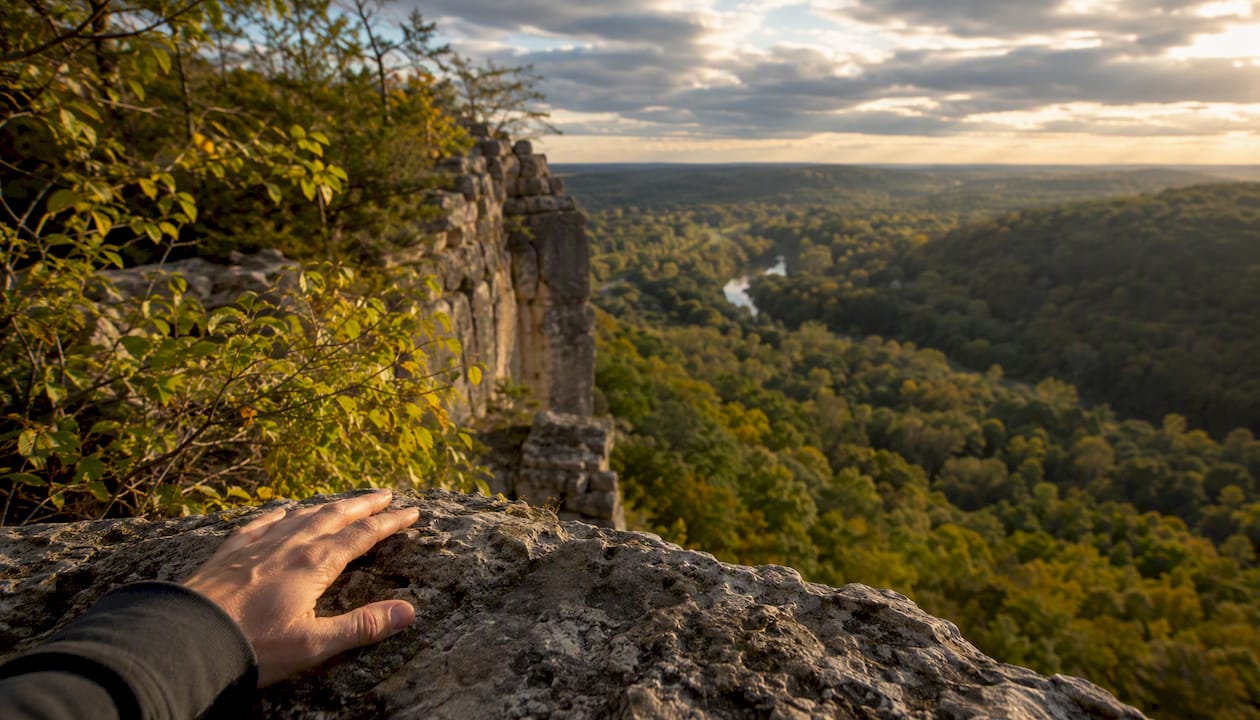
Cheltenham Badlands: 1 hour from Toronto (65 km), near Caledon. A small but striking landscape of red and grey shale ridges that looks more like the American Southwest than Ontario. Free to visit; a short boardwalk trail protects the fragile terrain. Best in morning light for photos. Combine with a stop in the village of Caledon East for coffee.
Sample combined day plan:
- 8:00 AM: Leave Toronto
- 9:00 AM–11:30 AM: Rattlesnake Point hike
- 12:00 PM: Lunch in Milton or Caledon East
- 1:30–3:00 PM: Cheltenham Badlands walk and photos
- 4:00 PM: Back in Toronto
1000 Islands
Drive time: 2.5–3 hours (280 km) to Kingston or Gananoque.
The 1000 Islands region straddles the Ontario-New York border where the St. Lawrence River widens into a maze of more than 1,800 islands. The best way to experience it is by boat. Gananoque is the most popular base for day cruises, with several operators running 1–3 hour tours. Kingston is a short drive west and worth a stop for its limestone architecture, Fort Henry, and the waterfront.
Top 3 things to do:
- Take a 1000 Islands boat cruise from Gananoque (1–3 hour options available)
- Visit Fort Henry National Historic Site in Kingston
- Walk the Kingston waterfront and browse the Farmers’ Market (Tuesdays and Saturdays)
Sample day plan:
- 6:30 AM: Leave Toronto
- 9:30 AM: Arrive Gananoque, book boat cruise
- 10:00 AM–12:00 PM: 1000 Islands cruise
- 12:30 PM: Lunch in Gananoque
- 2:00–5:00 PM: Drive to Kingston, Fort Henry or waterfront walk
- 5:30 PM: Start drive back; arrive Toronto around 8:30 PM
Family/accessibility: Boat cruises are generally accessible; confirm with the operator. Fort Henry has accessible areas. Kingston’s waterfront is flat and stroller-friendly.
Check Destination Toronto’s day-trip listings for current tour operators and seasonal schedules across all these destinations.
Time budget and cost summary for a sample subset:
| Destination | Recommended time on the ground | Typical day cost (CAD, per adult) |
|---|---|---|
| Niagara Falls + Niagara-on-the-Lake | 6–8 hours | — |
| Toronto Islands | 4–6 hours | $10–$30 |
| Hamilton waterfalls | 4–5 hours | $0–$20 |
| Elora Gorge | 5–6 hours | $20–$50 |
| Blue Mountain (summer) | 5–7 hours | $40–$150 |
| Rattlesnake Point + Cheltenham Badlands | 5–6 hours | $10–$30 |
| 1000 Islands | 6–8 hours | — |
How to pick the right day trip for your group
Three questions cut through the noise fast.
Step 1: How much driving time do you actually have?
If your total round-trip driving budget is under 3 hours, stay within 1–1.5 hours of downtown. That means Hamilton, Rattlesnake Point, Cheltenham Badlands, the Toronto Islands, or the Royal Botanical Gardens. These are the destinations where you arrive with energy and leave without feeling like the drive was the whole day.
If you can handle 3–4 hours of driving total, Niagara Falls, Niagara-on-the-Lake, Elora, Blue Mountain, and Muskoka all open up. These are the sweet-spot day trips where the destination genuinely rewards the drive.
Anything beyond 4 hours of round-trip driving (Bruce Peninsula, Algonquin, 1000 Islands, Prince Edward County) is better as a weekend. You can do them in a day, but you will spend more time in the car than at the destination unless you leave before sunrise.
Step 2: What does your group actually want to do?
- Want a beach? Sandbanks (weekend), Wasaga Beach (1.5 hrs), or Toronto Islands (15 min ferry)
- Want a short hike? Hamilton waterfalls or Rattlesnake Point
- Want wine? Niagara-on-the-Lake or Prince Edward County (weekend)
- Want something for kids? Toronto Islands, Centreville, Royal Botanical Gardens, or Blue Mountain Village
- Want fall colour? Muskoka or Algonquin (late September to mid-October)
- Want a scenic drive with minimal hiking? 1000 Islands or the Niagara Parkway
Step 3: Can you handle the logistics?
Some destinations require advance booking (Grotto at Bruce Peninsula, Sandbanks parking, Niagara Falls summer weekends). Others need a designated driver (any wine region). A few have limited accessibility for strollers or wheelchairs. Sorting these three questions before you pick a destination saves a lot of frustration on the day.
Pro Tip: For any wine-region day trip, designate a driver before you leave home, not in the parking lot. Or book a guided tour that handles transport. Several operators run wine-country day tours from Toronto that include pick-up, two or three winery stops, and lunch. It is the smarter call.
Practical planning tips for a smooth day out
Getting the logistics right is half the battle. Here is what actually matters.
Before you leave:
- Leave by 7:00–8:00 AM for any destination over 1.5 hours away. Friday afternoon traffic on the 400-series highways adds 45–90 minutes to almost every route.
- Download offline maps (Google Maps or Maps.me) for areas with spotty cell coverage, including Hamilton gorge trails and rural Prince Edward County roads.
- Book Niagara Falls attractions, Sandbanks parking, and Bruce Peninsula park entry 1–3 months ahead for summer weekends. These sell out.
- Check Parks Canada reservations for any national park entry that requires advance booking.
Getting there without a car:
- Niagara Falls: Seasonal GO Train from Union Station on weekends. Check GO Transit for current schedules and fares.
- Hamilton: GO Bus from Hamilton GO Centre, then local transit or a short taxi to waterfall trailheads.
- Royal Botanical Gardens: GO Bus to Burlington, then a short ride.
- Toronto Islands: Ferry from Jack Layton Ferry Terminal. Ferries run every 15–30 minutes in peak season; arrive 30 minutes early on summer weekends.
Safety at outdoor sites:
- Hamilton waterfalls: Stay on marked trails. The gorge edges are not fenced in all areas. Pre-download trail maps from the Hamilton Conservation Authority.
- Bruce Peninsula: The Grotto involves rock scrambling near cold, deep water. Wear proper footwear. Do not swim alone.
- Provincial parks: Carry bear spray in Algonquin if you are hiking remote trails. Store food in your car, not your tent.
- Exposed cliff trails (Rattlesnake Point, Bruce Trail): Keep children and dogs close to the edge. Wind can be strong on the escarpment.
- Beach safety: Sandbanks and Wasaga Beach have lifeguards in peak season, but hours are limited. Check current conditions before swimming.
Timing and crowds:
The Niagara Falls area sees its heaviest crowds from late June through August, with peak congestion on summer long weekends. Arriving before 9:30 AM makes a real difference. Prince Edward County wineries are busiest on summer Saturdays; a weekday visit or a Sunday morning arrival is noticeably quieter.
Local travel writers consistently recommend the “slow day trip” approach: pick one town or one trail, linger over lunch, and resist the urge to hit five stops. You will enjoy the day more and feel less like you spent it in a car.
Pro Tip: Toronto Tourism recommends pairing Niagara Falls with Niagara-on-the-Lake in a single day only if you leave by 7:30 AM. Arriving after 10:00 AM in summer means the falls parking is full and the winery tasting rooms are already busy by the time you arrive.
Key takeaways
The single most useful rule for planning day trips from Toronto: match your drive time budget to the destination before you pick one, and book anything in the Niagara or Bruce Peninsula corridor at least a month ahead in summer.
| Point | Details |
|---|---|
| Drive time is the first filter | Stay within 1–1.5 hours each way if you want more than 5 hours on the ground. |
| Book summer destinations early | Niagara Falls, Sandbanks, and Bruce Peninsula Grotto sell out weeks ahead in July–August. |
| Some destinations need a weekend | Prince Edward County and Algonquin are better as overnights given the 2–3.5 hour drive each way. |
| Wine regions need a plan | Designate a driver or book a guided tour before you leave; do not sort it out on arrival. |
| Dayhop builds the plan for you | Use Dayhop to compare drive times, filter by activity type, and add bookings in one place. |
A local perspective on what makes a great day trip
The list above covers the classics, and they are classics for good reason. But the most memorable day trips from Toronto are rarely the ones where you tried to do the most. They are the ones where you slowed down enough to actually be somewhere.
Hamilton’s waterfall circuit is a perfect example. Most visitors rush between Albion Falls, Webster’s Falls, and Tews Falls in two hours and leave feeling like they checked boxes. The better version of that day is spending the whole morning at Spencer Gorge, eating lunch in Dundas, and walking the escarpment trail in the afternoon. You see less, but you actually feel like you went somewhere.
The same logic applies to Elora. The gorge is beautiful, but the village is what makes it worth the drive. A slow morning on the patio of a café on Metcalfe Street, followed by a swim in the gorge, followed by a browse through the local shops — that is a day that sticks with you.
The destinations that feel the most rushed are almost always the ones where the drive time is borderline. Prince Edward County at 2–2.5 hours is the clearest case. You can do it in a day, but you will spend the whole time watching the clock. Go for a weekend and you will understand why people keep going back.
One more thing: the best day trips are the ones you actually take. Decision fatigue is real, and the gap between “we should go somewhere this weekend” and “we are in the car at 7:30 AM” is where most day trips die. Pick one destination, commit to it the night before, and go. The planning does not need to be complicated.
Dayhop makes day-trip planning fast and personal
Picking a destination is the fun part. Figuring out drive times, checking park fees, finding a place for lunch, and making sure the winery you want actually takes walk-ins — that is where the day can start to feel like homework.
Dayhop is built for exactly this. Tell it your starting point, your group size, your activity preference, and how much time you have. It compares travel time against on-the-ground time, flags destinations that need advance booking, and adds accessibility filters if you need them. Planning a Niagara Falls day? Dayhop maps the falls, the boat tour, and a Niagara-on-the-Lake winery stop into a timed itinerary that actually fits a single day. Planning Elora? It finds the gorge entry, a lunch spot in the village, and the best time to leave Toronto to beat the weekend traffic.
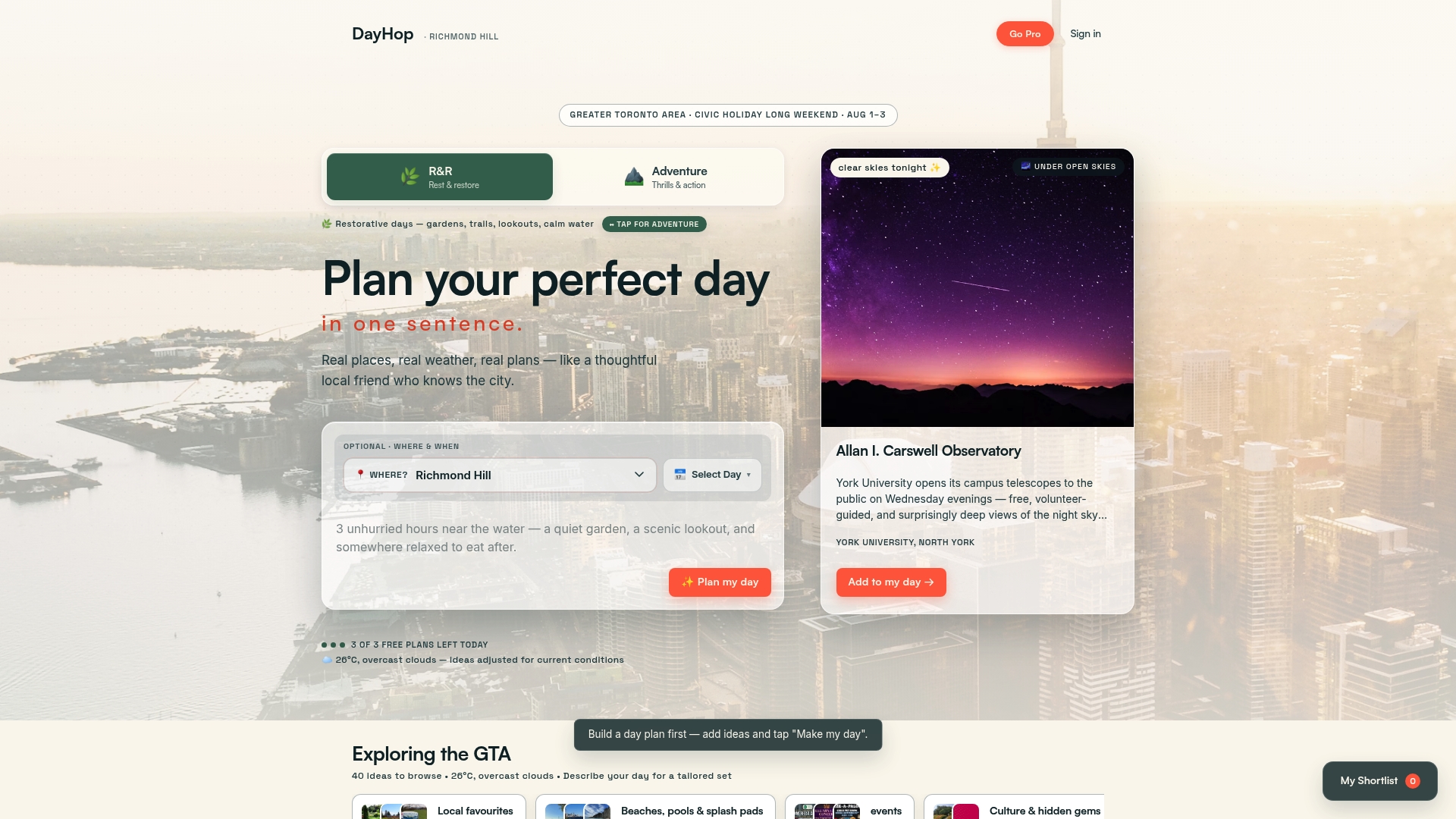
For wine-region trips, Dayhop can flag guided tasting tours so you are not sorting out a designated driver at the last minute. It connects to booking links for tours, ferries, and park entries so you can lock things in from one place.
Plan your next day trip with Dayhop and have a full itinerary ready in minutes, not hours.
Useful sources and booking links
These are the authoritative resources you will need to confirm hours, buy tickets, and check seasonal schedules before you go.
- Niagara Falls from Toronto [2026]: Complete Day Trip Guide
- [Prince Edward County from Toronto [2026]: Wine Country Guide](https://www.torontotourism.org/prince-edward-county-day-trip/)
- parks.canada.ca
- reservation.pc.gc.ca
- brucetrail.org
- rbg.ca
- parks.canada.ca
- Day Trips from Toronto
Recommended
Plan my day →