2–4 Hour Kensington Market Plan for Parents to Follow on Phone
2–4 Hour Kensington Market Plan for Parents to Follow on Phone
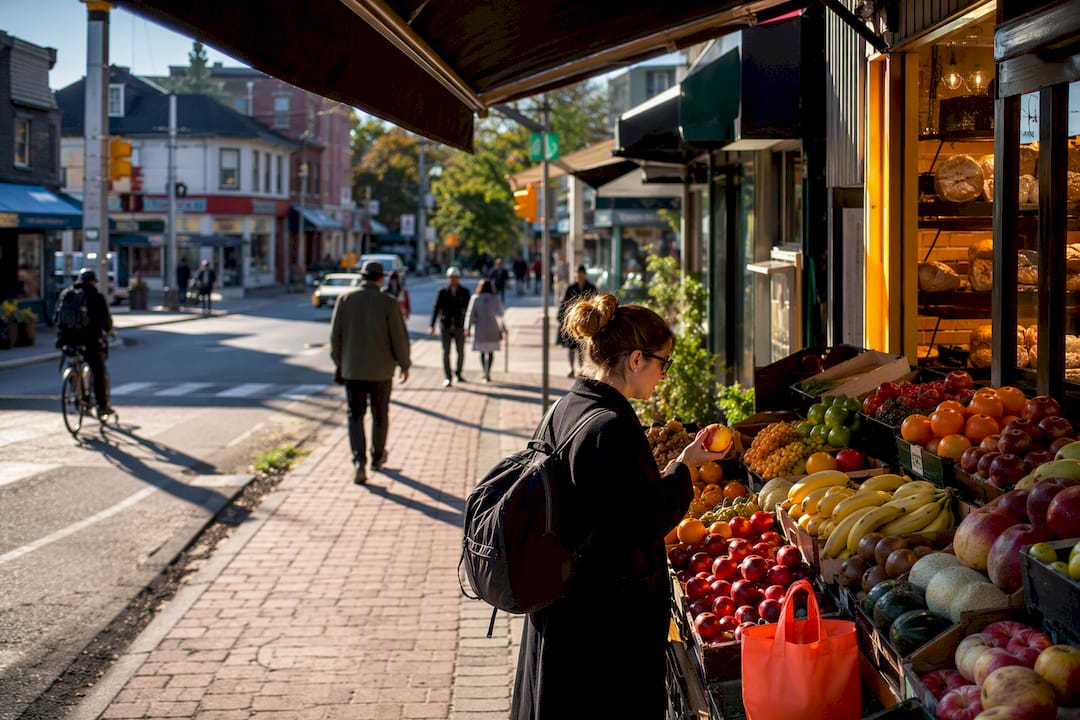
Kensington Market is a four-block multicultural market in downtown Toronto, designated a National Historic Site of Canada, packed with vintage shops, specialty grocers, and street food from a dozen cultures. The one-line plan: take the 510 Spadina streetcar in, walk Augusta Avenue, eat a patty or an empanada, browse vintage shops for twenty minutes, and finish sitting in Bellevue Square Park. Budget two to four hours. Go on a weekday late morning, or the last Sunday of the month between May and October for Pedestrian Sundays.
TL;DR:
- Most street food prices range from $5 to $10 per plate, with jumbo empanadas costing around $8.50, making it affordable compared to sit-down dining.
- Parking at the perimeter lots fills by mid-morning on weekends, so arriving early or using transit is recommended for easier access.
- Visiting on a weekday late morning offers quieter sidewalks and less crowded vintage shops, ideal for families with small children.
- Pedestrian Sundays from May to October attract big crowds and long food lines, so aim for a regular weekday visit if avoiding congestion is a priority.
- Vintage jackets typically cost from $25 to $60, and shoppers should set a budget of $30 to $50 per person to prevent overspending.
Table of Contents
- Kensington Market guide to history and layout
- Best eats in Kensington Market and what to order
- Where to shop and how to budget your time
- Pedestrian Sundays and other events worth timing around
- Getting to Kensington Market and moving around once you’re there
- A timed day plan you can follow from your phone
- Budgeting for a Kensington Market visit beyond food
- Seasonal notes: weather, crowds, and what changes by month
- Safety and accessibility for every visitor
- Why a live day plan beats a printed list here
- Plan your Kensington Market day with DayHop
- Sources
- FAQ
Kensington Market guide to history and layout
The market started as a Jewish pushcart district in the early 1900s, when peddlers sold goods off carts along Kensington Avenue. Over the following decades, Portuguese, Caribbean, Latin American, and East Asian families moved in, opening bakeries, fish shops, and grocers that stayed put even as the city changed around them. That layering is why you’ll find a Jamaican patty shop next to a Chinese barbecue counter next to a Portuguese bakery, all on the same block.
The official boundary runs College Street to the north, Dundas Street West to the south, Spadina Avenue to the east, and Bathurst Street to the west, a designation that made the market a National Historic Site for its intact streetscape and living immigrant history. It’s a tight four-block grid you can walk end to end in about 10 minutes.
The streets worth knowing: Augusta Avenue (the retail spine), Baldwin Street (food-forward, quieter), Kensington Avenue (vintage and costume shops), and St. Andrew Street (residential, some hidden cafes). Sidewalks are uneven brick and narrow in spots. A stroller works fine on Augusta and Baldwin, but expect to fold it up if you duck into a packed vintage shop. Pull up a map before you go so you’re not squinting at your phone mid-crosswalk.
Best eats in Kensington Market and what to order
Street food is the reason most people show up, and it’s cheap enough that you can sample three or four things without blowing your food budget for the week.
- Jamaican patties from the market’s bakeries run $4 to $6 and travel well if you’re eating on a bench.
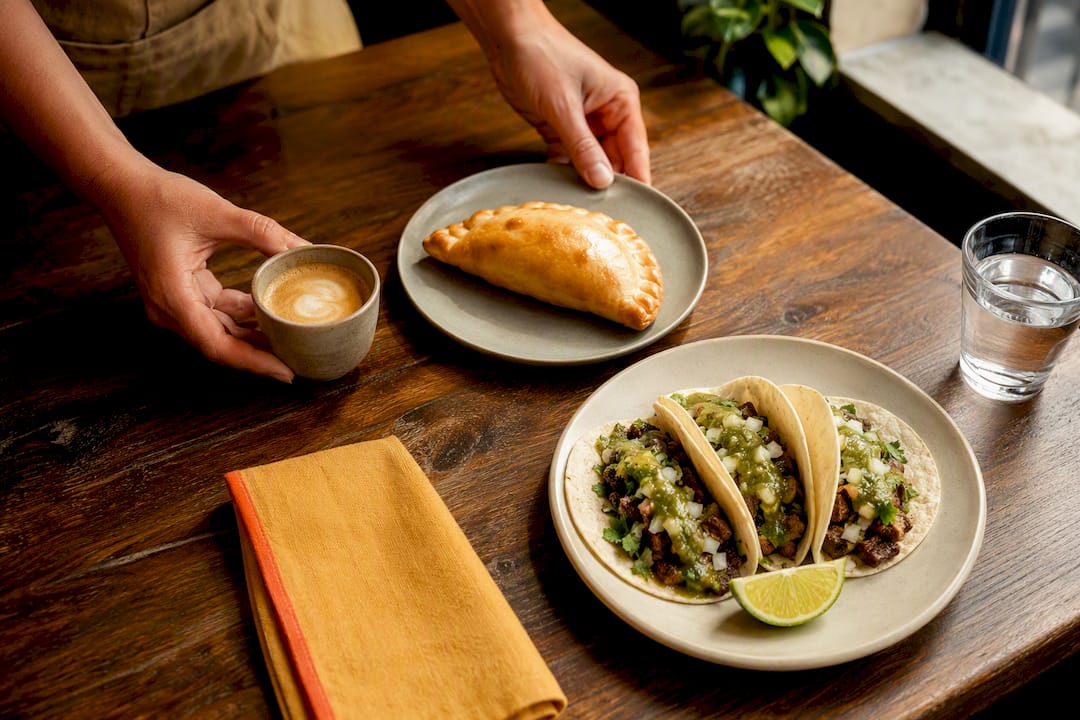
- Jumbo Empanadas is the stall to know on Baldwin. A large empanada was reported at $8.50 in a Toronto Star feature, and it’s big enough to split with a kid.
- Seven Lives does Baja-style tacos and is the busiest lunch line in the market. Go before noon or after 1:30 pm if you don’t want to stand in a queue on a hot sidewalk.
- Moonbean Coffee on Kensington Avenue is the reliable coffee stop. Grab a cup and let the kids watch the street from the patio chairs out front.
Statistic Callout: A jumbo empanada at $8.50 is one of the clearest price benchmarks in the market. It tells you street food here runs $5 to $10 a plate, which makes Kensington Market cheaper than most Toronto sit-down lunches.
For a proper sit-down meal, Grey Gardens on Augusta Avenue holds a Bib Gourmand recognition and is worth the wait if you’ve got a stroller-free evening planned. For groceries and pantry staples, Palace Cheese & Seafood stocks fresh fish and imported cheese, and Kensington Fruit Market has the cheapest produce prices you’ll find downtown.
A tight mini food route: start at Moonbean for coffee, walk two minutes to Jumbo Empanadas for a mid-morning snack, then finish at Seven Lives for tacos around 12:30 pm, just after the lunch rush thins out. Pedestrian Sundays push every line longer, so if you’re food-focused, go on a regular weekday instead.
Where to shop and how to budget your time
Augusta Avenue is the shopping spine, with the highest concentration of vintage stores between Baldwin and Nassau Street. Kensington Avenue runs a close second, especially for costume shops and record stores that don’t exist anywhere else in the city.
Vintage jackets typically run $25 to $60 or more depending on the brand and condition, and the shops don’t haggle much, so check zippers and seams before you commit. Artisan goods and pantry items cluster around Kensington Fruit Market and the Latin American grocers on Augusta, where you’ll find dried chilies, plantains, and spices you won’t see at a regular Toronto grocery store.
- Prioritise Augusta Avenue first if you only have 30 minutes.
- Skip aisles that look packed with tourists taking photos rather than shopping.
- Carry a tote bag. Most vintage shops don’t offer paper bags, and plastic ones cost extra.
- Leave the stroller outside cramped shops and carry your kid instead. Aisles are often 60 cm wide.
Pro Tip: Try on vintage jackets before noon on a weekday. Fitting rooms are one-person closets in most shops, and the line for them gets long by early afternoon on weekends.
Pedestrian Sundays and other events worth timing around
- Pedestrian Sundays happen the last Sunday of every month from May through October. Streets close to cars, vendors set up extra stalls, and buskers play through the afternoon, usually from around 11 am to 6 pm.
- Winter Solstice Festival runs in December and turns the market into a community lantern parade and gathering, less about shopping and more about neighbourhood spirit.
- Regular weekday mornings (10:30 am to 1 pm) are your quietest window if you’re bringing a toddler who needs space to wander without getting jostled.
Pedestrian Sundays draw big crowds and long food lines, which is great for atmosphere but rough with a stroller. If you want the market without the density, go on a weekday and save the street festival for a visit without small kids in tow.
Getting to Kensington Market and moving around once you’re there
The 510 Spadina streetcar stops at Spadina and Dundas, a two-minute walk into the market’s east edge. The 506 College streetcar stops at College and Bathurst, putting you at the north boundary. From the Art Gallery of Ontario, it’s a 12-minute walk south down Beverley Street. From University of Toronto’s main campus, figure 15 minutes on foot.
Driving is a mistake most visitors make once. Streets are narrow, one-way in sections, and residential parking takes priority. Paid lots exist on the perimeter along Bathurst and Spadina, but they fill by mid-morning on weekends and during Pedestrian Sundays. If you’re coming from Richmond Hill, that’s roughly 35 to 45 minutes by car depending on traffic on Highway 404 and the Don Valley Parkway, so factor in a lot of search or park farther out and walk.
Bike Share Toronto has docking stations along Spadina and College if you’re coming from downtown. Washrooms and bench seating are limited inside the market itself. Bellevue Square Park, home to the Al Waxman statue, is your best bet for both, plus a splash pad in summer.
A timed day plan you can follow from your phone
This is the plan. Follow it in order and you’ll cover food, shopping, and a rest stop without backtracking.
- 10:00 am — Arrive via the 510 Spadina streetcar, get off at Dundas and Spadina. If driving from Richmond Hill, budget about 40 minutes and park in the lot at Bathurst and Nassau (the lot fills by mid-morning on weekends, so aim earlier).
- 10:15 am — Coffee at Moonbean Coffee on Kensington Avenue. Grab a bench outside if the patio’s full.
- 10:35 am — Walk Augusta Avenue north to south, browsing vintage shops. Give this 45 minutes if you’ve got a stroller, since aisles slow you down.
- 11:30 am — Snack stop at Jumbo Empanadas on Baldwin Street ($8.50 for the large one, easy to split).
- 12:00 pm — Lunch at Seven Lives for tacos, timed just before the worst of the lunch rush.
- 12:45 pm — Walk to Bellevue Square Park, five minutes away. Let kids run near the splash pad (summer) or the open lawn, and use the public washrooms there.
- 1:30 pm — Optional stop: Kensington Fruit Market or Palace Cheese & Seafood if you want to bring something home for dinner.
- 2:00 pm — Head out via the 510 Spadina streetcar or the 506 College streetcar, depending on which side of the market you end up on.
Pro Tip: Pack a collapsible stroller if you’re going on a weekend. You’ll fold it more times than you expect once you start ducking into shops on Kensington Avenue.
The one honest caveat: the Bathurst and Nassau parking lot fills by mid morning most weekends, and Seven Lives’ line during peak lunch hour is longer than the tacos are worth if you’re in a rush. If the lot’s full or the line wraps the corner, skip ahead to Jumbo Empanadas and come back for tacos another day.
Budgeting for a Kensington Market visit beyond food
Food is cheap here, but the real spending happens in the shops if you’re not careful. A vintage jacket at $25 to $60 adds up fast if you’re browsing with kids who want souvenirs too. Set a shopping cap before you walk in, something like $30 to $50 per person, and stick to it.
Events don’t cost anything to attend. Pedestrian Sundays and the Winter Solstice Festival are free to walk through, though you’ll spend more on food simply because you’re tempted by more vendors. Parking, if you drive, runs roughly $3 to $5 an hour at the perimeter lots, which adds up over a three-hour visit faster than the streetcar fare does.
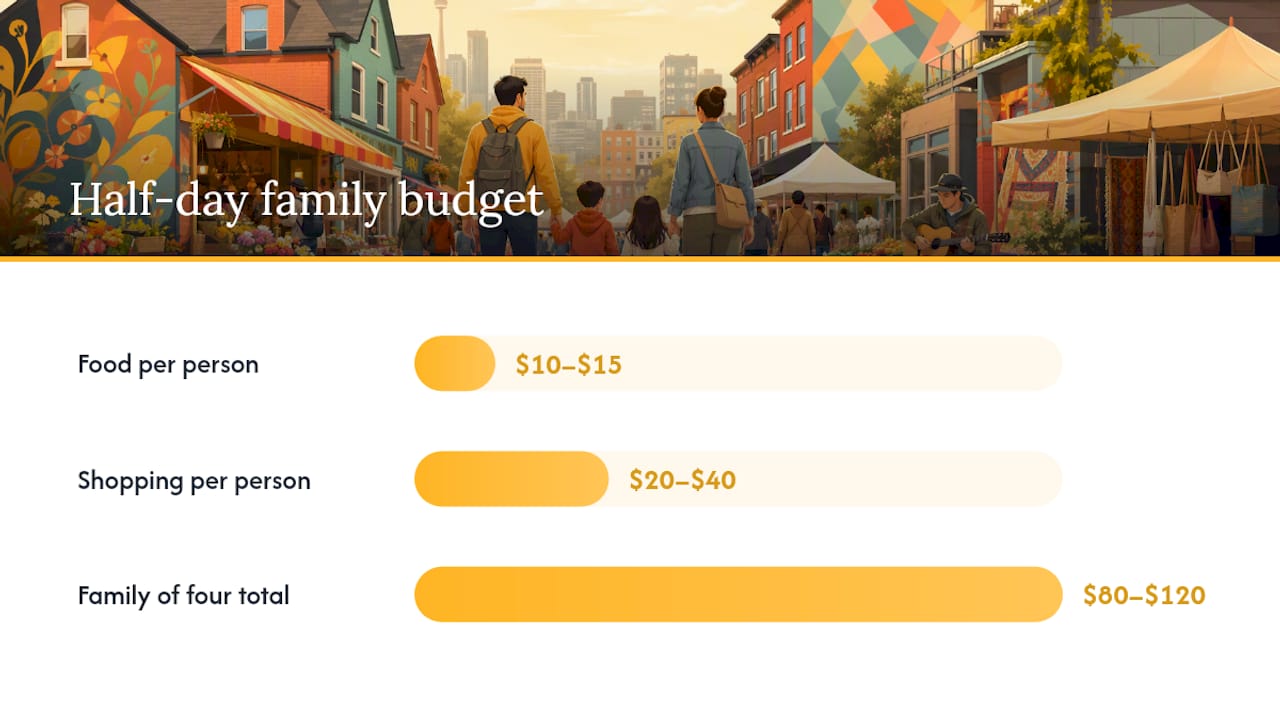
A realistic family budget for a half-day visit: $10 to $15 per person on food, $20 to $40 on shopping if you’re buying, and transit fare or parking on top. That puts a family of four at roughly $80 to $120 for a relaxed, unhurried visit without buying anything major.
Skip the temptation to bring cash only. Most vendors and shops now take tap, though a few of the smallest fruit stands still prefer cash for amounts under $5.
Seasonal notes: weather, crowds, and what changes by month
Summer is the market at full capacity. Patios spill onto sidewalks, Pedestrian Sundays draw the biggest crowds, and produce stands overflow with stone fruit and corn. It’s also the hottest and most crowded stretch, so bring water if you’re out past noon.
Fall thins the crowds and cools the air, which makes late September and October the most comfortable window for a stroller-friendly walk. Shops stay open the same hours, but you’ll get more room on the sidewalk.
Winter slows things down considerably. Several vendors reduce hours, and the Winter Solstice Festival in December is the one event that pulls people back out despite the cold. Dress warm and expect some shops to close earlier, around 5 or 6 pm instead of the usual evening hours.
Spring brings the market back to life gradually, with the first Pedestrian Sunday landing in May. It’s a good middle ground: fewer crowds than summer, but everything’s open and the patios are starting to fill again.
Safety and accessibility for every visitor
Kensington Market is a walking neighbourhood with narrow, sometimes uneven sidewalks, so watch your footing if you’re pushing a stroller or using a mobility aid. Curb cuts exist at most main intersections along Augusta and Spadina, though some of the smaller side streets don’t have them.
Crowds during Pedestrian Sundays get dense enough that a wheelchair or stroller needs extra patience and time to navigate. If mobility is a concern, a weekday morning visit gives you far more breathing room.
The market is generally safe during daylight hours, with steady foot traffic and open shops providing natural visibility. Standard city awareness applies: keep bags zipped in busy pockets near Kensington and Baldwin, and keep an eye on kids near the streetcar tracks on Spadina, since traffic doesn’t stop for browsing pedestrians the way the closed-off Pedestrian Sunday streets do.
Washrooms are limited to Bellevue Square Park and a handful of cafes that reserve them for paying customers, so plan your bathroom stops around those rather than assuming you’ll find one nearby.
Why a live day plan beats a printed list here
A guide like this gets you 80% of the way, but Kensington Market changes fast on the ground. A shop closes early, rain moves your afternoon indoors, or a line at Seven Lives eats your lunch window. Dayhop builds customised day plans that adjust in real time to weather and your own preferences, which matters in a neighbourhood this dense, where a five minute delay can mean the difference between a quiet aisle and a shoulder-to-shoulder one.
If you’re pairing this visit with more of the city, DayHop’s Toronto weekend itinerary maps out a full neighbourhood-by-neighbourhood plan, and DayHop’s street art guide helps you find the murals near Graffiti Alley just south of the market.
— Mugendi
Plan your Kensington Market day with DayHop
A digital planner and a paid subscription plan can build customised day plans that adjust for weather and user preferences, which is helpful in a dense, unpredictable neighbourhood like Kensington Market. Instead of guessing whether Seven Lives has a line or whether rain is going to push your afternoon indoors, you get a plan that shifts with the day instead of locking you into a printed itinerary from three months ago.
For readers who want a ready, timed Kensington Market plan on their phone before they even leave the house, DayHop’s City Guides give you exactly that: stops, timing, and transit notes built for a parent moving through the market on a Saturday, not a travel writer with an afternoon to spare.
Sources
For official boundary and designation details, see Parks Canada’s National Historic Site entry. For event timing and transit, see Toronto Tourism’s neighbourhood guide and Destination Toronto’s visit guide. For a recent food price example, see the Toronto Star’s feature on Jumbo Empanada. For restaurant picks beyond the market, Brévant Guide curates a selective list of Canadian restaurants worth checking.
- Kensington Market National Historic Site — Parks Canada
- Kensington Market Toronto 2026: Complete Neighbourhood Guide — Toronto Tourism
- This $8.50 jumbo empanada is a Kensington Market classic — The Toronto Star
FAQ
What is the best part of Kensington Market to visit?
Augusta Avenue is the strongest single stretch, packing the highest concentration of vintage shops, cafes, and street food into one walkable block. Baldwin Street runs a close second for food specifically, with Jumbo Empanadas and several bakeries clustered together.
What is the best time to go to Kensington Market?
Weekday late mornings, roughly 10:30 am to 1 pm, give you the quietest browsing without missing open hours. If you want the full street-festival atmosphere, go on the last Sunday of May through October for Pedestrian Sundays, though expect longer food lines.
What is Kensington Market famous for?
Kensington Market is known for its dense mix of international street food, independent vintage shops, and a layered immigrant history that earned it National Historic Site of Canada status. It’s the kind of place where a Jamaican patty shop, a Portuguese bakery, and a Latin American grocer sit on the same block.
Is Kensington Market better than St. Lawrence Market?
They serve different purposes. St. Lawrence Market is a formal indoor food hall with fixed vendor stalls, while Kensington Market is an open-air, multicultural neighbourhood built around independent shops and street food. If you want a structured food market, pick St. Lawrence; if you want a longer walk through vintage shops and multiple cultures’ street food, Kensington Market fits better.
How much does a Kensington Market visit typically cost?
Plan for $10 to $15 per person on food and $20 to $40 more if you’re buying vintage or artisan goods. A family of four can expect $80 to $120 total for a relaxed half-day visit without major purchases.
Recommended
Plan my day →