5 Must See Heritage Sites in Toronto With Ready Half Day Routes
5 Must See Heritage Sites in Toronto With Ready Half Day Routes
Toronto’s heritage sites span three categories: nationally designated landmarks, municipally protected buildings, and living heritage precincts you can still wander through today. Start with five: Fort York, the Distillery District (Gooderham and Worts), Union Station, Old Toronto City Hall, and Todmorden Mills. Each carries its own designation story and its own reason to visit. This guide groups them by neighbourhood, explains what “designated” actually means, and shows you how to turn a list of plaques into an actual day out.
TL;DR:
- Most heritage sites in Toronto are either nationally designated landmarks or municipally protected buildings, with protection levels affecting how they can be changed.
- Sites like Fort York and Old Toronto City Hall hold national significance, with plaques indicating legal protections under specific heritage laws.
- Planning visits around local heritage zones, such as Harbourfront or the Distillery District, allows for efficient exploration without extensive transit.
- Supporting these sites through volunteering, donations, and attendance helps address ongoing threats like redevelopment and deterioration.
- Using tools like Dayhop can help create flexible, weather-aware itineraries that maximize heritage site visits in a single day.
Table of Contents
- What counts as a heritage site in Toronto?
- Grouping heritage sites by neighbourhood for an easy day out
- Tickets, accessibility, and the best time to go
- Designated, listed, or neither: how Toronto protects its heritage
- Planning your heritage day with Dayhop
- Who actually protects Toronto’s heritage sites
- The pressure points threatening Toronto’s older buildings
- How you can help protect Toronto’s heritage sites
- Why Toronto’s layered history deserves a slower look
- Plan your heritage day with Dayhop
- Where to verify heritage site details
- Sources
What counts as a heritage site in Toronto?
Heritage sites in Toronto fall into two rough camps: places recognized by Ottawa as nationally significant, and buildings the city itself protects for their local value. Understanding which is which changes how you plan your visit, and honestly, it changes what you’re looking at when you get there.
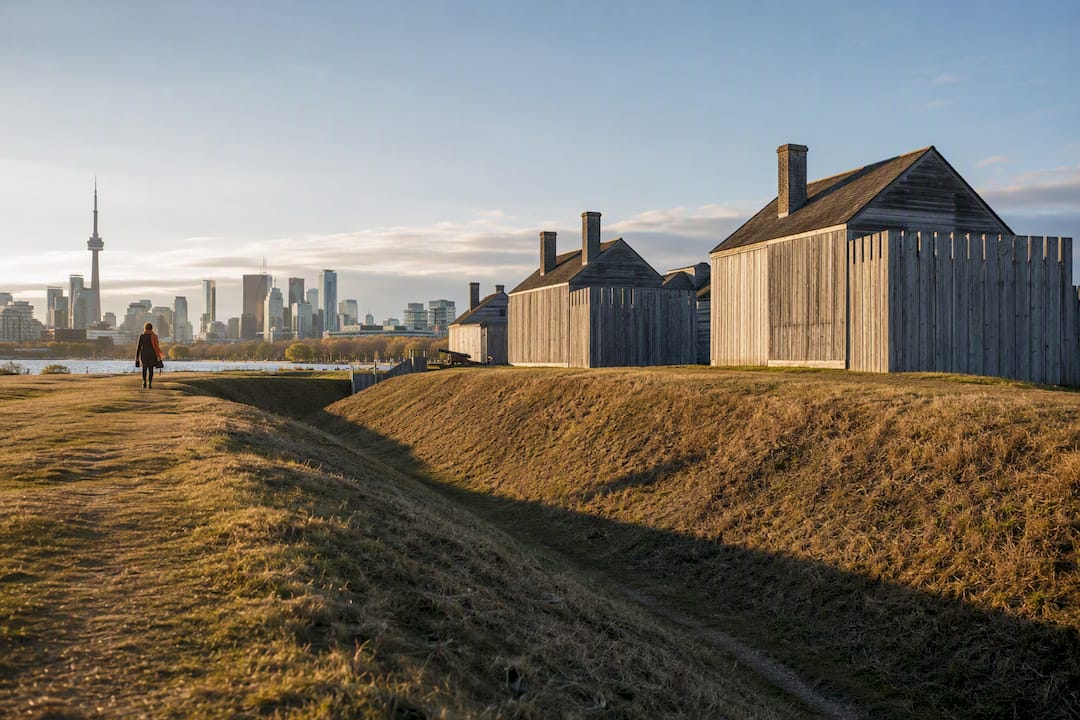
Fort York National Historic Site anchors the harbourfront cluster and remains the most complete War of 1812 site in Ontario. Parks Canada designated Fort York in 1923, and seven original buildings from that era still stand on the grounds, which is rare for a site this close to a downtown core. Walk the earthworks, check out the officers’ quarters, and picture the site as it was before the Gardiner Expressway existed a stone’s throw away.
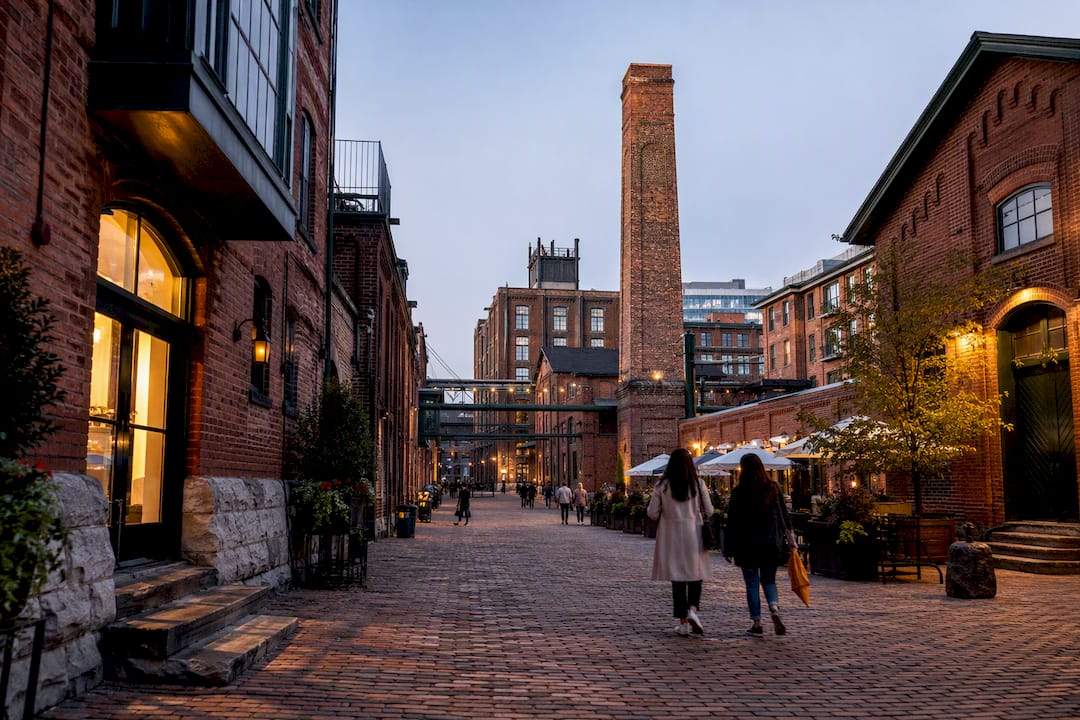
Gooderham and Worts, better known as the Distillery District, tells a different kind of story: industrial heritage that got a second life. The complex once housed one of the largest distilleries in the British Empire, and its cluster of Victorian industrial buildings is now a car-free precinct of galleries, shops, and patios. What makes it work as heritage is that the brick, timber, and cobblestone are original. You’re not walking through a themed reconstruction. You’re walking through an actual 19th-century industrial site that happened to find new tenants.
Union Station does double duty as a working transit hub and a heritage showpiece. The Beaux-Arts terminal occupies an entire city block and remains one of Toronto’s most cited examples of civic-scale architecture from the early 20th century. The Great Hall, with its vaulted ceiling and rows of columns, was built to make train travel feel monumental. It still does that job, even with a Tim Hortons in the concourse.
Old Toronto City Hall and York County Court House sit at the corner of Queen and Bay, and it’s easy to miss if you’re focused on the newer, curvier City Hall next door. Built between 1889 and 1899 under architect E.J. Lennox, the building was designated a national historic site in 1984 for its Richardsonian Romanesque style, all rough stone, deep arches, and a clock tower that dominated the skyline before skyscrapers arrived. It now houses provincial court functions, but the exterior and the entrance hall are worth a slow walk past.
Todmorden Mills is the one most visitors skip, and that’s a mistake. The site combines industrial-era buildings, an old brewery, a paper mill, and worker’s cottages with a 9.2-hectare Wildflower Preserve maintained largely by volunteers. It’s heritage and nature in one stop, tucked into the Don Valley, and it draws a fraction of the crowds you’ll find downtown.
A few more sites round out a serious heritage day:
- Casa Loma — the Gothic Revival “castle” built for financier Sir Henry Pellatt, popular for its tunnels, towers, and gardens.
- Spadina Museum — an Edwardian-era estate next door to Casa Loma, showing how a wealthy Toronto family actually lived in the 1920s and 1930s.
- St. Lawrence Market — a working market since the early 1800s, and one of the city’s oldest continuously operating public spaces.
Grouping heritage sites by neighbourhood for an easy day out
Toronto’s biggest heritage sites cluster into a handful of walkable zones, which makes planning far easier than it sounds. You don’t need a car, and in most cases, you don’t need much transit either.
The four groupings that matter most:
- Harbourfront and Fort York — the fort itself, plus the surrounding parkland and lakeside pathways.
- Distillery, Corktown, and St. Lawrence — Gooderham and Worts, St. Lawrence Market, and the older residential streets around them.
- Downtown core — Union Station and Old Toronto City Hall, both within a 10 minute walk of each other along Bay Street.
- Don Valley and Todmorden Mills — a quieter, greener cluster east of the downtown core.
For a compact half-day, try this: start at Union Station, walk north to Old Toronto City Hall (about 12 minutes), then continue east toward St. Lawrence Market and the Distillery District, finishing with a coffee among the industrial brick. Budget three to four hours if you want to actually stop and read the plaques.
For a fuller day, add Fort York in the morning before the crowds arrive, then take a streetcar or a 25 minute walk east into the downtown cluster for the afternoon. Save Todmorden Mills for a separate outing. It’s east of the core and pairs better with a Don Valley nature walk than with a downtown architecture tour.
Pro Tip: Visit Union Station and Old City Hall before 10 a.m. on weekdays to avoid the commuter rush, then loop into St. Lawrence Market right as the lunch crowd starts thinning out around 2 p.m.
Tickets, accessibility, and the best time to go
Most of Toronto’s heritage sites are easier to visit than people expect, but a few logistics are worth sorting out before you go.
- Hours and tickets: Fort York, Casa Loma, and Spadina Museum charge admission and have seasonal hours that shift in winter, so check each site’s official page before heading out rather than relying on a search result.
- Free admission: Toronto’s city-run history museums, including Todmorden Mills and Spadina Museum, offer free general admission year-round, which makes them an easy add-on to any itinerary.
- Accessibility: Union Station, Old Toronto City Hall, and the Distillery District are all street-level or ramp-accessible with paved paths, while Fort York’s grounds include some uneven, grass-covered terrain around the earthworks.
- Best season: Outdoor sites like Fort York and Todmorden Mills shine from May through October; indoor stops like Union Station and Casa Loma work fine in winter, though Casa Loma’s gardens lose most of their appeal once the snow arrives.
- Crowd patterns: Weekday mornings beat weekend afternoons everywhere on this list, especially at the Distillery District during festival season.
Designated, listed, or neither: how Toronto protects its heritage
Not every historic-looking building in Toronto carries the same legal protection, and the difference matters if you’re trying to understand what you’re looking at.
A National Historic Site designation comes from Parks Canada and recognizes places of significance to the whole country. Fort York got that status in 1923; Old Toronto City Hall followed in 1984. These designations don’t come with automatic funding, but they carry symbolic weight and usually mean solid interpretive signage on-site.
At the municipal level, Toronto works with two tiers. A property can be listed on the City’s Heritage Register, meaning the city has identified cultural or architectural value worth tracking, but hasn’t formally protected it. A designated property, by contrast, is protected under the Ontario Heritage Act, and any major alteration or demolition proposal triggers a mandatory review. Listed status is a flag; designation is a legal shield. The Heritage Register works as a proactive planning tool, catching sites worth evaluating before a developer’s application forces the issue.
For visitors, this mostly matters as context: a plaque on a designated building usually means the structure itself is legally protected, not just historically noted.
Planning your heritage day with Dayhop
Reading about Fort York’s earthworks is one thing. Actually getting from there to lunch to the Distillery District without wasting an hour on transfers is another. That’s the gap Dayhop is built to close.
Dayhop builds a route around what you actually want to do that day, factoring in weather, walking distance, and how much time you’ve got. A sample half-day plan might look like this:
- 9:30 a.m.: Fort York (allow a generous amount of time for the grounds and museum buildings)
- 11:15 a.m.: Harbourfront walk east toward downtown (30 minutes)
- 12:00 p.m.: St. Lawrence Market for lunch (60 minutes)
You can adjust any leg on the fly if it starts raining or you want to linger longer at the fort. For more Toronto route ideas, check out Dayhop’s guide to neighbourhood-based weekend itineraries or its list of must-see first-timer stops.
Who actually protects Toronto’s heritage sites
Government designations get the headlines, but most of the day-to-day work of protecting Toronto’s heritage happens through local organizations, not government offices. Heritage Toronto runs walking tours, plaque programs, and public talks that keep sites like Todmorden Mills and the Distillery District in public conversation year-round. Without that kind of ongoing interpretation, a plaque is just a plaque.
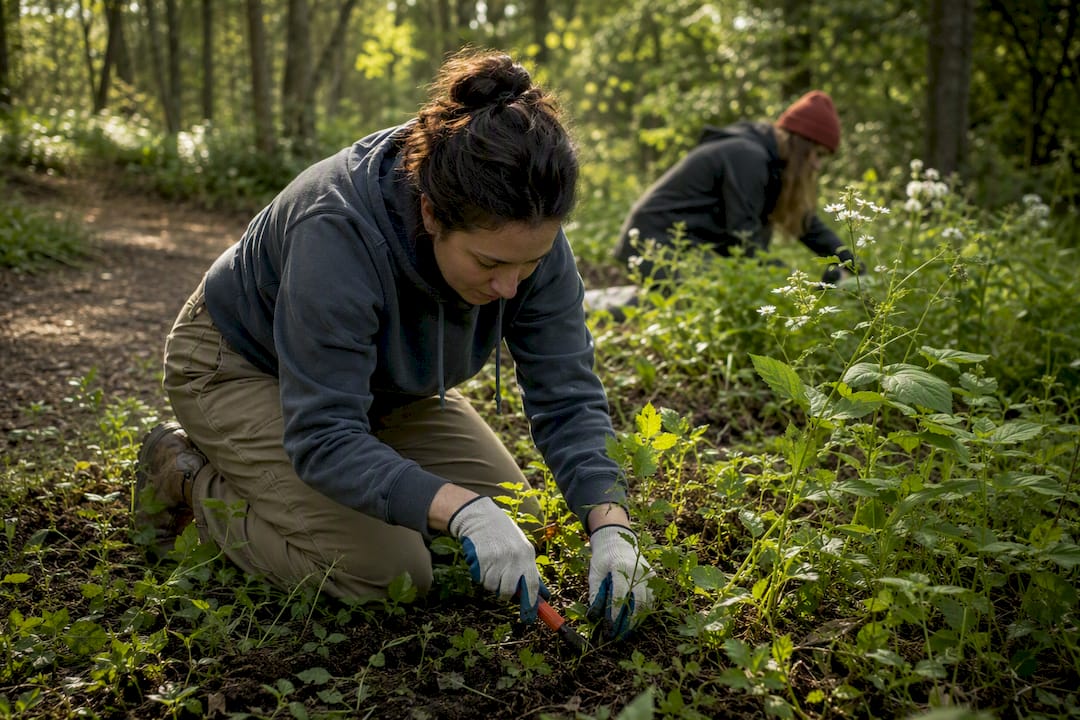
Volunteer groups do a lot of the physical work too. Todmorden Mills’ Wildflower Preserve, for instance, depends on volunteer stewards for planting, weeding, and habitat monitoring across its 9.2 hectares. That’s not a city crew showing up twice a year. It’s a sustained, community-driven effort that keeps the site from reverting to overgrown scrubland.
Neighbourhood associations and local historical societies also weigh in on planning decisions, often flagging buildings for the Heritage Register before a developer even files an application. This grassroots layer matters more than most visitors realize: the Ontario Heritage Trust and Heritage Toronto can advocate and educate, but they rarely own the buildings themselves. Protection in practice usually starts with a resident who notices a demolition permit posted on a fence and picks up the phone.
Community groups also shape how sites get interpreted, not just whether they survive. Multi-perspective programming, covering Indigenous history, colonial settlement, and industrial growth side by side, mostly comes from local advocacy pushing museums and heritage boards to broaden the story past a single plaque’s worth of text.
The pressure points threatening Toronto’s older buildings
Toronto’s heritage sites face a fairly consistent set of threats, and none of them are particularly dramatic. That’s part of the problem: erosion here tends to be slow and administrative rather than sudden.
Redevelopment pressure tops the list. Land values downtown and along transit corridors make older, lower-density buildings tempting targets for demolition, even when they’re listed on the Heritage Register. Listed status alone doesn’t block a permit. It only guarantees a review, and reviews can still end in approval.
Deferred maintenance is the quieter threat. Industrial-era brick, wood-frame structures, and century-old masonry all need consistent upkeep, and public funding for that work competes with a long list of other municipal priorities. A building can sit in a designated status for decades while its roof or foundation slowly deteriorates.
Climate is adding a newer strain. More intense storms and freeze-thaw cycles put extra stress on older masonry and mortar, particularly at sites with outdoor exposure like Fort York’s earthworks. Vegetation management at places like Todmorden Mills’ preserve also grows more demanding as invasive species spread more aggressively in a warming climate.
And then there’s simple visibility. Sites without an active organization behind them, unlike the Distillery District or Fort York, tend to fade from public attention, which makes it easier for their long-term protection to slip down the priority list entirely.
How you can help protect Toronto’s heritage sites
Supporting heritage conservation doesn’t require a history degree or a big donation. A few realistic entry points:
Volunteer your time. Todmorden Mills’ Wildflower Preserve regularly needs hands for planting and invasive species removal, and Heritage Toronto relies on volunteer tour guides and event support to keep its programming running.
Donate directly. Museums like Spadina Museum and heritage-focused nonprofits, including the Ontario Heritage Trust, accept donations that go straight toward restoration and maintenance costs that public budgets often can’t fully cover.
Show up to public consultations. When a listed property faces a demolition or major alteration application, the city typically holds public input sessions. Attending, or even just submitting written comments, adds real weight to a heritage argument that might otherwise go unopposed.
Join a local group. Neighbourhood historical societies and residents’ associations are usually the first to flag a building for the Heritage Register, and they’re almost always looking for more people willing to keep an eye on their own block.
Just visit. It sounds small, but consistent foot traffic and paid admission at sites like Fort York and Casa Loma directly fund the maintenance work that keeps these places standing. Attendance is its own form of advocacy.
Why Toronto’s layered history deserves a slower look
Toronto’s heritage sites sit on top of each other in ways a single visit rarely reveals. Fort York’s earthworks occupy land with Indigenous history stretching back long before the War of 1812, and the industrial brick at Todmorden Mills tells a settlement story that erased and built over what came before it. Seeing only the plaque at the entrance misses most of the picture.
If you take one thing from this guide, let it be curiosity about the layers, not just the landmarks. Support Heritage Toronto’s programming, visit the smaller museums, and read past the first paragraph of the interpretive sign. That habit does more for preservation than any single donation.
— Mugendi
Plan your heritage day with Dayhop
Skip the spreadsheet and the seventeen open tabs. Dayhop is the alternative to stitching together a heritage day yourself, built specifically for outings across the GTA. Tell it you want history, greenery, or a mix of both, and it lays out a route between sites like Fort York and Todmorden Mills that actually accounts for weather, walking time, and how long you’ll want to linger at each stop.

If a downpour rolls in halfway through your morning at the fort, Dayhop adjusts the rest of your day on the spot instead of leaving you stranded with a paper itinerary. It also surfaces nearby market stops, cafés, and events worth folding into your route, based on tips like those in Dayhop’s guide to Toronto’s hidden gems. Head to Dayhop to generate a ready-made heritage day plan for the GTA and start exploring this weekend.
Where to verify heritage site details
For designation dates, official hours, and site specifics, go straight to the source rather than a secondhand blog post.
- Parks Canada’s National Historic Sites listings for designation records
- The City of Toronto’s museums and heritage register pages for listed versus designated status
- Heritage Toronto for tours, plaques, and public programming
Sources
- Fort York National Historic Site of Canada — Parks Canada
- Todmorden Mills — City of Toronto
- Heritage register — City of Toronto
Recommended
Plan my day →