3–4 Attractions: When Toronto Attraction Passes Pay Off With Dayhop

3–4 Attractions: When Toronto Attraction Passes Pay Off With Dayhop
Toronto CityPASS is worth buying if your itinerary includes three to four (or more) of the city’s flagship paid attractions within a nine-day window. If you’re only chasing one or two big-ticket sights, pay-as-you-go usually wins. Watch two things before you commit: the nine-day validity clock starts the moment you first scan the pass, and reservations for the CN Tower, Ripley’s Aquarium, and City Cruises fill up fast in peak season.
TL;DR:
- The Toronto CityPASS is cost-effective if planning to visit three or more of the included attractions within nine days, especially when combining the CN Tower, Ripley’s Aquarium, and at least two other major sites.
- Key attractions like the CN Tower and Ripley’s Aquarium are included in the base price, but reservations for popular attractions fill quickly, particularly during peak season.
- Savings diminish sharply if only visiting one or two attractions, as the pass’s value hinges on stacking full-price admissions, with four or more attractions making it a clear bargain.
- Alternative options like the Go City Toronto Pass or attraction-specific bundles may suit longer or more varied itineraries better than CityPASS.
- Proper planning around reservations, transit, and pacing is essential to maximize value and reduce stress during the trip.
Table of Contents
- What’s included in Toronto attraction passes, and what do they cost?
- How the math works: pricing scenarios and the CityPASS crossover point
- Pass alternatives and when to use each one
- How to buy, activate, and use a Toronto attraction pass without surprises
- Getting more value from your pass through smart planning
- Folding passes into a personalised day plan
- Refund, cancellation, and change policies for the passes
- Special discounts or promotions for families, seniors, and students
- Transportation options included or recommended with the pass
- Contributor perspective: when I’d recommend a pass
- How Dayhop turns a pass into an actual day plan
- Sources
What’s included in Toronto attraction passes, and what do they cost?
Toronto CityPASS bundles two fixed attractions with a choice of three more, and understanding that structure is the whole game before you buy.
The two locked-in attractions are the CN Tower and Ripley’s Aquarium of Canada. From there, you pick three from a list that typically includes the Royal Ontario Museum (ROM), Casa Loma, City Cruises Toronto harbour tours, the Toronto Zoo, and the Ontario Science Centre. That flexibility matters because not every trip calls for a zoo day, and not every family wants a harbour cruise.
Pricing runs in Canadian dollars, and the CN Tower’s own CityPASS page lists adult passes at $134.96 and child passes at $99.96. CityPASS itself advertises savings of up to 38% off gate prices when you compare the bundle to buying every ticket separately.
A few operational details shape how you’ll actually use it:
- The pass is valid for nine consecutive days starting the first time you scan it, not the day you buy it.
- Reservations are recommended or required for the CN Tower, ROM, Ripley’s Aquarium, and City Cruises, especially in July and August.
- City Cruises and some outdoor attractions run seasonally, so a winter trip may knock one option off your shortlist.
- Tickets deliver as mobile passes, scanned by phone at each gate, no printing required.
That nine-day window is generous for most vacations, but it also means buying a pass for a two-day weekend and only using it twice leaves value on the table.
How the math works: pricing scenarios and the CityPASS crossover point
The crossover point is where a bundled pass starts beating individual tickets, and for Toronto CityPASS, that point is generally around three attractions, with four or more making the decision easier.
Here’s why three attractions is the borderline case rather than a clear win. The CN Tower and Ripley’s Aquarium are already baked into the price, so you’re really testing whether your third pick (say, the ROM or Casa Loma) pushes the total savings past what you’d pay buying each ticket at the gate. Add a fourth or fifth attraction, and the math tips firmly in the pass’s favour because you’re stacking more full-price admissions against one fixed cost.
Two quick scenarios show the pattern:
- Short visit, two attractions. A visitor who only wants the CN Tower and the Aquarium will almost always do better buying those two tickets directly, since the CityPASS price is built around covering five attractions’ worth of value.
- Longer stay, five attractions. A visitor hitting the CN Tower, Aquarium, ROM, Casa Loma, and City Cruises over four or five days sees the biggest gap between gate prices and the bundled cost, which is where that up to 38% savings claim actually plays out.
A Toronto local’s independent review points out that real savings shrink if your picks lean toward cheaper attractions, or if you’d qualify for senior, youth, or promotional pricing anyway. Dynamic gate pricing at some attractions can also narrow the gap on any given week. Run your own numbers against your actual attraction list before assuming you’re getting the maximum discount.
Pass alternatives and when to use each one
CityPASS isn’t the only way to save on Toronto sightseeing, and the right choice depends heavily on how many days you have and how many attractions you actually want to see.
Go City Toronto Pass takes a different approach: instead of a fixed five-attraction bundle, it offers a broader menu of attractions and activities across flexible day passes, which suits travellers who want to mix major sights with smaller experiences or tours. Toronto tourism guidance frames Go City as the better fit when your list runs longer than five stops or leans toward variety over depth.
Beyond the two headline options, a few other routes are worth knowing about:
- Attraction-specific bundles, like a combined CN Tower and boat cruise ticket, can beat a full pass if you only want two or three specific experiences.
- Destination Toronto’s seasonal offers rotate throughout the year and sometimes undercut standard pass pricing for short windows, so it’s worth a quick check of current deals before buying anything.
- Pay-as-you-go stays the simplest option for a one- or two-day trip built around a single marquee attraction.
Use this quick rule: shorter trips with a narrow focus favour pay-as-you-go or a single bundle; five-plus days with a long wish list favour Go City; three to five attractions in a focused, classic-Toronto itinerary is where CityPASS earns its price tag.
How to buy, activate, and use a Toronto attraction pass without surprises
Buying the pass is the easy part. Timing your activation and reservations right is where trips go sideways.
- Buy through the official CityPASS site or an authorized seller like the CN Tower’s own booking page, and expect delivery as a mobile ticket to your phone.
- Wait to activate until the morning of your first attraction visit. The nine-day clock starts on first scan, so activating early because you’re excited just burns days you won’t use.
- Book your reservations for the CN Tower, ROM, and City Cruises the same day you buy the pass, not the morning you plan to go. Peak-season slots disappear quickly, and reservation requirements are stricter than most visitors expect.
- On arrival day, check for extras that aren’t covered, like CN Tower SkyPod upgrades or special exhibits, which usually cost more on top of your pass.
Pro Tip: Book your CN Tower reservation for a clear morning, not just an open time slot. The observation deck is genuinely a different experience in fog versus sunshine, and you can’t always tell which you’ll get if you book blind three days out.
Getting more value from your pass through smart planning
A pass only pays off if your schedule respects travel time between attractions, and Toronto’s downtown core isn’t as walkable as it looks on a map.
Group the CN Tower and Ripley’s Aquarium together since they share an entrance plaza, making that pairing the easiest win in the whole pass. Keep the ROM and Casa Loma on separate days: both reward a slower pace, and cramming them together usually means rushing one to make closing time. The Toronto Zoo deserves its own half-day at minimum, factoring in a 45-minute-plus transit ride from downtown.
A few more habits that protect your time and your wallet:
- Reserve your time slots immediately after buying the pass, not after you land in the city.
- Check attraction availability before you buy if your dates are tight, since a sold-out reservation window can undercut the whole plan.
- Visit popular attractions in the first hour after opening to dodge tour-bus crowds.
- Review each attraction’s refund and transfer policy before locking in dates you’re not fully sure about.
Pro Tip: Treat your pass like a loose skeleton, not a strict schedule. Build in one buffer hour between attractions on opposite sides of downtown. That’s usually the difference between a relaxed day and a stressful sprint across the city.
Folding passes into a personalised day plan
Owning a CityPASS solves the pricing question. It doesn’t solve the scheduling question, and that’s where most visitors get tripped up, either overpacking a day or leaving reserved slots unused.
Dayhop builds itineraries around your preferences, the day’s weather, and the specific reservations you’ve already locked in, adjusting suggestions in real time rather than handing you a static checklist. Two examples show how that plays out:
- Family plan: Morning CN Tower reservation, lunch nearby, afternoon Ripley’s Aquarium, with a slower Casa Loma or ROM day built in separately rather than stacked on top.
- Highlights plan: A tighter, adult-paced day pairing the CN Tower with a City Cruises harbour tour, leaving the ROM and Casa Loma spread across two other mornings.
| What you do | What Dayhop does |
|---|---|
| Buy and reserve pass attractions | Builds a day plan around those exact time slots |
| Check the weather yourself | Adjusts outdoor-heavy days automatically for rain or heat |
| Guess how much time each stop needs | Paces the schedule to avoid back-to-back overbooking |
Reserve first, then let a tool like Dayhop map the rest of the day around those fixed windows. It’s a far more relaxed way to explore than working from a printed list.
Refund, cancellation, and change policies for the passes
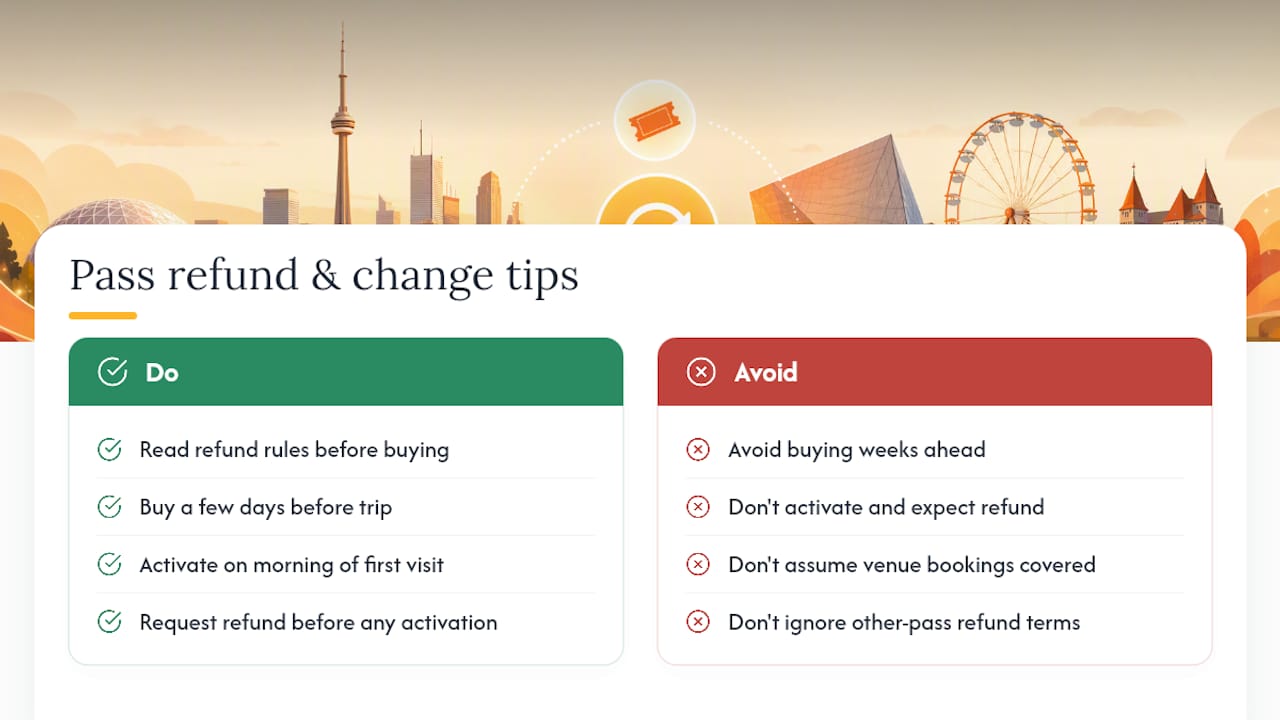
Refund rules for Toronto CityPASS are stricter than many first-time buyers expect, so it’s worth reading before, not after, you book.
Unused passes are generally eligible for a refund within a set window from the date of purchase, provided none of the included attractions have been scanned or activated. Once you’ve used the pass at even one attraction, it typically becomes non-refundable, since the pricing model assumes you’re committed to using the rest of the bundle. Reservation changes at individual attractions, like shifting a CN Tower time slot, are usually possible for free through the venue’s own booking system, separate from the CityPASS purchase itself.
That distinction matters for trip planning: if your dates are still flexible, hold off buying until you’re fairly confident about arrival day. If a family member gets sick or a flight changes, you have more flexibility to seek a refund before the pass gets activated than after. Attraction-specific bundles and Go City passes carry their own separate refund terms, which sometimes offer more forgiving windows, so it’s worth checking that fine print if you’re the type to book far ahead.
The safest approach is to buy a few days before your trip rather than weeks in advance, and to activate the pass only on the morning of your first attraction visit. That gives you a real refund window if plans change, without wasting any of your nine-day validity period on days you didn’t need it.
Special discounts or promotions for families, seniors, and students
Child pricing is the most consistent discount built into Toronto CityPASS, with kids’ passes running notably cheaper than adult passes across the same five attractions.
Beyond the standard child rate, individual attractions sometimes layer on their own senior or student discounts at the gate, which can occasionally beat what a bundled pass offers if you’re only visiting one or two sights. It’s worth checking each attraction’s own pricing page for age-based rates before assuming the pass is automatically the cheaper route for an older traveller or a student group.
Seasonal promotions are where the real extra savings tend to show up. Destination Toronto’s special offers page rotates deals throughout the year, sometimes bundling hotel stays with attraction discounts, or offering limited-time pricing on individual venues during shoulder seasons. Families visiting during a slower month, like early spring or late fall, often find better standalone deals than what a fixed pass structure can offer.
Groups and families should also compare the total cost of buying multiple child passes against any family-rate bundles individual attractions might run independently. There’s no universal family discount tier baked into CityPASS itself beyond the standard adult and child pricing split, so the savings math depends entirely on your group’s age mix and which attractions actually appeal to everyone.
Transportation options included or recommended with the pass
Toronto CityPASS doesn’t include transit fare, so getting between attractions is entirely on you, and that’s worth planning around rather than treating as an afterthought.
The Toronto Transit Commission (TTC) subway and streetcar network connects most CityPASS attractions reasonably well. The CN Tower and Ripley’s Aquarium sit close together near Union Station, making them walkable from most downtown hotels. The ROM and Casa Loma both sit near subway stations on the Yonge line, though Casa Loma involves a short walk uphill from the station. The Toronto Zoo is the outlier: it sits well outside the downtown core, and reaching it by transit takes considerably longer than a rideshare or rental car would.
A day pass or weekly TTC pass is worth considering if you’re planning to hit four or five attractions spread across different neighbourhoods, since individual fares add up quickly. City Cruises departs from the harbourfront, an easy walk or short streetcar ride from the CN Tower area, which is part of why pairing those two attractions on the same day works so well logistically.

If you’re arriving from outside the city and need visa clarity before booking flights, it’s worth reviewing Canada’s current visitor visa requirements ahead of time so transportation and attraction planning aren’t the only logistics on your list.
Contributor perspective: when I’d recommend a pass
I’d tell most visitors to buy CityPASS if their list runs three to five classic attractions and their schedule has some give across that nine-day window. It’s not the right call for a one-attraction weekend.
My practical advice: book your CN Tower slot for a clear morning, and always leave more transit time between neighbourhoods than Google Maps suggests, especially getting to or from the zoo. Toronto’s downtown feels compact on paper and less so on foot with tired kids.
Once your reservations are locked in, a tool like Dayhop is genuinely useful for building the rest of the day around them without overpacking it.
— Mugendi
How Dayhop turns a pass into an actual day plan
Buying the pass answers the money question. Making the days actually work, without racing between reservations or wilting in an afternoon downpour, is a different problem entirely, and it’s the one Dayhop was built to solve.
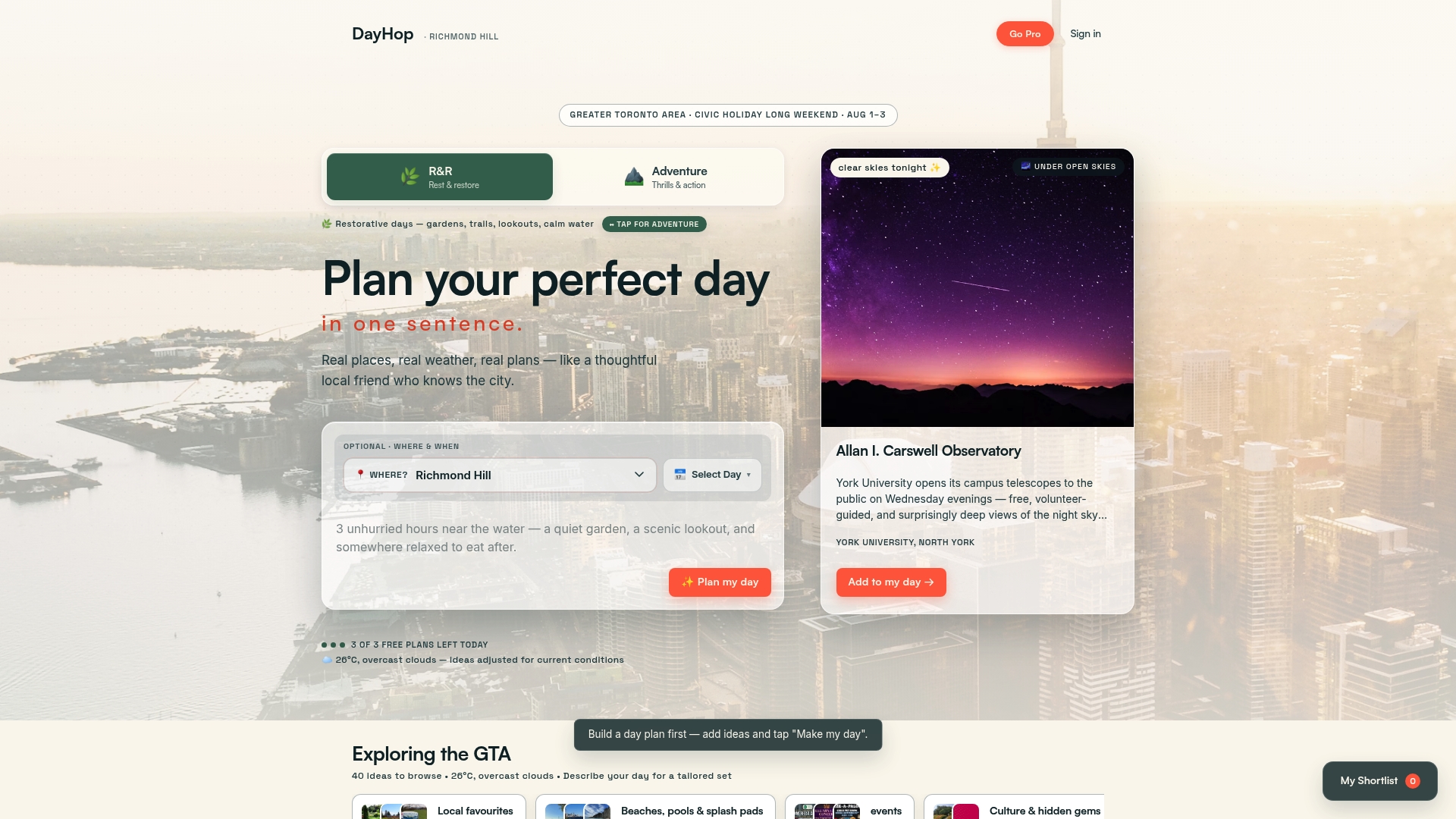
Dayhop’s free planning tools let you drop in your CityPASS reservations and build a realistic day plan around them, adjusting for weather and pacing so you’re not sprinting from the ROM to Casa Loma with no buffer. The Pro plan adds multi-day planning and more saved itineraries, useful if your trip spans the full nine-day validity window and covers several neighbourhoods. Dayhop also surfaces nearby stops, like a good brunch spot near your morning attraction or a seasonal outing worth adding if your dates line up.
Once your pass is booked, head to Dayhop and build the day plan around it before you land.
Sources
Pricing, validity, and reservation details in this guide come from official attraction pages, CityPASS, and Toronto tourism guidance, current as of your travel dates.
Plan my day →