Secure 4–6 Hours at Niagara Falls: Tour First Day Trip From Toronto
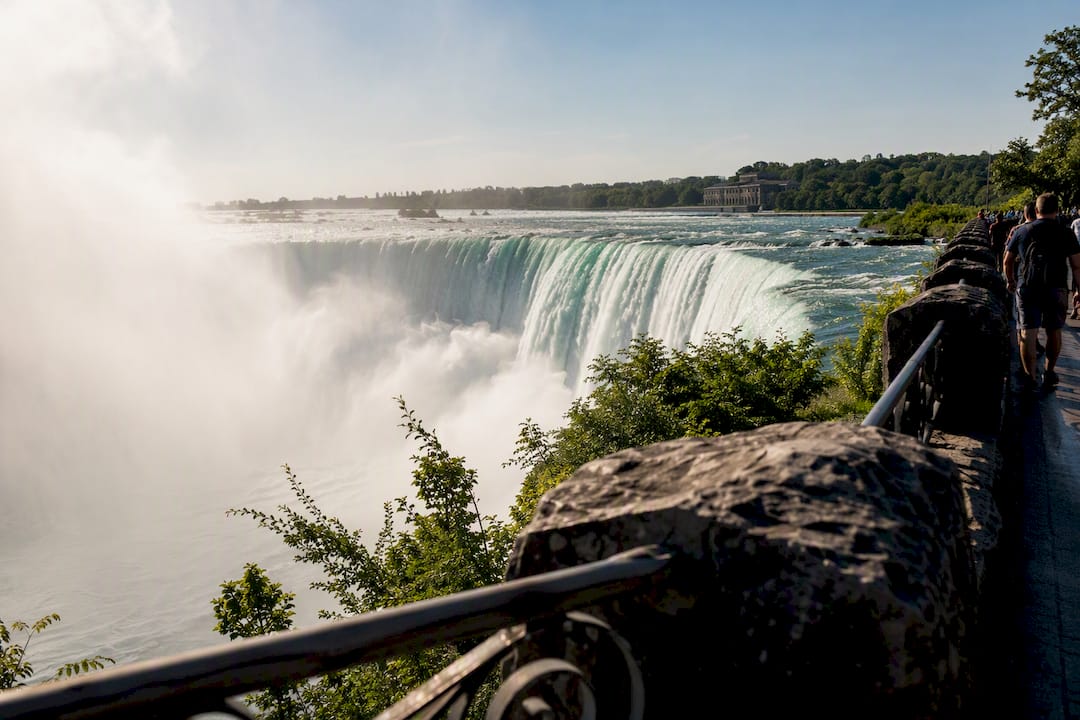
Secure 4–6 Hours at Niagara Falls: Tour First Day Trip From Toronto
For most Toronto day‑trippers, a guided coach tour is the easiest way to see Niagara Falls without the planning headache, running about 9 to 10 hours with hotel pickup included. Budget travellers do best with the GO Train + WEGO combo on weekends or an intercity bus. If you want the freedom to detour into wine country, driving wins. Leave Toronto by 8 a.m. either way, and you’ll have 4 to 6 solid hours at the Falls before heading back.
TL;DR:
- Guided coach tours are the easiest, most convenient option, costing around $99, and including hotel pickup with a schedule that covers most attractions within 9 to 10 hours.
- Public transit options like the GO Train and intercity buses are budget-friendly but have limited schedules in winter and require extra planning for attraction connection and last-mile transport.
- Driving allows full flexibility and range, especially for adding wine country stops, but incurs extra costs for parking and fuel, and can take 1.5 to 2 hours each way.
- The best time for warm-weather boat cruises is between late spring and early fall, while winter visitors should prioritize Journey Behind the Falls and expect shorter daylight hours.
- Using real-time planning tools helps adapt the day to weather changes, train delays, or preference shifts, maximizing time at key sights and avoiding fixed, rigid itineraries.
Table of Contents
- Four ways to actually do a Niagara Falls day trip from Toronto
- Sample Niagara Falls day trip itineraries by transport type
- How to choose the best option for your trip
- Booking tickets, timing your day, and packing right
- What else fits into a Niagara Falls day trip
- How DayHop turns this shortlist into your actual day plan
- Where to eat near Niagara Falls on a day trip
- Best time of year to visit and what the weather does to your plans
- How to photograph Niagara Falls during a short visit
- A local planner’s honest take on doing this trip right
- Let DayHop build your Niagara Falls day plan for you
- Sources
Four ways to actually do a Niagara Falls day trip from Toronto
Picking how you get there decides almost everything else about your day, so let’s sort through the real options before you book anything.
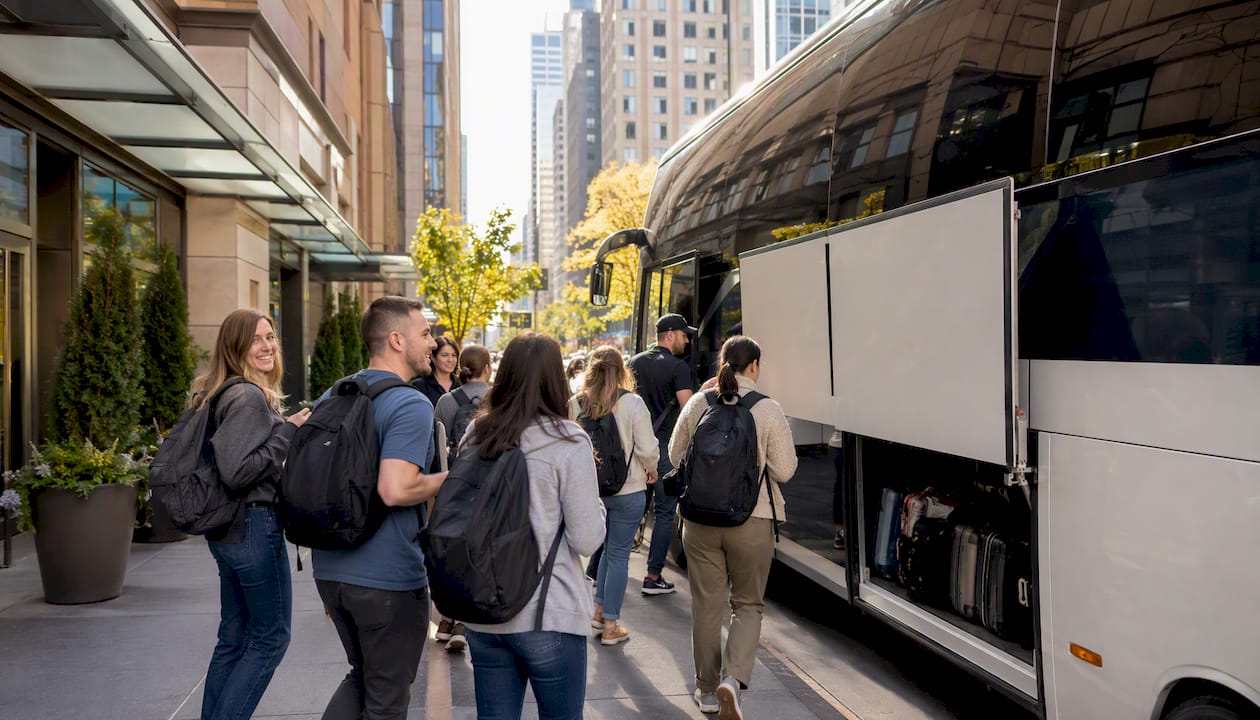
A guided coach tour is the closest thing to a done‑for‑you day. Buses pick up from central Toronto hotel hubs, and most itineraries run 9 to 10 hours with a licensed guide narrating the drive, stopping at Table Rock and often including a wine‑country detour on the way home. Base prices commonly start around $99, though the boat cruise and Journey Behind the Falls are usually sold as add‑ons rather than bundled in. You show up, you sit back, and someone else handles parking, navigation, and the schedule.
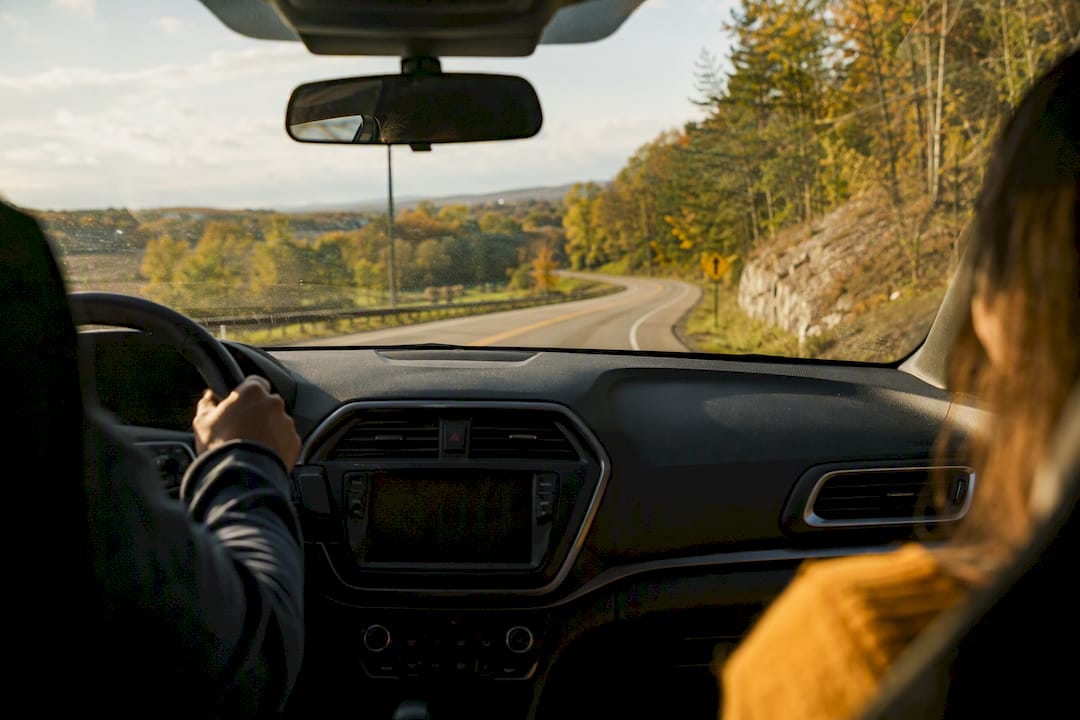
Driving yourself gives you full control. The trip covers roughly 130 kilometres and takes about 1.5 to 2 hours each way in light traffic, though the Queen Elizabeth Way gets ugly on summer weekends, sometimes adding 45 minutes or more each direction. You’ll pay for parking near the Falls, which runs from about $20 to $30 for the day depending on the lot, plus gas. Driving is the only option that lets you swing through Niagara‑on‑the‑Lake or a winery without coordinating around someone else’s timetable.
The GO Train + WEGO combo is the sweet spot for budget‑minded travellers who don’t want to drive. GO Transit runs a year‑round train service to Niagara Falls with a GO+WEGO package bundling the round trip with local bus access, priced around $22 on weekends. Niagara Parks sells a similar 1‑day and 2‑day travel package pairing the direct train with WEGO bus access. The catch: weekday train service is thinner, so this option shines brightest on Saturdays and Sundays. Weekday travellers might find themselves working around gaps of a few hours between departures.
Intercity buses like Megabus and FlixBus offer the most frequent departures and the loosest schedule, with one‑way fares typically running $10 to $42 depending on how early you book. The tradeoff is the last mile: bus terminals don’t drop you at Table Rock, so you’ll need a short WEGO ride or a 20 to 30-minute walk to reach the main viewpoints.
Here’s how the four stack up side by side:
- Guided coach tour: ~$99+ base, 9 to 10 hours total, zero planning, best for solo travellers, couples, and groups who want commentary and no logistics
- Driving: ~$40 to $60 in gas and parking, 8 to 10 hours total, full flexibility, best for families with car seats or anyone wanting a winery stop
- GO Train + WEGO: ~$22 to $34 round trip, 7 to 9 hours total, best on weekends, best for budget travellers comfortable with public transit
- Intercity bus: ~$10 to $42 one‑way, 7 to 9 hours total, most frequent departures, best for solo or last‑minute travellers who don’t mind a short WEGO connection
None of these is objectively “correct.” The GO+WEGO combo tends to be the cheapest practical non‑driving option on weekends, while a coach tour often ends up better value once you tally attraction fees and the time you’d otherwise spend figuring out connections yourself.
Sample Niagara Falls day trip itineraries by transport type
Each transport option comes with its own natural rhythm. Here’s how to structure the day depending on which one you pick.
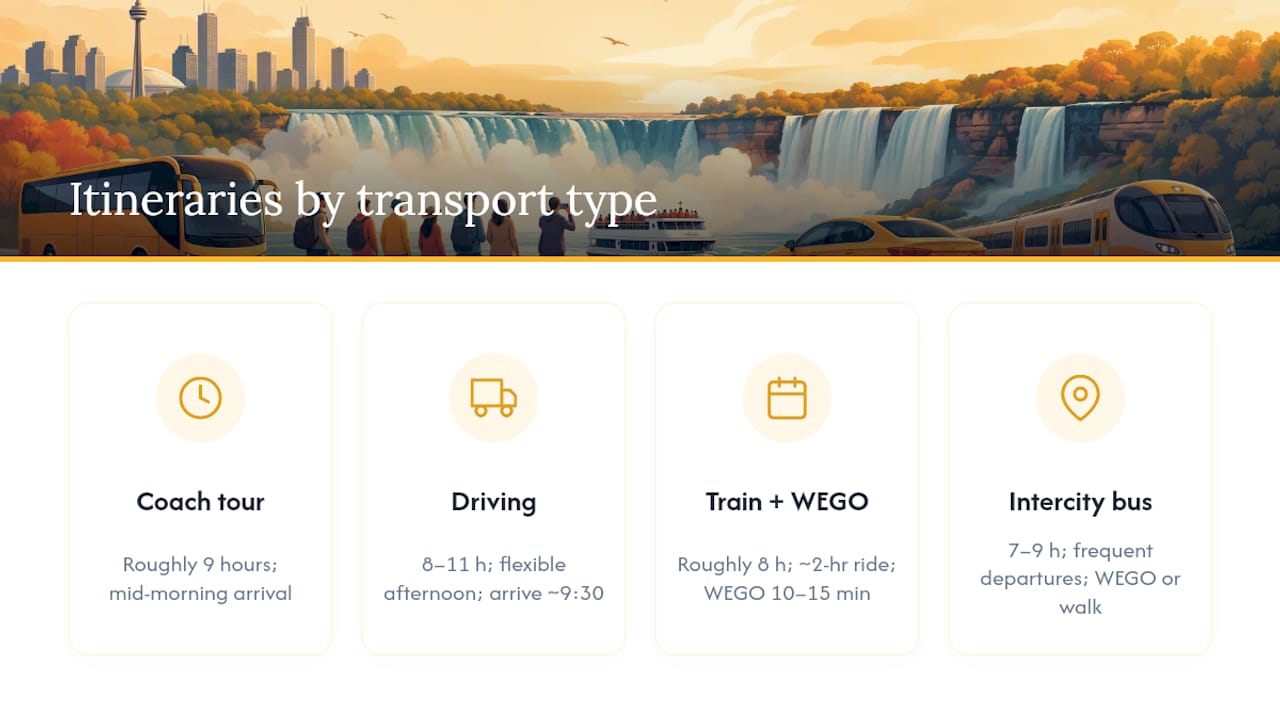
1. Coach tour itinerary (roughly 9 hours door to door): Pickup happens between 7:30 and 8:30 a.m. from downtown Toronto hotel stops. You’ll arrive at Niagara Falls by mid‑morning, usually around 10:30 a.m., with the guide walking the group to Table Rock for the first Horseshoe Falls views. From 11 a.m. to 1 p.m., most tours build in free time for the boat cruise (seasonal) or Journey Behind the Falls, plus lunch on your own. Many itineraries then swing through Niagara‑on‑the‑Lake or a winery for an hour before heading back, arriving in Toronto by 5 or 6 p.m.
2. Driving itinerary (flexible, 8 to 11 hours): Leave Toronto by 7:30 a.m. to beat weekend QEW traffic and arrive by 9:30 a.m. Park near Clifton Hill or the Table Rock Welcome Centre, then head straight to the falls for photos before the crowds build. Book your boat cruise ticket for an early slot, ideally before 11 a.m., since arriving early cuts queue time and gives better light for photos. Grab lunch around Clifton Hill or Queen Street, then use your afternoon flexibility for a 90 to 120 minute stop in Niagara‑on‑the‑Lake or a single winery before driving home, leaving by 4 p.m. to dodge the return rush.
3. GO Train + WEGO itinerary (best on weekends, roughly 8 hours): Catch an early weekend train from Union Station, generally departing between 7 and 9 a.m. depending on the schedule that day. The ride takes about two hours, and your GO+WEGO pass lets you hop straight onto a WEGO bus toward Table Rock, a 10 to 15-minute ride from the Niagara Falls GO station. Spend your afternoon at the falls, hitting the boat cruise or Journey Behind the Falls and grabbing lunch nearby, then catch a WEGO bus back to the station in time for a mid‑afternoon or early‑evening return train.
4. Intercity bus itinerary (most flexible departures, 7 to 9 hours): Buses run frequently throughout the day, so you’re not locked into one departure window like the train. From the Niagara Falls bus terminal, it’s either a short WEGO connection or a walk to Table Rock. Build in that extra travel time on both ends. Once there, the itinerary mirrors the train plan: falls views first, attraction add‑ons midday, lunch nearby, then a bus back whenever suits your evening plans.
Winter variation: the boat cruise doesn’t run in the colder months, so swap it for Journey Behind the Falls, which drops you into tunnels behind Horseshoe Falls and stays open year‑round. Winter days are shorter, too, so aim to arrive by mid‑morning regardless of which transport option you choose.
How to choose the best option for your trip
Start with three questions: what’s your budget, who’s coming with you, and how much do you want to plan versus just show up?
If you’re travelling with kids or older relatives who’d rather not navigate transfers, a guided coach tour or driving usually beats public transit. If you’re solo or with one other budget‑minded friend, GO+WEGO on a weekend or an intercity bus keeps costs low. If wine country is on your wish list, driving or a private tour are really your only realistic paths, since public transit rarely accommodates a winery stop without heavy prearrangement.
Before locking in any option, run through this checklist to compare costs apples‑to‑apples:
- Total transport cost (round trip, per person)
- WEGO pass or last‑mile transit cost, if not driving
- Attraction tickets: boat cruise, Journey Behind the Falls, or both
- Parking cost if driving (budget $20 to $30)
- Meals, which run $15 to $30 per person near the Falls
If you’re booking a guided tour specifically, ask the operator these questions before paying:
- Is the boat cruise or Journey Behind the Falls included, or is it an add‑on?
- Where exactly is the pickup point, and how early do you need to arrive?
- What’s the cancellation policy, and how many days ahead can you cancel for a refund?
- What’s the group size, and is transport an actual coach or a shuttle van?
- Is there flexible free time at the falls, or is the schedule fully fixed?
Watch for listings that advertise a low base price but bury attraction fees in the fine print. A tour quoted at $99 can quietly become $160 once the boat and lunch are added.
Pro Tip: Call or message the tour operator directly and ask them to confirm in writing exactly what’s included before you pay. Vague listings that say “see the falls” without naming Table Rock, the boat, or Journey Behind the Falls usually mean you’re paying for a drive‑by, not real time at the attractions.
Booking tickets, timing your day, and packing right
Boat cruise tickets sell out fastest on weekend afternoons in July and August, so book online a few days ahead if you’re set on a specific time slot. Cancellation policies vary by operator, but many allow free changes up to 24 to 48 hours before your slot, so check that window before you commit to a fixed itinerary.
On timing, leave Toronto by 7:30 or 8 a.m. on busy summer weekends to beat both the crowds and the QEW traffic that builds through midmorning. Aim to arrive by 9:30 or 10 a.m., which gets you to Table Rock before the tour buses unload en masse. Plan your return by early afternoon on the drive back if you want to dodge the worst of the highway slowdown, typically between 4 and 6 p.m.
WEGO buses connect the Niagara Falls GO station and bus terminals to Table Rock and other attraction clusters, and a WEGO pass is often bundled into GO+WEGO packages. If you’re arriving somewhere WEGO doesn’t reach directly, a short rideshare can be faster than waiting for the next bus, especially outside peak hours.
Accessibility varies by attraction. Table Rock and the main viewing areas are wheelchair accessible, and WEGO buses are equipped for mobility devices, but Journey Behind the Falls involves an elevator down to tunnel level, so check current operating status if that matters for your group.
Pack for the falls’ own little microclimate: a light rain jacket, quick‑dry layers, and closed shoes, since the boat cruise and the observation deck both get you genuinely wet from mist. Bring ID, a secure crossbody bag, and a phone case if you’re shooting photos near the spray.
One seasonal note worth building your whole day around: the boat cruise only runs in warmer months, generally spring through fall, while winter visitors get illuminated falls at night and occasional fireworks displays as a trade‑off.
What else fits into a Niagara Falls day trip
A single day has real limits, and the smartest itineraries know what to skip.
Niagara‑on‑the‑Lake is the most popular add‑on, and it’s genuinely worth the detour if you have the time. Budget 1.5 to 2 hours for a walk through the historic main street and maybe one shop stop. A winery visit adds another 90 to 120 minutes minimum once you factor in the drive, the tasting itself, and getting back on the road.
The catch is that these add‑ons only work cleanly with certain transport choices:
- Driving: easiest way to fit in Niagara‑on‑the‑Lake or a winery stop, since you control the route
- Guided coach tour: many itineraries already build in a wine‑country stop, so check the tour description
- GO Train + WEGO or intercity bus: rarely practical for add‑ons unless you prearrange a taxi or local shuttle, since public transit doesn’t run between these towns on a day‑trip‑friendly schedule
If wine tasting is part of the plan and you’re driving, stick to one or two stops and designate a driver who skips the tastings, or better yet, book a private tour or wine‑focused operator so nobody has to choose between a glass of Riesling and getting everyone home safely.
How DayHop turns this shortlist into your actual day plan
Reading through four transport options and three sample itineraries is useful, but turning that into a real plan still takes some juggling, especially if the weather shifts or a train gets delayed. That’s the gap DayHop is built to close.
DayHop’s planning tool factors in real‑time weather, your stated preferences, and attraction time windows to suggest a day plan that actually fits the hours you have. For a Niagara Falls trip, that might mean:
- Pushing the boat cruise booking earlier in the day if the forecast shows afternoon rain
- Swapping in Journey Behind the Falls automatically if you’re planning a winter visit when the boat isn’t running
- Recommending the ideal WEGO connection window based on which train or bus you’re taking
- Adjusting your itinerary live if a train delay eats into your afternoon, sliding a winery stop later or trimming it altogether
Instead of manually cross‑referencing schedules and hoping your timing holds up, DayHop adjusts the plan as your day actually unfolds.
Where to eat near Niagara Falls on a day trip
Clifton Hill and the stretch along Falls Avenue have the highest concentration of quick, casual spots, from burger joints to pizza counters, and most run $10 to $20 per person. If you want a sit‑down meal with an actual view of Horseshoe Falls, several restaurants along Table Rock and the Skylon Tower area offer window seating, though expect to pay closer to $25 to $40 per person for that view.
For a faster midday option, food courts near the Falls Avenue entertainment complex let groups split up and grab different cuisines without losing much time. If you’re driving and want to stretch your legs away from the tourist strip, Queen Street in the historic district has a quieter selection of cafés and bistros, a nice break if Clifton Hill starts to feel too carnival‑like for your taste.
Whichever you pick, build lunch into your itinerary rather than treating it as a gap to fill. On a day trip where every hour counts, deciding in advance whether you want fast and cheap or a sit‑down view saves you from wandering Clifton Hill hungry while your afternoon slips away.
Best time of year to visit and what the weather does to your plans
Summer is peak season for a reason. Warm weather, the boat cruise running, and long daylight hours make June through August the most forgiving window for a day trip, though it’s also when crowds and QEW traffic hit their worst. Spring and fall shoulder seasons, particularly May, September, and early October, offer smaller crowds, cooler temperatures, and still‑running boat tours, making them a smart pick if your schedule is flexible.
Winter changes the entire experience. The falls partially freeze into dramatic ice formations, and Niagara Parks lights up the falls at night with illuminations and occasional fireworks. But the boat cruise shuts down, so Journey Behind the Falls becomes your close‑up option instead, and you’ll want warmer layers since mist and wind off the falls make it feel colder than the forecast suggests.
Rain is a factor in any season near the falls, mist alone can dampen you on a clear day if you’re standing close to Table Rock. Pack accordingly no matter when you go, and check the forecast the morning of your trip rather than days ahead, since Niagara’s microclimate near the gorge can shift quickly from what Toronto is experiencing just an hour up the road.
How to photograph Niagara Falls during a short visit
Morning light works best for photographing Horseshoe Falls, since the sun sits behind you when shooting from Table Rock in the early hours, avoiding the harsh backlit glare that shows up by early afternoon. If you’re on a coach tour with a fixed schedule, ask your guide which viewpoint gets the best light at your specific arrival time.
The boat cruise gives you the closest vantage point to the base of the falls, but expect your phone or camera to get misted almost immediately, so a waterproof pouch or a simple plastic bag over your device is worth packing. For a drier alternative, the Table Rock observation areas and the walkway along the Niagara Parkway offer strong wide‑angle shots without the spray.
Sunset and the nightly illumination are worth staying for if your schedule allows it, since the falls lit up in colour make for a completely different photo than the daytime shots most visitors capture. If your transport option has you leaving by late afternoon, this isn’t realistic, another reason driving or a flexible tour gives you more room to catch that golden‑hour or after‑dark shot before heading home.
A local planner’s honest take on doing this trip right
Most locals still recommend a guided tour for a first‑time, single‑day visit, not because driving is hard, but because a good guide gets you to the right viewpoint at the right time without you burning an hour figuring it out yourself. Driving or the train make more sense once you’ve done the trip before and know exactly what you want to see.
If there’s one thing worth planning around, it’s this: get to Table Rock before 10 a.m. The light is better, the crowds are thinner, and you’ll actually enjoy your coffee at one of the small cafés along the boardwalk instead of shuffling past bus groups to get a photo.
— Mugendi
Let DayHop build your Niagara Falls day plan for you
Every option above works, but none of them adjusts automatically when the weather shifts, your train runs late, or you decide halfway through the morning that you’d rather skip the winery and spend an extra hour at Table Rock. DayHop is built for exactly that moment, turning your Niagara Falls shortlist into a live, adjustable plan instead of a fixed script you’re stuck following.
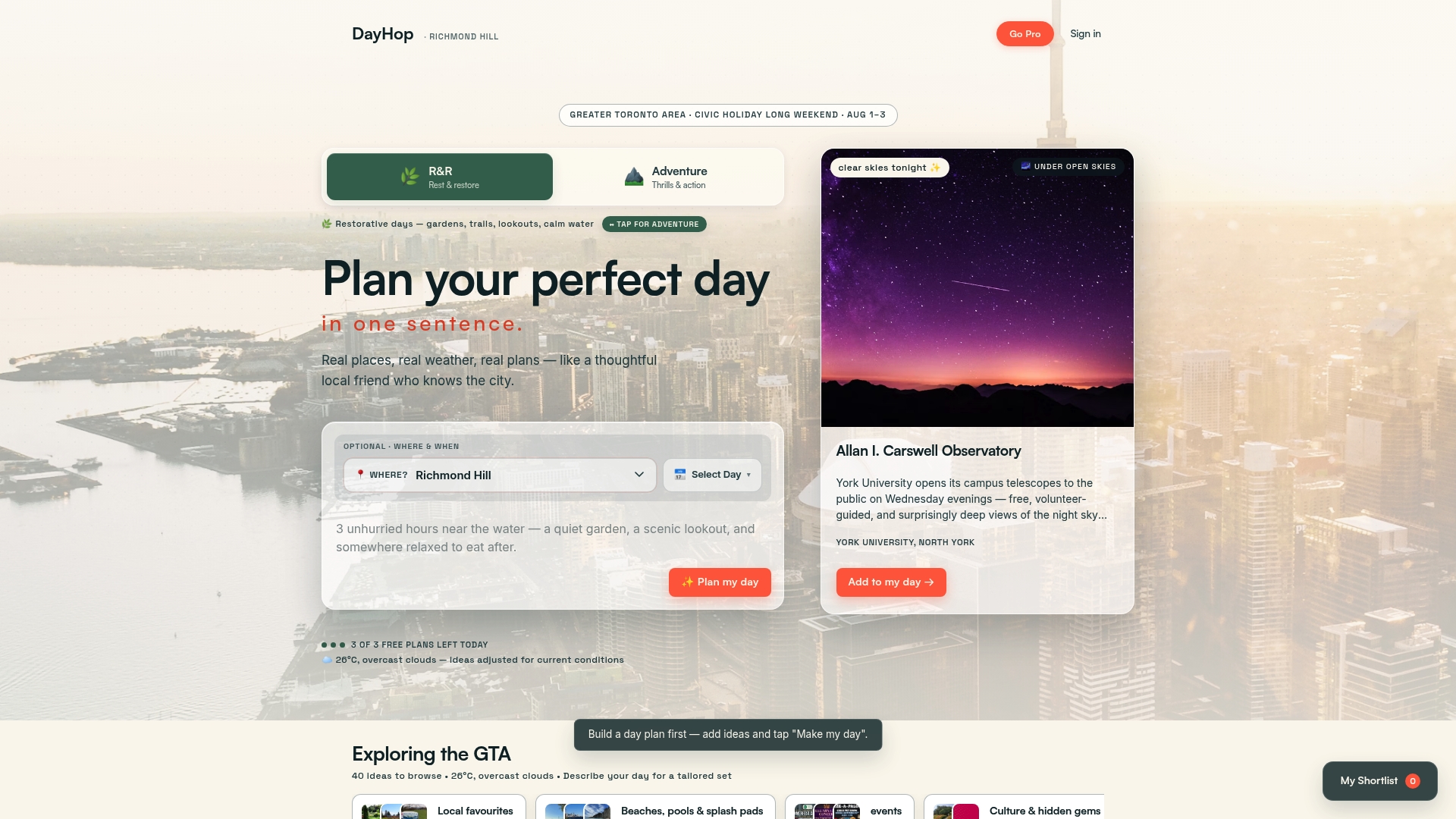
Tell DayHop your travel style, whether you’re chasing the boat cruise at sunrise or keeping things slow with a Niagara‑on‑the‑Lake stroll, and it builds a timed plan around current weather and attraction windows, then lets you shuffle pieces around in real time if your day changes shape. It also surfaces booking links for the attractions and activities in your plan, so you’re not juggling five browser tabs the night before your trip. Open the DayHop planning tool and map out your Niagara Falls day before you even leave Toronto.
Sources
Recommended
Plan my day →