The best indoor gardens Toronto has for a warm winter escape
The best indoor gardens Toronto has for a warm winter escape
Allan Gardens Conservatory wins for heritage charm with five connected greenhouses, Centennial Park Conservatory takes the crown for sheer tropical scale, Cloud Gardens delivers a downtown cloud-forest fix on a lunch break, and Toronto Botanical Garden rounds things out with programming and a proper garden shop. All four City-run sites offer free admission, so the only real cost is bus fare and a bit of planning.
TL;DR:
- Allan Gardens offers heritage charm with five diverse greenhouses, but visitors should expect temperature swings that require layered clothing.
- Centennial Park provides the largest volume of tropical plants and seasonal displays, making it ideal for those seeking variety and full showcases.
- Cloud Gardens is highly photogenic and quick to visit but has a history of closures, so checking status before going is essential.
- Toronto Botanical Garden combines indoor programming, classes, and outdoor gardens, offering a more educational experience than traditional conservatories.
- The city’s conservatories were built for different specific needs, so choosing the right site depends on whether visitors seek heritage, volume, quick escape, or education.
Table of Contents
- Where to find the best indoor gardens in Toronto
- What to expect inside a Toronto conservatory
- Planning your visit: rules, timing, and getting there
- How to check for closures before you go
- Why Toronto built glasshouses in the first place
- Guided tours and learning opportunities at Toronto’s conservatories
- Indoor gardening tips inspired by what you’ll see in Toronto’s greenhouses
- A couple of sample days, built around Toronto’s glasshouses
- Skip the spreadsheet and let Dayhop build the loop for you
- The gap between “free admission” and “worth your afternoon”
- Sources
Where to find the best indoor gardens in Toronto
Toronto’s greenhouse scene is small but mighty, and each site does something the others don’t. Here’s the shortlist, ranked by what you’re actually looking for on a given day.
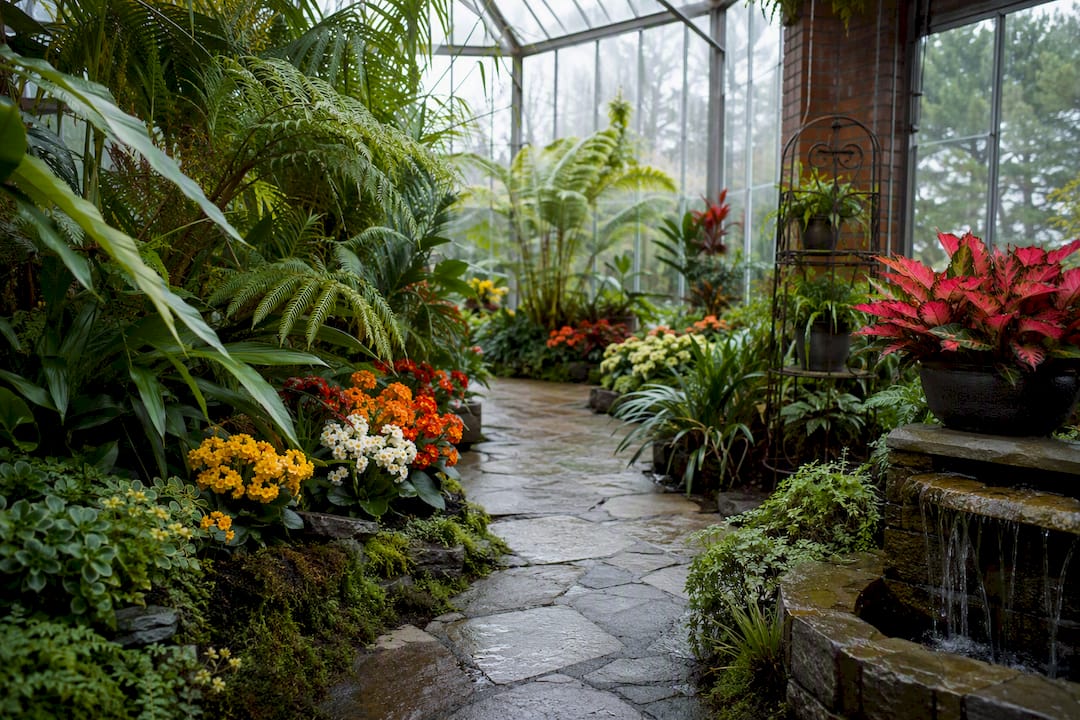
Allan Gardens Conservatory sits just east of downtown and packs five greenhouses under one heritage-style roof: arid, tropical, palm, orchid/bromeliad, and temperate houses. The palm house structure dates back to the Victorian glasshouse era, and it’s the kind of building that photographs beautifully even on a grey Tuesday. Plan for 30 to 45 minutes to walk all five rooms. There’s no coat check on-site, and casual photography is fine, but if you’re bringing a tripod or shooting for a client, you’ll need to book ahead through the city.
Centennial Park Conservatory, out in Etobicoke, is the one to pick if you want volume. Its main tropical house holds roughly 200 tropical plant varieties, paired with arid and specialty wings that rotate seasonal displays. The complex opened in 1970 and still functions as a production greenhouse for other city parks, which is part of why the seasonal shows feel so full. It’s less central than Allan Gardens, but if you’re already west of downtown, it’s worth the detour.
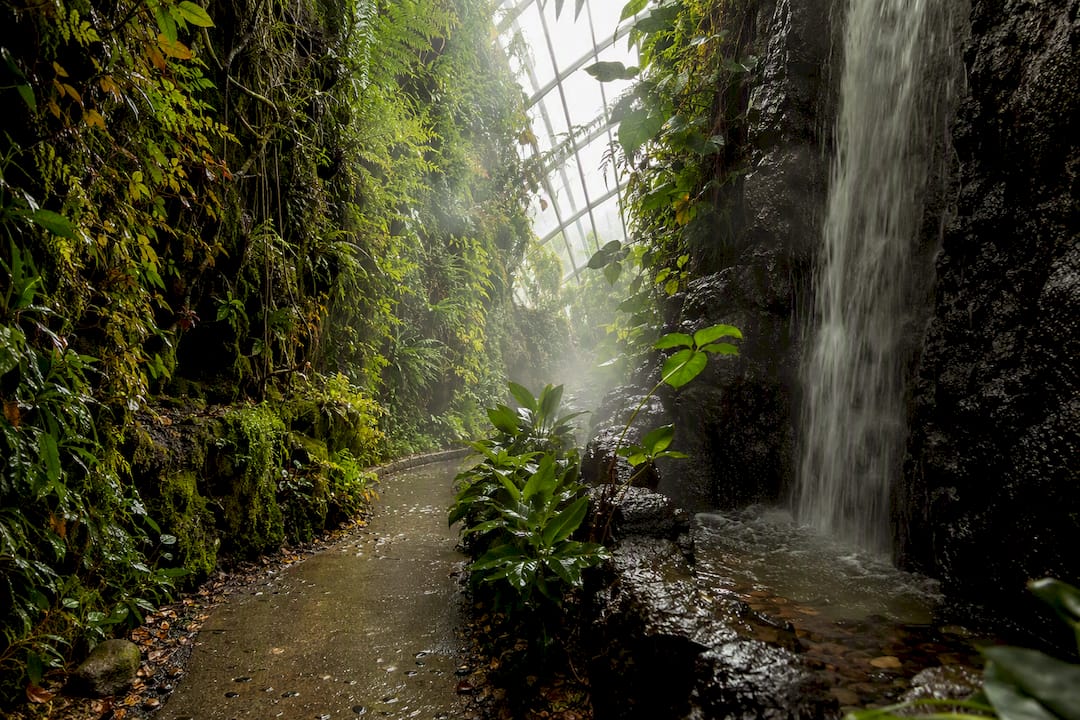
Cloud Gardens Conservatory is the one everyone posts about. Tucked into a small downtown park near Queen and Yonge, it’s built like a miniature cloud rainforest, with multi-level walkways, a waterfall, and vertical plant walls that make it one of the more photogenic Instagram spots in Toronto. It’s also the most fragile of the bunch. The upkeep on a glass structure surrounded by high-rises is technical, and the conservatory has closed intermittently for climate-control upgrades. Check before you make a special trip.
Toronto Botanical Garden, near Edwards Gardens, isn’t a conservatory in the same sense, but it earns a spot for what surrounds its outdoor beds: an indoor shop, a full slate of classes, and a visitor centre that ties the whole property together. The outdoor gardens are free to walk any time, and the indoor programming is what separates a quick stroll from a genuinely educational afternoon.
If you’re up for a longer trip, two nearby options round out the regional picture:
- Cambridge Butterfly Conservatory is roughly an hour west and swaps foliage for flight, with a tropical greenhouse full of live butterflies.
- Royal Botanical Gardens in Burlington/Hamilton is the largest botanical garden in Canada by area, with indoor and outdoor sections worth a full day.
What to expect inside a Toronto conservatory
Every greenhouse room does a different job, and knowing the difference changes how you dress and what you look for. A tropical house runs warm and humid, home to broad-leafed plants, orchids, and bromeliads that need constant moisture. An arid house flips that entirely: dry air, bright light, and cacti or succulents built to survive drought. A palm house is tall, airy, and built around, well, palms, often the architectural centrepiece of the whole building. A temperate house sits in between, holding plants that would struggle in Toronto’s actual winter but don’t need tropical extremes either.
The temperature swing between rooms, and between the greenhouse and the parking lot, is bigger than most visitors expect.
- Dress in layers. City conservatory pages recommend it specifically because there’s no coat check, and you’ll go from a puffy jacket outside to sweating in the tropical house within minutes.
- Wear shoes you can walk in on damp floors, since humidity condenses on tile near the misting systems.
- Check accessibility features (ramps, elevator access, accessible washrooms) on the specific site’s page before you go, since older heritage buildings vary in what they can accommodate.
Pro Tip: Bring a light scarf or a bag you can stuff a sweater into. You’ll want it back on the second you step outside.
Planning your visit: rules, timing, and getting there
City-run conservatories share a few ground rules, and they’re worth knowing before you arrive.
- No food or drink inside. This is a firm policy at every City conservatory, meant to protect humidity-sensitive collections. Grab your coffee before you go in, not while you’re there.
- Casual photography is fine everywhere. Tripods, lighting rigs, or anything that reads as a commercial shoot usually need a booked permit, especially at Allan Gardens.
- Visit early on weekdays or during shoulder seasons for the best light and the fewest people crowding your shot; late fall through early spring tends to be quieter than peak summer weekends.
- Budget 45 to 90 minutes depending on the site. Cloud Gardens is a quick 15 to 20 minute stop; Allan Gardens or Centennial Park deserve closer to an hour.
- Check transit and parking on the official page before you leave home, since some lots are small and fill up fast on weekends.
Pro Tip: Shoulder-season mornings aren’t just quieter, they also give you better window light for photos, since the sun sits lower and softer in the glasshouses.
How to check for closures before you go
Nobody wants to bundle up, take transit downtown, and find a locked door. Before heading out, check the specific conservatory’s page on the City of Toronto’s conservatory hub for maintenance notices or temporary closures.
- Cloud Gardens has the most frequent closure history of the four main sites, so confirm status before making it your only stop downtown.
- Seasonal flower shows and holiday displays get posted on the same pages, usually a few weeks ahead.
- For group bookings, school visits, or event photography, contact information is listed directly on each conservatory’s page.
Why Toronto built glasshouses in the first place
Toronto’s relationship with indoor gardens goes back further than most visitors realize. Allan Gardens started as a private garden donation in the 1850s and grew into a full conservatory complex by the late 1800s, part of a broader Victorian trend of building glass palm houses in northern cities that couldn’t grow tropical plants outdoors. The idea was equal parts science and spectacle: show off exotic species while giving working-class residents free access to a warm, green space during brutal winters.
That civic mission never really went away. Centennial Park Conservatory, built in 1970, doubled as a production facility, growing plants for other city parks while also welcoming the public. Cloud Gardens, opened decades later in the early 1990s, represented a different instinct: squeezing a piece of tropical forest into a downtown pocket park, built as much for stressed office workers on a lunch break as for horticulture enthusiasts.
What ties all of these together is the same underlying logic. Toronto winters are long, and public glasshouses give residents a reliable, free way to stand somewhere warm and green without booking a flight. That’s not a small thing in a city where seasonal mood dips are real, and it’s part of why these buildings have survived for over a century in some cases, patched, renovated, and reopened again and again rather than torn down.
Guided tours and learning opportunities at Toronto’s conservatories
You don’t need a green thumb to get more out of a conservatory visit. Toronto Botanical Garden runs the most structured programming of the group, with guided tours and hands-on classes covering everything from container gardening to native plant landscaping. Its educational calendar shifts seasonally, so a spring visit might mean a pruning workshop, while fall brings bulb-planting sessions.
The City-run conservatories lean more informal. Allan Gardens and Centennial Park don’t run regular public tours the way a dedicated botanical garden does, but both accept group bookings for schools and community organizations, and staff are usually available to answer questions if you catch them during a quiet stretch. If you’re organizing a school trip or a seniors’ group outing, reach out through the contact info on each site’s official page well ahead of your preferred date, since availability can be limited around peak seasons.
For self-guided learners, the plant labelling inside most greenhouses is genuinely good. Take your time reading the small placards near unusual specimens. Orchid and bromeliad houses in particular tend to have detailed origin and care notes that double as a mini plant-care lesson, which is a solid warm-up if you’re about to try growing something similar at home.
Indoor gardening tips inspired by what you’ll see in Toronto’s greenhouses
Walking through a tropical house is basically a live demo of what your houseplants actually want. A few habits translate directly from greenhouse to living room.
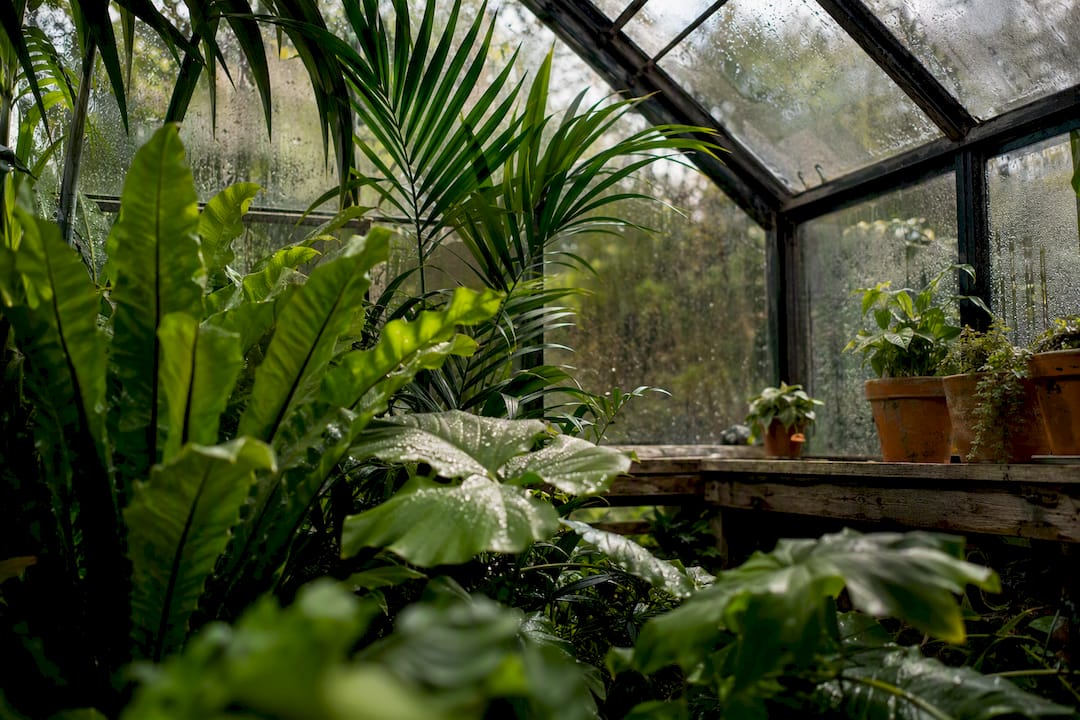
Humidity matters more than most people think. The reason orchids and bromeliads thrive under glass isn’t magic, it’s moisture in the air. A cheap humidity tray or a small humidifier near your plant shelf mimics that effect at home, especially in Toronto apartments where forced-air heating dries everything out by January.
Light direction beats light intensity for a lot of common houseplants. Notice how conservatories orient palms and broad-leaf tropicals toward filtered, indirect light rather than direct blasting sun. A south-facing window with a sheer curtain often works better than an unobstructed bright window that scorches leaves.
If you’re picking a first plant after visiting one of Toronto’s indoor gardens, look to what thrived there. Pothos, snake plants, and philodendrons handle the swing between dry heated apartments and occasional neglect far better than the finicky orchids you just admired. Save those for once you’ve got a feel for watering rhythm.
Pro Tip: Snap a photo of the plant tags on species you like at Allan Gardens or Centennial Park. Most garden centres in the city can order or point you toward the same variety.
A couple of sample days, built around Toronto’s glasshouses
For a half-day escape, start at Cloud Gardens right when it opens, grab a coffee nearby, then walk to a small museum or gallery within a few blocks. Downtown transit makes this loop easy without a car.
For a fuller day, begin at Allan Gardens, wander the five greenhouses at your own pace, then grab lunch in Cabbagetown or Riverside before heading to Toronto Botanical Garden or an outdoor garden if the weather cooperates. Dayhop builds routes like this automatically, factoring in weather, accessibility needs, and real-time adjustments if a stop turns out to be closed.
Skip the spreadsheet and let Dayhop build the loop for you
Piecing together conservatory hours, transit times, and a lunch stop by hand eats up the planning time you’d rather spend actually walking through a palm house. Dayhop builds that loop for you automatically, factoring in each conservatory’s hours, the day’s weather, and your own preferences so you’re not the one juggling five browser tabs the morning of.
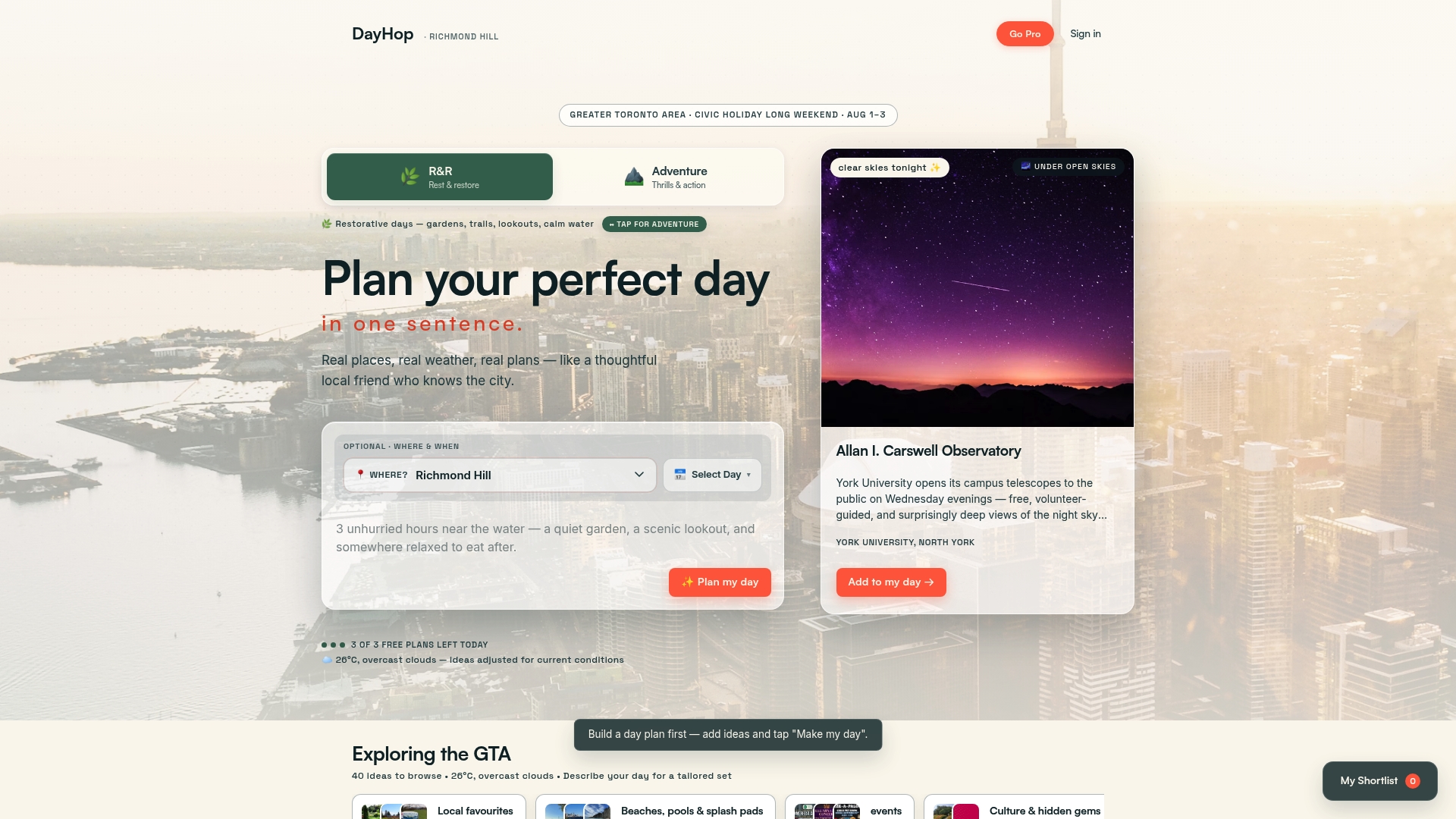
Say you want a downtown half-day around Cloud Gardens, or a fuller loop that pairs Allan Gardens with a nearby lunch spot and a second stop if the forecast holds. Dayhop lays that plan out in seconds and adjusts in real time if something’s closed or the weather turns. Free signups get a full sample itinerary to start, and Pro unlocks multi-day planning and more saved routes for anyone who ends up making a habit of this. Try a sample GTA day plan on Dayhop and see what it builds around your next indoor garden visit.
The gap between “free admission” and “worth your afternoon”
Most guides to Toronto’s conservatories stop at logistics: hours, admission, what to wear. That’s useful, but it misses the more interesting question, which is why these four sites feel so different from each other despite all technically being “free indoor gardens in a Canadian winter city.”
The honest answer is that Toronto never built one cohesive conservatory system. It built four separate answers to four separate problems, decades apart, by different people with different budgets. Allan Gardens is a Victorian relic that survived by accident of preservation. Centennial Park is a working production facility that happens to let the public in. Cloud Gardens is a corporate plaza amenity from the early 1990s that outgrew its original modest ambitions and became a genuine attraction. Toronto Botanical Garden is the only one built explicitly around teaching, not just display.
That patchwork is actually the city’s advantage, not a flaw to apologize for. A visitor chasing heritage architecture wants Allan Gardens. Someone chasing volume and seasonal spectacle wants Centennial Park. Someone with 20 minutes on a lunch break wants Cloud Gardens, closures permitting. Nobody needs a fifth, redundant glasshouse; they need to know which of the four already fits their afternoon. That’s a routing problem more than an information problem, and it’s exactly the kind of decision fatigue that makes people default to “I’ll just stay home” instead of getting outside on a cold Saturday.
— Mugendi
Sources
Recommended
Plan my day →