A Distillery District guide for visitors: what to do and see
A Distillery District guide for visitors: what to do and see
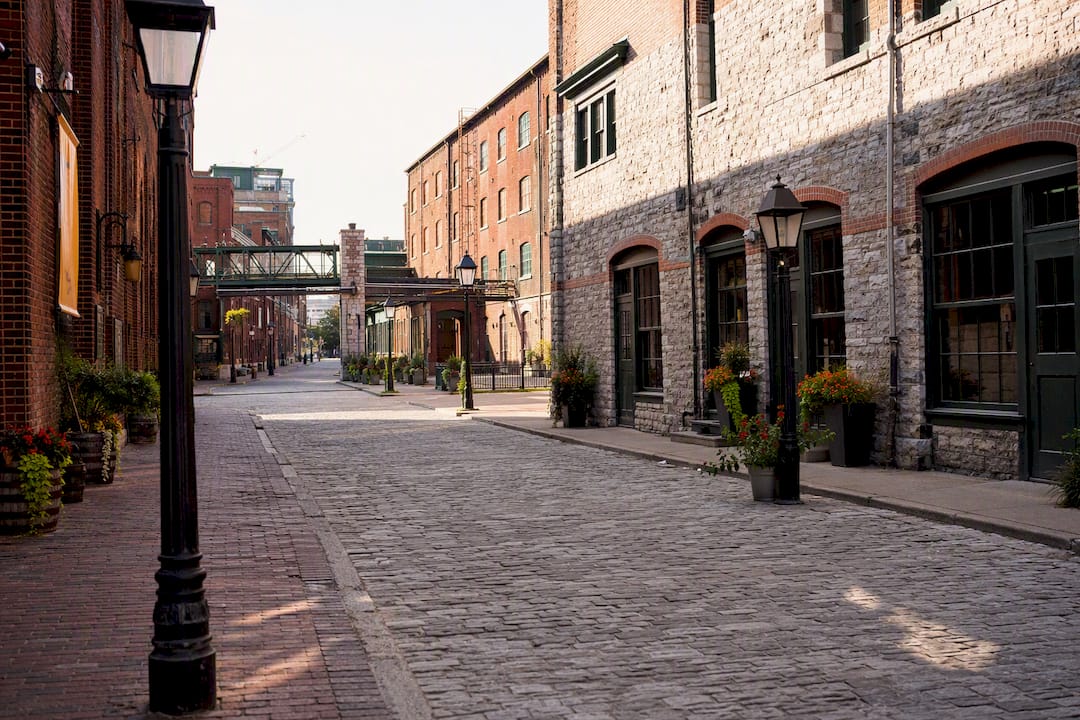
The Distillery District is a 13-acre, pedestrian-only historic village in Toronto’s east end, packed with cobblestone lanes, Victorian brick warehouses, and some of the city’s best independent shops and restaurants. Give it a couple of hours for a quick loop, several hours if you want lunch and a couple of galleries, or a full evening if you’re catching a seasonal event. Here’s your cheat sheet:
- Coffee: Balzac’s Coffee Roasters, the district’s original café
- Casual bite: Mill Street Brew Pub for beer and comfort food
- Sit-down dinner: Cluny Bistro for French classics
- Shop stop: Any of the 40-plus design boutiques
- Seasonal event: Distillery Winter Village in December
Key Takeaways
The Distillery District rewards visitors who match their visit length to a plan: 2 hours for a loop, a half-day for food and shopping, an evening for events and dinner.
| Point | Details |
|---|---|
| Entry is free year-round | Tickets are only required for specific event windows like Winter Village weekend evenings. |
| Cobblestones demand flat shoes | Strollers and wheelchairs need extra caution on the historic 10-street layout. |
| Book dinner early on event weekends | Reserve Cluny Bistro or El Catrín one to three weeks ahead during Winter Village season. |
| Dayhop simplifies the planning | The free tool builds a timed Distillery District day plan around your interests and the weather. |
Table of Contents
- When is the Distillery District open, and do you need tickets?
- How do you get to the Distillery District?
- Why does the Distillery District matter historically?
- What are the best shops in the Distillery District?
- Where should you eat and drink in the Distillery District?
- What seasonal events happen in the Distillery District?
- Should you book a guided tour or explore on your own?
- What’s a good Distillery District itinerary for your visit length?
- What should you know before walking the Distillery District?
- A local’s take on timing your visit
- Let Dayhop build your Distillery District day around you
- Frequently asked questions
- Sources
When is the Distillery District open, and do you need tickets?
The district’s standard hours run Monday to Wednesday from 10 a.m. to 8 p.m., Thursday to Saturday from 10 a.m. to 9 p.m., and Sunday from 11 a.m. to 8 p.m., though individual shops and restaurants set their own schedules on top of that. Walking through is free, every day of the year, with one exception: major seasonal events like the Winter Village charge admission on busy weekend and evening slots.
- Free to enter and wander any day
- Ticketed windows only apply during specific event periods
- Shop and restaurant hours vary by business
Pro Tip: Check the official events calendar a few days before your visit, especially from November through March, so you’re not caught off guard by a ticketed evening.
How do you get to the Distillery District?
Streetcars on King and Queen stop within a short walk of the district’s Trinity Street entrance, and it’s about 10 to 15 minutes on foot from either line. From Union Station, plan on a 20 to 25 minute walk, from the CN Tower closer to 25 to 30 minutes, and from St. Lawrence Market just 10 minutes. Bike share docks sit near the perimeter, and once you’re inside, everything is car-free cobblestone.
- Streetcar: King or Queen lines, then a short walk
- Walking: 10 to 30 minutes depending on your starting point
- Driving: perimeter Green P lots, which fill up fast on event weekends
- Cycling: bike share stations nearby, interior is pedestrian-only
Parking is genuinely tight during peak season, so treat transit as your default plan rather than your backup.
Why does the Distillery District matter historically?
The Gooderham and Worts distillery grew into one of the largest in the world through the 1800s before finally shutting down as an active distillery in 1990. Restoration work followed, and the site reopened as a cultural and commercial district in 2003. What survived is remarkable: 13 acres, more than 40 preserved Victorian-era industrial buildings, and 10 cobblestone streets, making it one of the best-preserved collections of Victorian industrial architecture in North America.
- 1800s to 1990: active distillery operations
- 1990: closure as a working distillery
- 2003: reopens as a heritage and cultural district
Hundreds of industrial artifacts and heritage plaques remain scattered through the site, each carrying a QR code that links to deeper background on the Distillery Heritage self-guided tour.
What are the best shops in the Distillery District?
More than 40 boutiques cluster along the cobblestones, and almost none of them feel like a chain store. Expect design-forward home goods, artisanal chocolate and food shops, handmade jewellery, and small-batch clothing labels you won’t find in a mall.
- Design and home decor boutiques
- Artisanal food and chocolate shops
- Independent jewellery and gift stores
- Specialty clothing and accessories
During the Winter Village and other seasonal events, pop-up market stalls fill the courtyards with extra vendors, so budget a little more browsing time if you’re visiting in December.
Where should you eat and drink in the Distillery District?
The district’s dining scene splits neatly into a few lanes: cafés and bakeries for a quick stop, pubs and brewhouses for something casual, and sit-down bistros when you want a proper meal. The names that come up again and again across visitor guides and the district’s own dining page are worth knowing before you arrive.
- Balzac’s Coffee Roasters — the café that anchors the district’s morning routine
- Mill Street Brew Pub — on-site brewery with hearty pub fare
- Cluny Bistro — French bistro classics in a grand dining room
- Soma Chocolate Café — small-batch chocolate and rich hot drinks
- El Catrín Destilería — Mexican fine dining with a striking patio
Pro Tip: Book dinner at Cluny or El Catrín at least a week ahead, and two to three weeks out if you’re visiting on a Winter Village weekend, when tables disappear fast.
What seasonal events happen in the Distillery District?
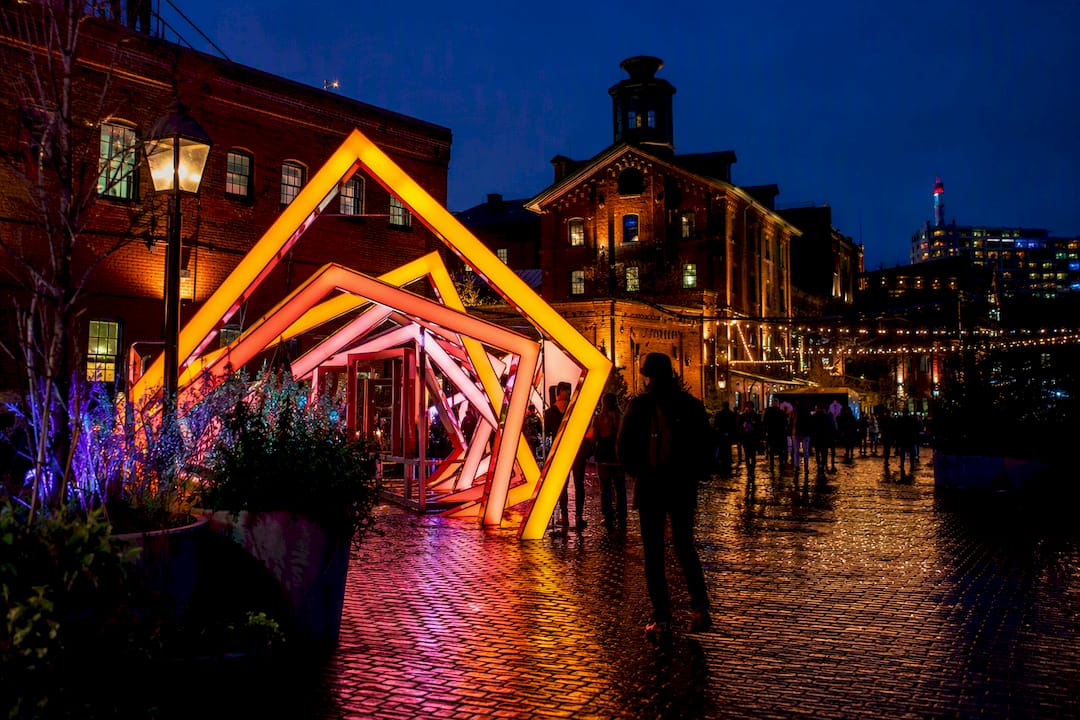
Winter turns the district into two very different attractions back to back. The Distillery Winter Village runs mid-November through late December, with a massive lit tree and market stalls, charging admission on busy weekend and evening periods while staying free on quieter weekday visits. Once that wraps up, the Toronto Light Festival takes over from January through early March, filling the same courtyards with large-scale light installations that are free to wander and best seen after dark.
- Winter Village: mid-November to late December, paid on peak evenings and weekends
- Light Festival: January to early March, free admission throughout
- Summer patio season and weekend live music are the district’s quieter, warm-weather draw
Plan for earlier arrivals and heavier transit demand on any Winter Village weekend, since parking and streetcar loads both spike around ticketed event windows.
Should you book a guided tour or explore on your own?
Guided options range from classic heritage walks to prohibition-era spirits tours, food-and-drink tastings, and after-dark ghost tours, most starting near the Trinity Street entrance. If you’d rather go at your own pace, the self-guided tour resources and the QR codes on artifact labels around the site cover the same ground for free, walking you through how the old brick warehouses actually worked.
- Guided walking, spirits, food, and after-dark tours
- Self-guided QR codes on artifacts throughout the site
- A simple loop down Trinity, Tank House Lane, and Case Goods Lane covers the highlights
Pro Tip: Book food and drink tours a few days ahead, since small-group tastings fill up faster than general walking tours.
What’s a good Distillery District itinerary for your visit length?
1. The 2-hour quick visit. Enter at Trinity Street, grab a coffee at Balzac’s, wander Tank House Lane and Case Goods Lane for photos, and pop into two or three boutiques on your way back out.
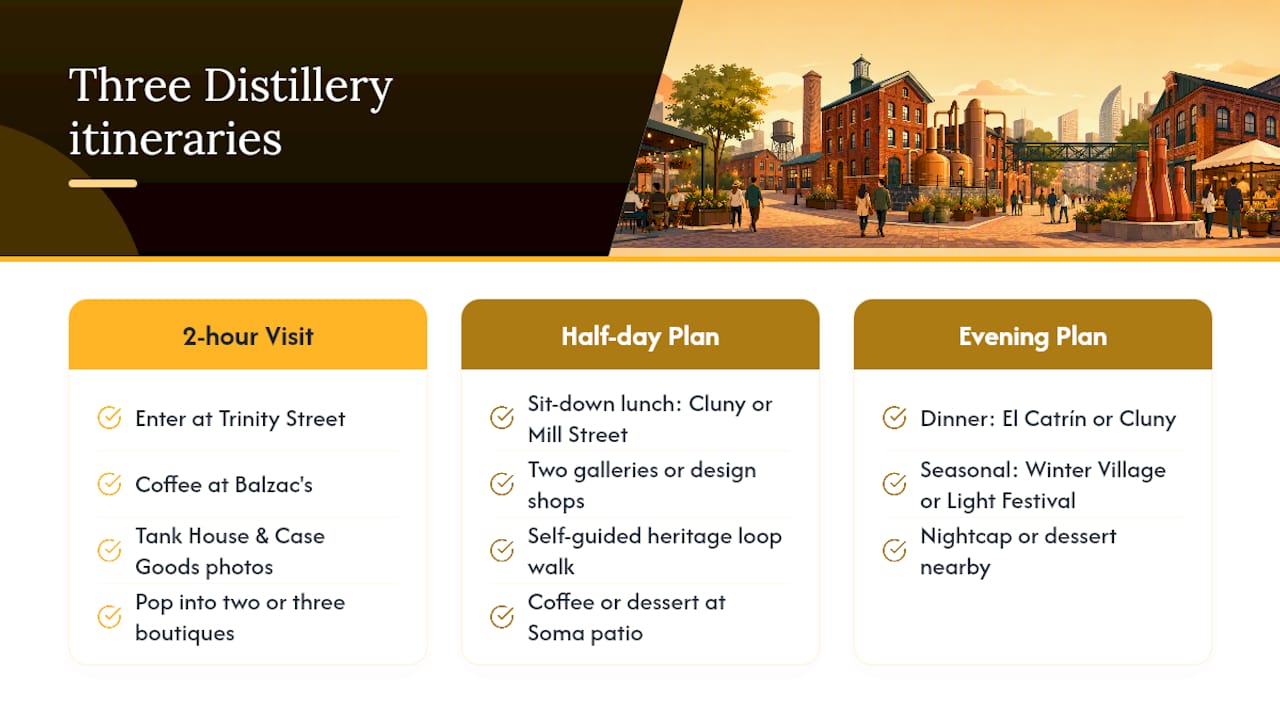
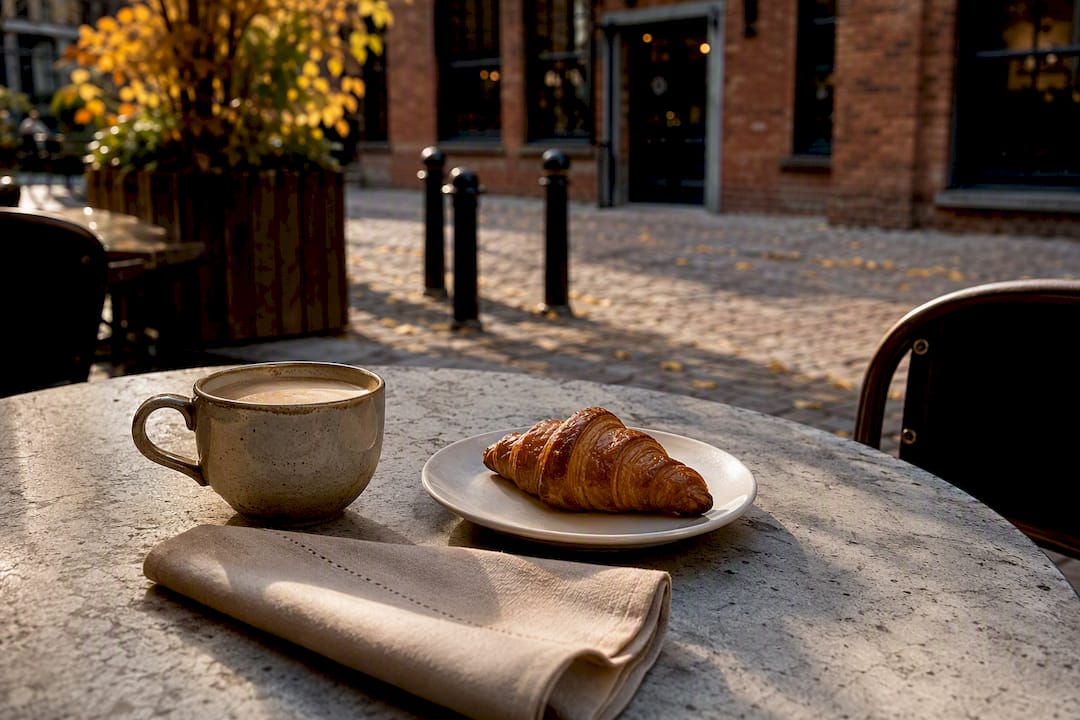
2. The half-day plan. Start with a sit-down lunch at Cluny Bistro or Mill Street, follow it with stops at two galleries or design shops, walk the self-guided heritage loop, and finish with a slow coffee or dessert at Soma in a courtyard patio.
3. The evening plan. Book dinner at El Catrín or Cluny for early evening, then time your visit around the Winter Village lights or Toronto Light Festival installations if it’s the right season, and close with a nightcap or dessert nearby.
Pro Tip: If you’re visiting on an event weekend, lock in your dinner reservation before you leave home. Restaurant tables and ticketed entry windows both move fast once the Winter Village opens.
What should you know before walking the Distillery District?
The historic cobblestones look great in photos but are rough on strollers, wheelchairs, and heels, so pack flat, sturdy footwear. Accessibility varies by individual storefront, so call ahead if you have specific mobility needs. Washrooms, water, and charging spots are available inside restaurants and cafés rather than as standalone public amenities.
- Wear flat, sturdy shoes for the cobblestones
- Confirm accessibility needs directly with individual businesses
- Visit early on a Sunday morning for near-empty courtyards and soft light
Pro Tip: Photographers swear by arriving before 8 a.m. on a Sunday, when the brick warehouses catch the morning light and the lanes are nearly empty.
A local’s take on timing your visit
The best-kept secret about this district isn’t a hidden shop, it’s the hour you choose to show up. Come on a weekday afternoon, well before the dinner rush, and you’ll get the same brick lanes and courtyards without fighting a crowd for a photo. Skip the obvious lunch rush window between noon and 1:30 p.m. if you want an easy table anywhere on the patio side.
Let Dayhop build your Distillery District day around you
Dayhop is the shortcut for visitors who’d rather spend their time in the district than spend it deciding how to structure their day. Tell it how much time you’ve got, whether you’re chasing patios or heritage buildings, and how the weather’s looking, and it lays out a timed plan for your visit, right down to when to book dinner.
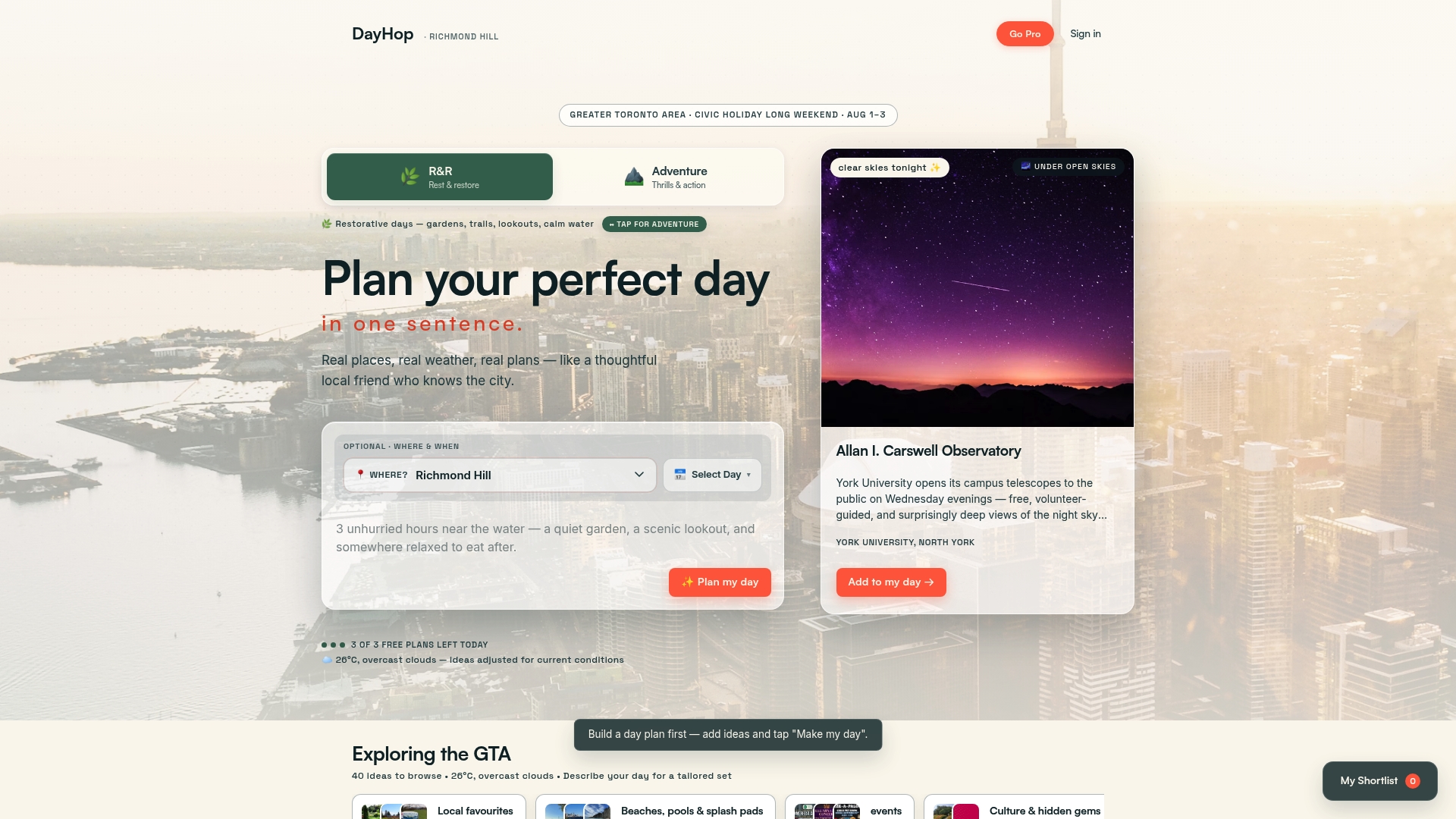
Free plans get you a solid day layout with the essentials covered. If you want multi-day planning around a longer Toronto trip, live adjustments if your afternoon plans change, or more saved itineraries to reuse later, DayHop Pro unlocks that extra flexibility. Either way, you can start building your Distillery District day plan in a couple of minutes.
Frequently asked questions
Is the Distillery District free to visit? Yes, walking through is free every day of the year, except during specific ticketed periods tied to major seasonal events like the Winter Village.
How much time should I spend in the Distillery District? Two hours covers the highlights, a half-day allows for lunch and shopping, and a full evening works well if you’re attending a seasonal event or booking dinner.
Do I need a car to visit the Distillery District? No. Streetcars on the King and Queen lines get you within a short walk, and the interior is pedestrian-only once you arrive, so transit or walking is usually easier than driving.
What are the must-try restaurants in the Distillery District? Cluny Bistro, Mill Street Brew Pub, Balzac’s Coffee Roasters, Soma Chocolate Café, and El Catrín Destilería are the names that come up most often, each covering a different style of meal.
When is the best time to avoid crowds? Early Sunday mornings, before 8 a.m., tend to be the quietest, giving you empty lanes and good light for photos before the shops open.
Sources
- The Distillery Historic District - FAQ
- Distillery District Toronto 2026: History, Shops & Dining Guide
Recommended
Plan my day →