Eight day trips from Toronto you can reach by train
Eight day trips from Toronto you can reach by train
Skip the parking search and the 401 traffic report: these eight destinations are all doable in a single day using GO Transit or VIA Rail, no car required. Here’s your shortlist, ranked by how easy the trip is to pull off:
- Niagara Falls — the waterfall selfie every visitor wants, about 1 hour 40 minutes direct on the GO Niagara train from Union Station.
- Hamilton — street art, waterfalls, and a real food scene, roughly 50 minutes on the Lakeshore West GO line.
- Burlington / Port Credit — lakeside walks and patios without the highway drive, 35 to 50 minutes on Lakeshore West GO.
- Stratford — theatre town charm and a walkable downtown, about 2 hours on VIA Rail.
- Kingston — limestone architecture and a proper waterfront, around 2.5 to 3 hours on VIA Rail.
- Guelph — a compact university city with surprising food finds, about 1 hour 10 minutes on the Kitchener GO/VIA line.
- Markham — one of the best food crawls in the GTA, roughly 50 minutes on the Stouffville GO line.
- Rouge Hill — Toronto’s own national urban park, about 30 minutes on Lakeshore East GO.
Most of these routes run direct from Union Station. A few, like Niagara, need a quick transfer to a local shuttle once you arrive.
Here’s the number that matters for your budget: GO Transit sells a One-Day Weekend Pass for $10, covering unlimited travel on every GO train and bus line on Saturdays, Sundays, and statutory holidays. Kids 12 and under ride free. That single pass can cover your entire day, including the connecting bus at the other end.
Key Takeaways
Train day trips from Toronto work best when you match your destination’s distance to your available hours and buy the right pass before you board.
| Point | Details |
|---|---|
| Match trip length to time | Rouge Hill (30 minutes) and Port Credit (35 minutes) suit half-days; Kingston (2.5 to 3 hours) needs a full commitment. |
| Buy the right pass | The $10 GO One-Day Weekend Pass covers unlimited weekend travel; VIA fares drop when booked off-peak and in advance. |
| Niagara needs a combo ticket | The GO+WEGO bundle, starting around $22 round trip, covers both the train and unlimited local shuttle access. |
| Check alerts before boarding | Construction can turn a direct GO train into a bus bridge, so confirm your route within 24 hours of departure. |
| Time your connections | Lining up your arrival with the next local shuttle or bus departure protects your limited hours on the ground. |
Table of Contents
- Best train day trips from Toronto: what to do when you get there
- Planning your fares, passes, and connections
- How Dayhop turns these transit facts into an actual day plan
- What to pack for a day trip by train
- Staying safe and polite on trains and local transit
- Official pages and tools to check before you go
- Why train-first day trips beat the driving default
- Sources
Best train day trips from Toronto: what to do when you get there
Picking the destination is the easy part. Knowing what to actually do once you step off the platform, and how to string it together without wasting half your day waiting for a connection, is where most trip planning falls apart. Here’s the practical breakdown for each stop.
1. Niagara Falls
Niagara earns the top spot because it’s the one trip that feels like a proper getaway despite costing less than a tank of gas. The GO Niagara train runs seasonally from Union Station directly to Niagara Falls, with a ride time of approximately under two hours and no transfer needed on the train itself. GO Transit’s own day-trip recommendations point to exactly this kind of trip as proof that ditching the car removes the stress of parking near the Falls, which anyone who’s circled a Clifton Hill parking garage in July can appreciate.
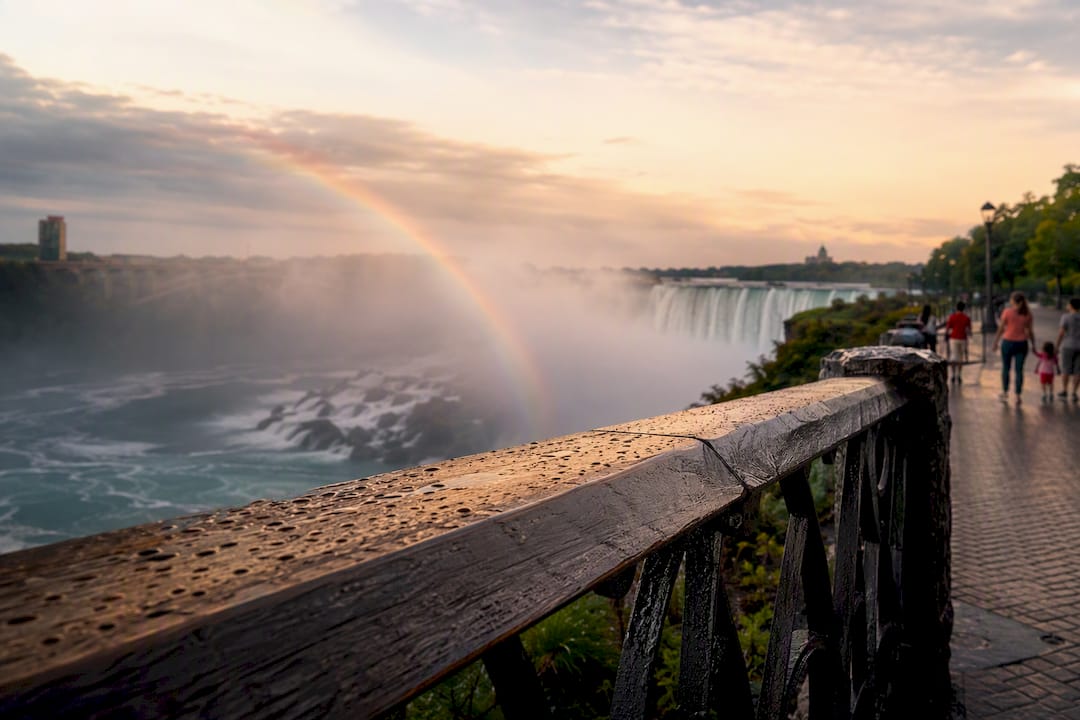
Once you arrive, you’ll want the GO+WEGO combo ticket, which bundles your GO Train round trip with unlimited WEGO bus access around the Falls district. Packages start around $22 round trip, and Niagara Parks also sells a version of this bundle that adds in local attraction options. WEGO is your last-mile lifeline here: the falls, the boat tours, and the wineries are spread out enough that walking everywhere eats your whole afternoon.
A realistic one-day itinerary:
- Morning: arrive, hop the WEGO bus to Table Rock for the classic Falls view.
- Midday: catch the boat tour (Hornblower or Journey Behind the Falls, depending on season) for the up-close soak.
- Afternoon: WEGO over to Clifton Hill for lunch, or push out to a nearby winery if you’ve got extra time.
- Late afternoon: time your return WEGO bus to line up with your GO train departure. Experienced day-trippers pick their home departure station (Union, Exhibition, Port Credit, Oakville, or Burlington) specifically to match convenient arrival windows on the way back.
2. Hamilton
Hamilton is the trip people underestimate. The Lakeshore West GO line gets you there in under an hour, often with a direct run and sometimes with a quick transfer depending on the time of day, so always check before you lock in your schedule.
Hamilton GO Centre downtown or West Harbour GO station near the waterfront both work as arrival points, and each puts you close to a different flavour of the city. West Harbour drops you steps from the waterfront trails and Bayfront Park, which connect into the broader Waterfront Trail network running along Lake Ontario. Hamilton GO Centre puts you closer to the James Street North art scene and the escarpment access points for the city’s famous waterfalls, including Websters Falls and Tews Falls (both a short local bus or rideshare from downtown).
A tight one-day plan:
- Start at West Harbour, walk the waterfront trail toward Bayfront Park.
- Bus or walk up to James Street North for lunch and gallery browsing.
- If you’ve got the energy, catch a local bus out to one of the escarpment waterfalls.
- Return via Hamilton GO Centre in the late afternoon.
3. Burlington and Port Credit
These two are really one trip with two exits, both on the Lakeshore West line and both reachable in well under an hour. Neither requires a transfer.
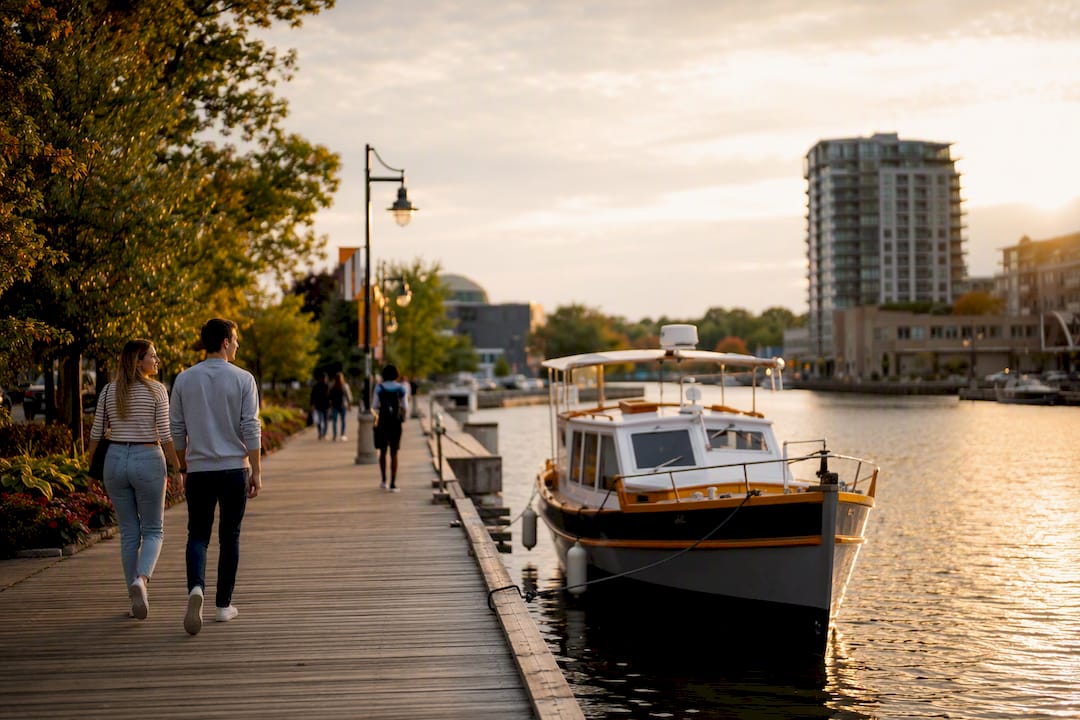
Port Credit rewards a slow morning: walk the waterfront, browse the village shops, grab a coffee by the marina. Burlington adds the Royal Botanical Gardens, one of the largest botanical gardens in the country, plus a longer stretch of lakeside path. Both towns have SoBi bike-share docks near their GO stations, which turns a 20 minute walk into a 6 minute ride if you want to cover more ground.
Quick itinerary for either stop:
- Grab a SoBi bike at the station.
- Ride the waterfront trail toward the marina or gardens.
- Lunch on a patio (both towns have plenty).
- Slow wind-down walk back to the station for your return train.
4. Stratford
Stratford is VIA Rail territory, and it’s built for a theatre matinee day. The trip runs about 2 hours from Toronto, and VIA Rail’s Ontario destination listings show this as one of the routes where booking off-peak keeps a round trip well under $100.
The whole town is walkable from the station. A typical day: morning train in, stroll the downtown core and the riverside park, catch a matinee if the Stratford Festival season lines up with your visit, then an early dinner before the return train. Check VIA’s schedule carefully here: weekday and weekend departure times shift, and Stratford doesn’t have the frequency of a GO corridor route, so missing your return train means a long wait for the next one.
5. Kingston
Kingston is the furthest pick on this list and the one that rewards planning your hours tightly. VIA Rail gets you there in roughly 2.5 to 3 hours, and the historic downtown, limestone architecture, and waterfront are all within walking distance of the station area once you’re downtown (a short local bus or taxi from the VIA station itself, which sits a bit outside the core).
Given the travel time eats close to 5 to 6 hours round trip, treat Kingston as a full-commitment day: an early departure out of Union Station, a focused few hours covering the waterfront, Fort Henry views from a distance, and one museum stop (the Kingston Penitentiary tours or the Marine Museum are popular choices), then a firm eye on the return schedule. This is not the trip to add a spontaneous extra stop.
6. Guelph
Guelph runs on the Kitchener line, served by both GO and VIA depending on time of day, with a ride of about 1 hour 10 minutes. It’s mostly direct, though some off-peak departures involve a bus connection, so check before booking.
The core is compact enough to cover on foot: the Basilica of Our Lady Immaculate dominates the skyline, the downtown strip has a strong independent coffee and food scene, and the Speed River trail gives you a quieter walking option if you want a break from storefronts. Guelph doesn’t get the same tourism attention as Stratford or Niagara, which is exactly why it’s worth a look if you want a day trip that doesn’t feel scripted for visitors.
7. Markham
Markham is the food-first pick. The Stouffville GO line gets you there in under an hour, direct, and the trip is really an excuse to eat your way through Pacific Mall and First Markham Place, two of the GTA’s best-known food destinations for regional Chinese cuisine.
Neither location sits directly at the GO station, so budget for a short local bus ride or a 15 to 20 minute walk depending on which Markham stop you land at (Unionville and Markham GO stations put you in slightly different spots relative to the malls). This is less a sightseeing day and more a grazing day: plan for multiple smaller stops rather than one big sit-down meal.
8. Rouge Hill and Rouge National Urban Park
Rouge Hill is the closest trip on this list, roughly half an hour on the Lakeshore East line, and it’s the one most people don’t realize is a train ride away: Canada’s largest urban national park, accessible without a car.
From Rouge Hill GO station, a short walk or a connecting TTC bus gets you to trailheads inside Rouge National Urban Park. The park has family-friendly options like the Vista Trail and Riverside Trail, both manageable for kids, plus longer stretches for anyone wanting a real hike. This is the pick for a low-effort, high-payoff half-day that still leaves you time for something else afterward.

Planning your fares, passes, and connections
The single best money-saving move for a weekend trip is the GO Transit One-Day Weekend Pass: $10 for unlimited travel across every GO train and bus line, valid Saturdays, Sundays, and statutory holidays, with free travel for kids 12 and under. If your day trip involves any local GO bus connection at the other end, the flat $10 almost always beats paying separate fares for the train and the connecting bus.
For Niagara specifically, skip the à la carte approach entirely. The GO+WEGO combo ticket bundles your round-trip train fare with unlimited WEGO bus access around the Falls for packages starting around $22 round trip, which beats buying WEGO day passes separately once you factor in even two or three shuttle rides.
VIA Rail trips run on a different pricing model entirely, priced per route and by how far ahead you book. VIA’s Ontario destination pages show that fares to towns like Stratford, Kingston, and Cobourg can land under $100 round trip when you book in advance and travel off-peak. Wait until the week of travel and that same seat can cost noticeably more.
A few practical habits make the difference between a smooth day and a scrambled one:
- Check the GO Transit trip planner and service alerts within 24 hours of departure. Construction and track maintenance can quietly turn a direct train into a bus bridge, adding time you didn’t plan for.
- Time your arrival to match the next local shuttle or WEGO departure rather than the one after it. A 15 minute wait for a connection can cost you an entire attraction later in the day.
- Carry a PRESTO card. It works across GO Transit and most local transit systems in destination towns, and it avoids fumbling for exact change at a bus farebox.
- If you’re bringing a bike, know that GO’s weekend bike coaches to Niagara run on select trains only and availability shifts by season, so confirm before you show up at the platform with a bicycle.
Pro Tip: Book VIA Rail fares at least two to three weeks out if your day trip lands on a weekend. Prices climb fast as the departure date approaches, and the cheapest seats sell out first.
How Dayhop turns these transit facts into an actual day plan
Knowing the train schedule is one thing. Building a full day around it, with real activities slotted into the gaps between arrival and departure, is a different problem entirely. That’s the gap Dayhop closes.
You tell Dayhop your preferences (family pace or solo adventure, outdoor focus or food crawl, how much walking you’re up for) and it builds a timed itinerary around your actual train windows, not a generic list of things to see. If your GO train gets you into Burlington at 10:15 AM, Dayhop lines up a plan that starts there rather than assuming you’re arriving whenever.
A sample Burlington day built this way might look like: 10:15 AM arrival, grab a SoBi bike, ride to the Royal Botanical Gardens for a late-morning wander, lunch on a Lakeshore Road patio by 1:00 PM, a slow beach walk after, then a 4:40 PM train back with a buffer built in for the walk to the platform.
If your train gets delayed or a shuttle connection runs late, Dayhop adjusts the plan on the fly instead of leaving you to rework it yourself standing on a platform. That contingency handling matters more than people expect: a 20 minute delay on a tight day-trip schedule can quietly wreck the rest of your afternoon if nothing shifts to absorb it.
Free users get curated outing suggestions matched to weather and activity type. Dayhop Pro unlocks multi-day planning, deeper customization, and more saved itineraries for anyone who turns weekend train trips into a regular habit.
What to pack for a day trip by train
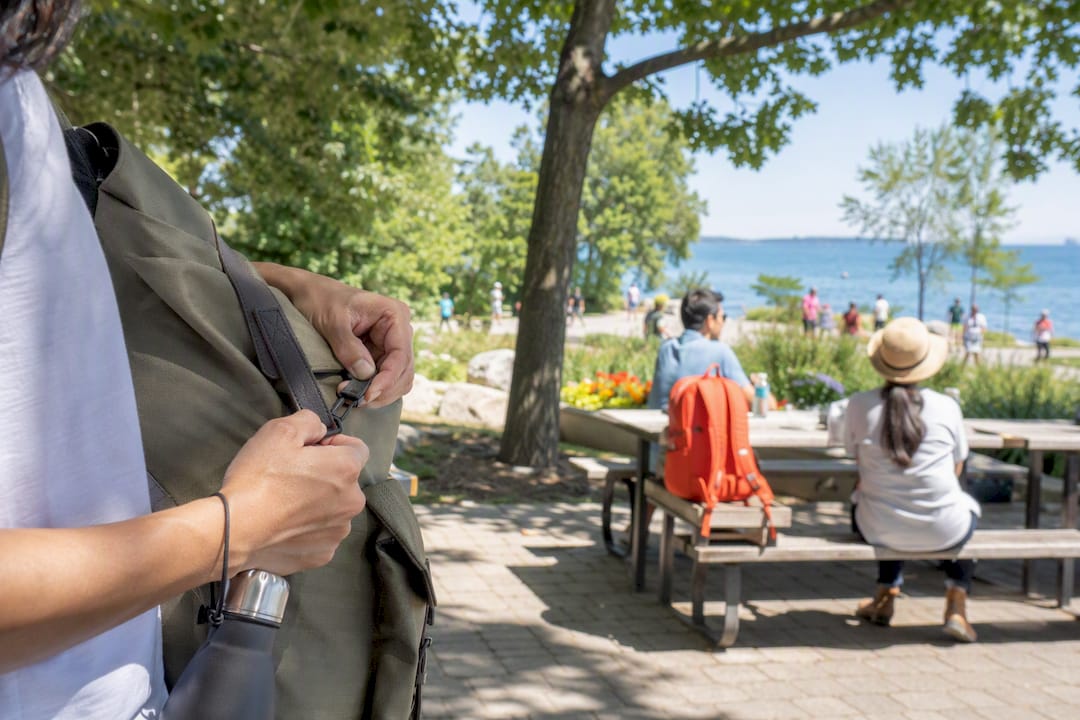
Pack light, because you’re carrying everything yourself all day with no trunk to toss it into. A daypack with water, snacks, and a portable charger covers the basics: platforms and shuttle stops don’t always have easy food access, and a dead phone means no mobile ticket, no maps, and no way to check for service alerts.
Layer for weather that might not match Toronto’s. Niagara’s mist zone near the Falls soaks through light jackets fast, even on a sunny day. Lakeside towns like Burlington and Port Credit run cooler and windier than downtown Toronto. Comfortable walking shoes matter more than anything else on this list: nearly every destination here is built around walking once you arrive, whether that’s Kingston’s uneven historic sidewalks or a Rouge Park trail.
A few specifics worth adding:
- A reusable water bottle, since several stations and trails have refill points but limited purchase options.
- A portable phone charger for mobile tickets, PRESTO taps, and live schedule checks.
- Sunscreen and a hat for anything involving the waterfront or Niagara’s boat tours.
- A light rain shell, especially for spring and fall trips when Ontario weather flips fast.
- Cash or a backup card, since some smaller-town shops and food stalls (particularly around Markham’s malls) run cash-preferred.
Staying safe and polite on trains and local transit
Trains and local buses run on shared etiquette that keeps the whole system moving smoothly for everyone. Keep bags off empty seats during busy periods, and pull large luggage or bikes clear of the aisles once you board. On GO trains, priority seating near the doors is reserved for riders who need it, so shift if someone with a mobility need boards.
Hold onto your PRESTO card or mobile ticket for the entire ride. Fare inspectors check randomly, and losing the physical card mid-trip means a fresh purchase. On WEGO buses in Niagara and local transit in smaller towns, tap or show your pass as you board, not after you’ve sat down.
For solo travellers or anyone heading out later than planned, stick to well-lit platforms while waiting and keep valuables zipped rather than in an open bag pocket. Stations like Union have staff and security visible at most hours, but smaller stops like Rouge Hill or Port Credit thin out fast after evening rush. If your return train gets delayed, most GO stations have digital boards and PA announcements, so there’s rarely a need to guess.
Official pages and tools to check before you go
- GO Transit weekend passes and fares
- GO Transit trip planner and day-trip guide
- GO+WEGO combo ticket details for Niagara
- Niagara Parks GO train travel package
- VIA Rail Ontario destinations and fares
- Waterfront Trail Hamilton communities guide
- Niagara weekend GO train and bike coach service
Why train-first day trips beat the driving default
The conventional advice on Toronto day trips still assumes a car in the driveway, and that assumption is outdated for a huge share of GTA residents who either don’t own one or would rather not burn a Saturday sitting on the 401. The real constraint isn’t distance from Toronto. It’s connection timing at the other end, and that’s the part most travel advice skips entirely.
What gets underrated is how much a $10 weekend pass or a $22 Niagara combo ticket changes the calculus. These aren’t marginal savings; they remove the friction that makes people default to driving in the first place. What gets overrated is the idea that you need a rigid, pre-built schedule. The trips that work best leave room for a missed connection or a longer lunch, because Ontario’s regional rail network, while genuinely good, isn’t dense enough to forgive a tightly overbooked itinerary.
Readers should prioritize picking a destination that fits their actual time window, not the one with the best Instagram reputation.
— Mugendi
Ready to build one of these trips without doing the schedule math yourself? Plan your day with Dayhop and get an itinerary timed to your train, built around what you actually want to do once you arrive.
Sources
- Weekend passes with GO | GO Transit
- 3 Epic GO Train day trips from Toronto you’ll love | GO Transit blog
- Toronto to Niagara Falls Train - Niagara Parks (GO train package)
- Train trips Ontario | VIA Rail
Recommended
Plan my day →